
Why Does My Air Conditioner Smell?

by Tyler Castle
Updated: June 2, 2026
9.7 min read
Key Points of This Article:
- The most common reasons why your air conditioner smells are due to moisture buildup, dirty air filters, built up dust and debris, and improper drainage.
- Not all AC smells are harmless, as burning or gas-like odors can point to serious problems that need immediate attention.
- Letting small issues like moisture buildup or poor airflow go unchecked can quietly increase your energy bill over time.
- Regular maintenance to your air conditioning unit can improve airflow, reduce odors, and help your system run more efficiently day to day.
If your air conditioner smells when it turns on, it’s usually your home’s way of telling you something isn’t working quite right.
Over time, that smell can make your space feel less comfortable and leave you wondering what’s actually going on behind the scenes and these signs that cause your air conditioner to smell, can cause a higher electricity bill over time.
In this guide, we’ll walk through what different air conditioner smells mean, what’s causing them inside your system, and how they can quietly affect your comfort, airflow, and energy use.
Why Does My Air Conditioner Smell?
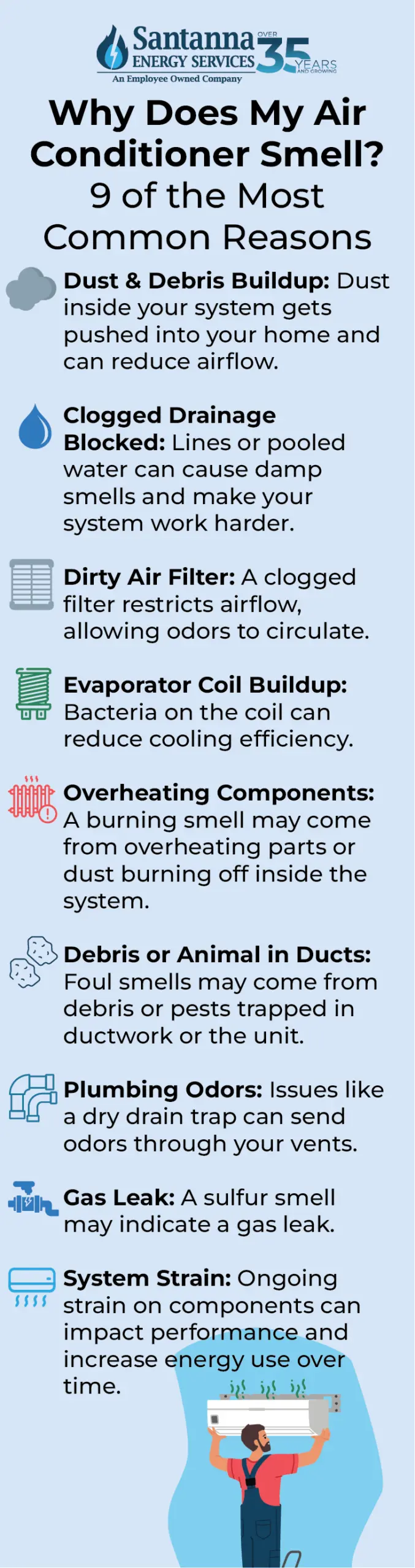
Your air conditioner smells when moisture, dust, or buildup inside the system affects airflow and creates odors that get circulated through your home.
In most homes, odors develop over time as your AC pulls in air, removes heat, and creates condensation during normal operation. When something builds up or does not move the way it should, those conditions can lead to noticeable smells when the air starts circulating.
Here are the most common causes of air conditioner smells and what they mean for your home:
Dust and Debris Buildup Inside the System
Your air conditioner can smell when dust and debris collect on internal components and get pushed into your home when the system turns on.
This is most noticeable at the start of the cooling season after months of inactivity. The smell is often dry, stale, or similar to an unused space. While usually temporary, buildup can reduce airflow and affect cooling performance.
Clogged or Improper Drainage (Condensate Issues)
This can happen when the condensate line is clogged or when water pools in the unit.
The result is a damp or stagnant smell that spreads through your vents. Poor drainage can also affect humidity control and make your system work harder to maintain comfort.
Dirty or Clogged Air Filter Restricting Airflow
A dirty air filter may stop trapping dust and particles effectively, allowing odors to circulate more easily.
Restricted airflow can make smells more noticeable and force your system to run longer, which reduces overall efficiency.
Bacteria Growth on the Evaporator Coil
Your air conditioner can smell when bacteria build up on the evaporator coil in damp conditions. Bacteria on the evaporator coil can reduce how effectively your system removes heat, lowering efficiency.
This often creates a sour or “dirty sock” smell that lingers even when the system is running.
Overheating or Electrical Component Issues
A burning smell can happen when electrical components overheat or when dust burns off internal parts.
A brief odor may occur after the system has been unused, but a strong or persistent smell may point to wiring or motor issues.
Debris or Animal Intrusion in Ductwork or Unit
Foul or rotten smells can come from debris or a small animal trapped inside ductwork or the unit.
This is most often caused by small pests such as mice, squirrels, birds, or even insects that find their way into duct openings, vents, or outdoor units. It can happen in homes with older ductwork, gaps around vents, or outdoor units that are easily accessible.
Plumbing-Related Odors Entering Through Airflow
Plumbing issues, such as a dry drain trap or a backed-up line, can let unpleasant odors enter your airflow.
The AC does not cause the issue, but it can carry the smell throughout your home, making it more noticeable and affecting overall comfort.
Gas Leak Being Circulated Through Your Air System
Your air conditioner can spread a rotten egg or sulfur-like smell if there is a natural gas leak elsewhere in your home.
This smell is intentionally added to natural gas for safety, so it is easy to detect. The AC does not create it, but it can circulate it quickly through your vents. This is a serious safety concern, not just a comfort issue, so leave your home and contact your gas company immediately.
Burning Smell Caused by Overheating Components
Strain on internal parts can signal your system is working harder than it should, which may impact performance and energy use.
Why Does My Air Conditioner Smell Musty?
Your air conditioner likely smells musty or like mold because moisture inside the system is not fully drying out between cooling cycles, allowing damp conditions to linger over time.
It is usually more noticeable when your AC first turns on, after it has been off for a while, or during very humid days. In many homes, the system cools the air, but the inside stays slightly damp and humid, so the smell gets pushed through the vents when the air starts moving again.
When your system is not fully removing humidity, your home can feel warmer than it actually is. This often leads to lowering the thermostat, which increases energy use.
What Does That Air Conditioner Smell Mean? A Quick Guide for Homeowners
If you’re not sure what your AC smell means, this quick guide can help you connect what you’re noticing to what may be happening inside your system.
While some smells are temporary, others can signal issues that affect comfort, airflow, and how efficiently your system runs.
Air Conditioner Smell Quick Guide
| Smell | Likely Cause | What to Do |
| Musty | Moisture buildup leading to mold or mildew inside the system | Replace filter, check for moisture, and schedule maintenance if it continues |
| Burning | Dust burning off or overheating electrical components | If brief, monitor it; if persistent or strong, turn off the system and have it checked |
| Rotten | Debris or a trapped animal in ductwork or the unit | Inspect vents if accessible or call a professional for safe removal |
| Dirty socks | Bacteria buildup on the evaporator coil in damp conditions | Replace filter and consider professional coil cleaning if smell lingers |
| Chemical | Possible refrigerant issue affecting cooling performance | Turn off the system and contact a professional for inspection |
| Gas-like | Possible gas leak being circulated through airflow | Leave the home immediately and contact your gas utility or emergency services |
Taking action early can help you avoid bigger issues, keep your home comfortable, and prevent unnecessary energy use.
Can Air Conditioner Smells Increase Your Electricity Bill?
Yes, certain air conditioner smells can signal airflow, moisture, or system issues that make your AC work harder and use more electricity over time, leading to an increased electricity bill.
While the smell itself does not increase your energy bill, what is causing it often does.
When your air conditioner is not moving air properly or removing moisture efficiently, it has to run longer to reach the temperature you set. Over time, those longer run cycles can quietly add to your electricity usage.
Even a small efficiency drop can make a noticeable difference. For example, at an average electricity rate of 17¢ per kWh, if your AC runs just 1–2 extra hours per day due to restricted airflow or excess moisture, that could add roughly $12 to $35+ per month to your electricity bill, depending on your system size.
How To Get Rid of a Bad Smell From Your Air Conditioner
You can get rid of a bad smell from your air conditioner by reducing moisture, improving airflow, and keeping the system clean so odors do not build up and circulate through your home. Here are some quick tips on how to get rid of a bad smell from an air conditioner:
Replace or Clean Your Air Filter to Improve Airflow
You can get rid of many AC smells by replacing or cleaning your air filter every 1-3 months.
Over time, filters collect buildup that affects how air moves through your system. When airflow improves, your system can cool and dry the air more effectively, which helps reduce odors.
Run Your System for a Few Cycles
You can usually clear mild or temporary AC smells by letting your system run for a few cooling cycles, especially if it has not been used in a while.
A light dusty smell at the start of the season is common and often fades as air moves through the system. If the smell goes away within a short time, it is usually not a concern. If it lingers, it may point to moisture or buildup that needs attention.
Keep Vents Open and Unblocked for Better Air Circulation
You can reduce AC odors by making sure your vents are open and not blocked by furniture or curtains, allowing air to move evenly throughout your home.
When airflow is restricted, certain areas can stay damp or less ventilated, which can make smells more noticeable.
Reduce Indoor Humidity to Prevent Damp Conditions
You can help eliminate musty or sour AC smells by lowering indoor humidity so moisture does not linger inside your system.
Using bathroom and kitchen exhaust fans, especially during showers or cooking, can help remove excess moisture from the air. In more humid homes, keeping humidity at a balanced level can make a noticeable difference in how your home feels and smells.
Check for Moisture or Standing Water Near the Indoor Unit
You can reduce odors by checking around your indoor AC unit for signs of moisture or standing water, which can create damp, stagnant smells.
Water should drain away from your system during normal operation, so any pooling may point to a drainage issue.
Schedule Routine Maintenance to Remove Buildup
Over time, dust, moisture, and other particles can collect in areas that are not easy to access.
A professional inspection can clean these areas and restore proper airflow and drainage. This helps your system run more smoothly and reduces the chances of odors returning.
Have the Evaporator Coil Checked and Cleaned if Needed
When the coil stays damp, it can hold onto odors that continue to circulate through your home.
Cleaning it helps improve how your system removes heat and moisture, which can improve both comfort and efficiency.
Have a Professional Inspect the System if the Smell Keeps Coming Back
You should have a professional inspect your system if the smell keeps returning, even after basic steps like changing the filter or improving airflow.
Ongoing odors usually mean the root cause has not been fully addressed. A proper inspection can identify issues with airflow, moisture, or system performance that are not visible from the outside.
Most air conditioner smells are common and manageable, but they are more than just an inconvenience. They are often early signs of moisture, airflow, or system efficiency issues that can affect how your home feels day to day.
Taking care of air conditioner smells early can help improve comfort, reduce strain on your system, and keep things running more smoothly.
And while your AC might work a little harder from time to time, your energy costs do not have to be unpredictable. With options like Santanna’s Unlimited Energy plan, you can bring a bit more consistency to your monthly bills, even when usage changes.* If you are looking for predictable supply charges, check out our Unlimited Energy plan.
* Restrictions apply. Enrollment based upon program eligibility. Customers using more than 125% of normal monthly usage as determined by Santanna may be required to switch plans.
Tyler is an experienced energy professional, having worked for Santanna Energy Services, for the past four years. He is passionate about renewable energy and believes that diversifying the energy grid is the key to a sustainable future. Tyler is dedicated to supplying consumers with the best possible energy solutions and works diligently to make sure that Santanna can deliver the highest quality service.