
Can You Put Hot Food in the Fridge? And Can This Increase Your Fridge’s Energy Use?

by Jenna Mendez
Updated: August 25, 2026
9.1 min read
Key Points of This Article:
- You can safely put hot food in the refrigerator, and refrigerating it within 2 hours of cooking (or 1 hour if it's 90°F or hotter) is usually safer than leaving it on the counter for too long.
- Hot food doesn't damage your refrigerator, but very large or extremely hot dishes can temporarily raise the temperature inside, causing the compressor to run longer while it removes the extra heat.
- To help food cool safely and reduce the refrigerator's workload, divide large meals into shallow containers, leave space for airflow, and let extremely hot food cool just slightly before refrigerating it.
- If you're storing large batches of leftovers, avoid putting multiple steaming-hot containers in the refrigerator or freezer at once to help maintain consistent temperatures and keep both your food and appliance performing efficiently.
You've probably heard someone say, "Don't put hot food in the fridge." Some people worry it could spoil the food, damage the refrigerator, or even lead to higher electricity bills. But is that actually true?
With so many different opinions, it can be difficult to know the best way to handle hot leftovers. As an energy supplier, we know how everyday household habits can affect the way appliances use electricity, and our team has asked the same questions in our own kitchens.
In this guide, we'll explain what really happens when you put hot food in the fridge, whether it affects food safety or your refrigerator's energy use, and the simple steps you can take to keep both your food and your appliance running at their best. Let's get started.
Can You Put Hot Food in the Fridge?
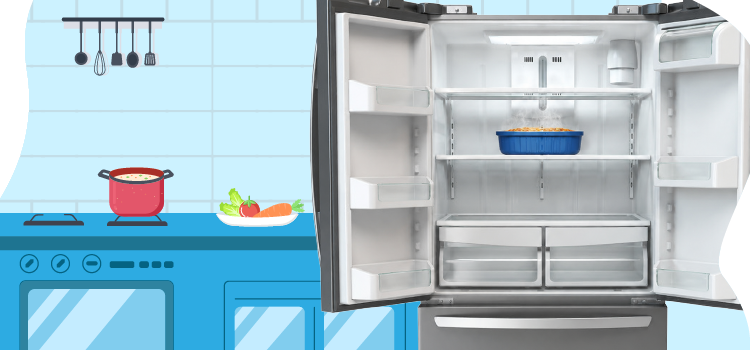
According to the USDA, yes, you can put hot food in the fridge; modern refrigerators are designed to handle warm leftovers as part of everyday use, although very large amounts of extremely hot food may temporarily make the refrigerator work a little harder while it removes the added heat.
Many people grew up hearing that hot food should always cool completely before going into the fridge.
In fact, we asked our employee-owners at Santanna Energy Services, " Do you typically let leftovers cool before refrigerating them?" And a staggering 92% of respondents said they do!
This advice became common years ago, leading many homeowners to believe that putting hot food in the refrigerator would damage the appliance or spoil other foods. Today's refrigerators are built to handle the normal temperature changes that occur when you store groceries, prepare meals, and put away leftovers.
So, a small container of hot food that adds relatively little heat is something most fridges can handle, while a large stockpot that contains much more heat might throw your fridge temperature off for half an hour or so before it gets back to normal.
Is It Safe to Put Hot Food in the Fridge?
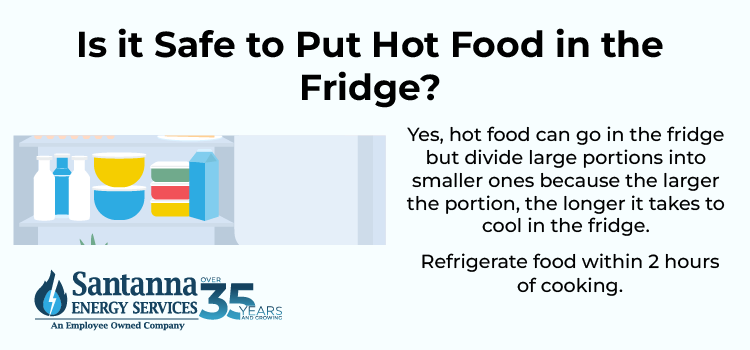
Yes, it is generally safe to put hot food in the fridge, and in many cases, refrigerating it sooner is safer than leaving it at room temperature for too long.
The CDC states that hot food can generally sit out for up to 2 hours before you should refrigerate it. If the surrounding temperature is 90°F or higher, such as during an outdoor gathering, that time is reduced to 1 hour.
According to the USDA Food Safety and Inspection Service, bacteria grow most rapidly when food stays in what food safety experts call the "danger zone," which is between 40°F and 140°F. The longer cooked food remains within this temperature range, the greater the chance that bacteria can multiply.
In other words, the biggest food safety concern isn't putting hot food in the refrigerator; it's leaving it out on the counter for too long before refrigerating it. Once food is placed in the refrigerator, the appliance begins cooling the food until it reaches a safe storage temperature.
What Happens Inside Your Refrigerator When You Put Hot Food Inside?
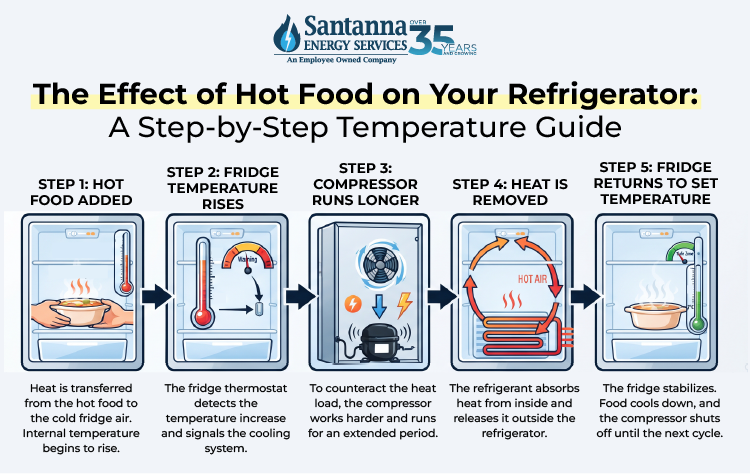
When you put hot food in the refrigerator, the heat from the food slightly raises the temperature inside the fridge. The refrigerator senses this change and automatically begins removing the extra heat until it returns to its set temperature.
Here's what typically happens after you place hot food inside:
- Heat is released from the food. The hotter the food and the larger the portion, the more heat enters the refrigerator.
- The temperature inside the refrigerator rises slightly. The increase is usually temporary, but it can be more noticeable if you're storing a large pot of soup or several hot dishes at once.
- The compressor runs longer. As the refrigerator detects a higher temperature, the compressor turns on and runs until the temperature returns to normal.
- The extra heat is removed. The refrigerator transfers the heat from inside the appliance to the surrounding air, allowing both the food and the refrigerator to cool back down.
Does Putting Hot Food in the Fridge Increase Energy Use?
Yes, putting hot food in the fridge can increase energy use because the refrigerator has to remove the extra heat from the food. However, for most everyday leftovers, the increase is usually small and short-lived.
Although the exact amount varies depending on your refrigerator, the food's temperature, and your local electricity rate, the impact on your energy bill is usually very small.
For example, suppose your refrigerator normally uses about 1.5 kilowatt-hours (kWh) of electricity per day.
If storing a large pot of very hot soup raises the internal temperature by 1.8°F, Swiss energy baseline data shows a 5% to 11% efficiency penalty for every 1.8°F change.
In this scenario, a 5% increase forces the compressor out of its normal duty cycle into continuous high-wattage operation, using approximately 0.075 additional kWh.
Using the U.S. average residential electricity rate of 18.44 cents per kWh (May 2026), that would add roughly 1 to 2 cents to that day's electricity cost.
Since this is just an example, keep in mind that the actual increase depends on several factors, including how much hot food you're storing, how hot it is, the size and efficiency of your refrigerator, the temperature inside your kitchen, and your local electricity rate.
Does Putting Hot Food in the Fridge Damage the Refrigerator?
No, putting hot food in the fridge does not normally damage the refrigerator. Modern refrigerators are designed to handle warm leftovers as part of everyday use.
Rather than damaging the refrigerator, repeatedly placing very large amounts of extremely hot food inside may temporarily reduce its cooling efficiency because it takes longer to remove all that heat. During that time, the temperature inside the refrigerator may rise slightly, which can also warm nearby foods until the appliance catches up.
Can You Put Hot Food in the Freezer to Cool It Faster?
Generally, it's not recommended to put hot food directly into the freezer to cool it faster because when very hot food is placed in the freezer, it releases heat into the surrounding air risking the thawing of nearby food.
So, what makes placing hot food in the fridge less harmful than putting hot food in a freezer? It all comes down to the way the environment absorbs heat. A refrigerator can safely handle steam as liquid condensation. Because it's set at a lower temperature, a freezer causes steam from that food to freeze, which can form restrictive coil ice that can hinder freezer performance.
How to Safely Store Hot Food in the Fridge
The safest way to store hot food in the fridge is to help it cool efficiently without leaving it at room temperature for too long.
Here are a few simple storage habits that can help keep food at a safe temperature while also reducing the amount of heat your refrigerator has to remove:
- Divide Large Meals into Smaller Containers: Instead of placing one large container in the refrigerator, divide the food into several smaller portions.
- Use Shallow Containers: Shallow containers allow heat to escape faster because more of the food is exposed to the cooler air inside the refrigerator. The U.S. Department of Agriculture recommends that hot leftovers should be transferred into shallow containers that are no more than 2 inches deep for maximum food safety.
- Leave Space for Airflow: Avoid packing containers tightly together— refrigerators cool food by circulating cold air around it.
- Avoid Overloading the Refrigerator: Adding a large amount of heat all at once can cause the refrigerator to run longer to remove it. If practical, organize the food so that air can continue to circulate throughout the refrigerator.
- Loosely Cover Food While It's Cooling: If appropriate for the type of food and storage container, loosely covering hot food while it cools can allow heat and steam to escape more easily.
- Keep Hot Containers Away from Easily Perishable Foods: Giving hot food a little space helps reduce the temporary warming of nearby items while the refrigerator removes excess heat.
FAQs
How long should food cool before refrigerating?
Food does not need to cool completely, but it should be refrigerated within 2 hours of cooking, or within 1 hour if the temperature is 90°F or higher.
Can hot food crack glass shelves?
It can happen if an extremely hot container is placed directly onto a cold glass shelf, so transferring food to storage containers or allowing it to cool slightly first can help reduce the risk of thermal shock.
Can putting hot food in the fridge make it smell?
No, hot food itself does not make the fridge smell, but uncovered food or spoiled leftovers can create odors as they release moisture and food particles.
What temperature should a refrigerator be set to?
A refrigerator should be set to 40°F (4°C) or below, with 37°F (3°C) often recommended to keep food safely chilled without freezing it.
Putting hot food in the fridge is generally safe, and for most everyday leftovers, it's often the better choice than leaving food out for too long. While very hot food can temporarily make your refrigerator work a little harder, the extra energy use is usually small.
Simple habits like dividing large meals into smaller containers, using shallow storage containers, and allowing good airflow can help your refrigerator cool food more efficiently while keeping your leftovers properly stored.
Just as a few simple kitchen habits can help your refrigerator run more efficiently, having more predictable energy costs can make managing your home a little easier, too. Santanna's Unlimited Energy plan helps protect you from unexpected supply charge fluctuations*, giving you greater confidence in your monthly energy supply costs. Explore whether an Unlimited Energy plan is the right fit for your household and enjoy one less surprise when it comes to your home's energy.
Because peace of mind is knowing your leftovers are stored safely, your refrigerator is running efficiently, and your energy costs are one less thing to worry about.
* Restrictions apply. Enrollment based upon program eligibility. Customers using more than 125% of normal monthly usage as determined by Santanna may be required to switch plans.
Jenna Mendez is an experienced energy content professional who has spent four years researching, writing, and managing authoritative educational content for Midwest energy consumers at Santanna Energy Services. As a lifelong Illinois resident, Jenna brings firsthand knowledge of the region’s climate, communities, and household energy needs to her work.
She specializes in translating complex energy topics into clear, practical guidance about electricity and natural gas costs, appliance energy use, energy efficiency, and everyday home living. Drawing on industry research, Santanna customer data, and insights from experienced energy professionals, Jenna incorporates this knowledge into her content to help homeowners better understand their energy choices and make informed decisions for their households.