
How to Use Solar Panels During a Power Outage

by Brennan Lambrecht
Updated: October 8, 2026
13.1 min read
Key Points of This Article:
- To use your solar panels during a power outage, your system needs battery storage, a backup-capable inverter, a portable solar generator, or an off-grid setup that can safely operate without the utility grid.
- If you're looking to use the energy you've stored from your solar panels, your best solution is to use a solar backup battery to power essential appliances and devices like lights, refrigerators, Wi-Fi routers, phones, laptops, and medical equipment rather than high-energy loads.
- Most standard grid-tied solar systems shut down during power outages to prevent backfeeding and protect utility workers, your home, and solar equipment.
Most homeowners assume solar panels automatically keep the lights on during a power outage. The reality is a little different.
Whether your solar panels continue powering your home depends on how your solar system is designed. Most homes with standard grid-connected solar panels actually lose power during an outage, even on bright sunny days. Others can continue running certain appliances if they have battery storage or specialized backup equipment.
In this guide, you'll learn what happens to solar panels during a power outage, why most systems automatically shut off, and what options are available if you want backup power when the grid goes down.
Do Solar Panels Work During a Power Outage?
Most solar panels do not power your home during a power outage because standard grid-tied solar systems automatically disconnect from the electric grid when utility power is lost.
This surprises many homeowners because it seems like solar panels should keep producing electricity as long as the sun is shining. While the panels themselves may still be generating electricity, a typical grid-tied system is designed to stop delivering that electricity to your home until utility power is restored.
It's important to know that this doesn't apply to every solar system. Homes with an off-grid solar system or a backup-capable system with battery storage can often continue using electricity during a power outage because they can safely operate without relying on the utility grid.
Why Do Solar Panels Shut Down During a Power Outage?
Solar panels don't shut down because something is wrong; they shut down because they're designed to keep people, your home, and the electrical system safe during a power outage. Here are some of the most common reasons solar panels shut down during power outages:
- To Protect Utility Workers: If solar systems kept sending electricity into power lines, the wires could still carry electricity even though the neighborhood has lost power. This is called backfeeding, and this can be hazardous to utility workers working on restoring power.
- To Keep Your Home's Electrical System Safe: A power outage can make electricity on the grid unstable as power is lost and later restored. During an outage, your solar system automatically pauses and waits until the grid is stable again. This helps your home's electrical system return to normal safely when power comes back.
- To Prevent Damage to Your Solar Equipment: Your power turning on and off repeatedly while the grid is unstable could place unnecessary stress on parts of your solar system, especially the inverter. By waiting until utility power has been safely restored, the system helps protect itself and continue operating as intended.
What Would Homeowners Actually Choose for Backup Power?
In a recent survey of 18 Santanna Energy Services employee-owners, 67% said they would choose a home battery over a generator if they were purchasing backup power today. Cost, reliability, installation, maintenance, fuel dependency and the frequency of power outages were among the factors respondents said would influence their decision.
How to Use Solar Panels During a Power Outage
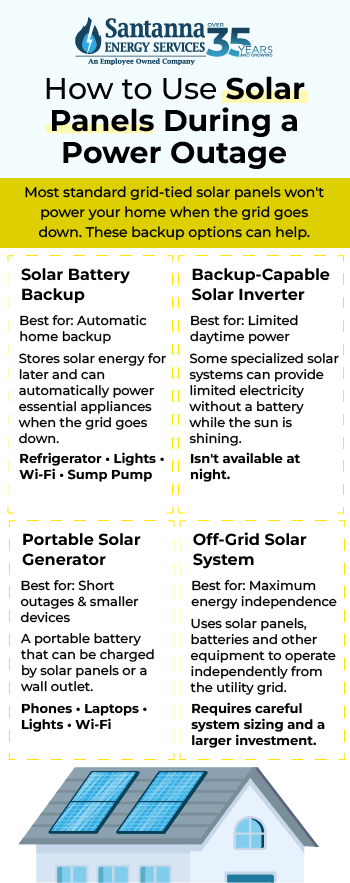
Looking to use your solar panels during a power outage? Here are some of the most common strategies:
Use a Solar Battery Backup (Best Overall)
Most homeowners who want to keep their home powered during an outage choose a solar battery backup because it automatically stores excess solar energy and supplies electricity when the grid goes down.
Industry data reported by the U.S. Energy Storage Monitor from Wood Mackenzie found that residential battery storage experienced significant growth, with a record-breaking 1.3 gigawatt-hours deployed in the first quarter of 2026, showing a significant year-over-year increase in homeowners pairing batteries with solar setups.
Santanna's energy experts see that trend continuing. In our July 2026 survey of 18 employee-owners, 78% said they believe battery storage will become more common over the next decade, while the remaining respondents said they weren't sure. None said they expected battery storage not to become more common.
We asked our employee-owners why they'd choose a home battery over a generator, and Web Architect Tyler Castle said "[Home batteries] are quieter in operation, lower maintenance, there's no fuel dependency, seamless backup, and the ability to pair batteries with solar."
For him, the value is less about financial return and more about having a "safety blanket" during an emergency.
Depending on the size of the battery and your home's energy use, it can keep essential appliances like your refrigerator, lights, Wi-Fi router, sump pump, and medical equipment running for several hours or even a day.
For many homes, solar backup power can last anywhere from about 2-27 hours, depending on battery capacity and household electricity use. A battery may power essential loads for several hours or longer.
While it has a higher upfront cost (around $12,000-$22,000) than other backup options, it's often the best choice for homeowners who want reliable, automatic backup power without relying on fuel.
Use a Backup-Capable Solar Inverter
Some solar systems use a backup-capable inverter that allows you to use a limited amount of solar electricity during a power outage, even without a battery. These systems can deliver up to 12,000 W of power and can cost anywhere from $5,000 to $12,000 depending on the unit.
Be aware that some systems only work while the sun is shining, so they won't provide electricity at night and may generate less power on cloudy days.
Although they don't offer the same level of backup as a battery system, they can be a practical option for homeowners who only want to power a few essential devices during daylight hours.
Use a Portable Solar Generator
A portable solar generator is a battery-powered unit that stores electricity and can be recharged using portable solar panels or a wall outlet before an outage.
It's designed to power smaller devices like lights, phones, laptops, Wi-Fi routers, and, in some cases, a refrigerator for a limited time and can provide backup power for 300–7200W and can cost anywhere from $ 1,000 to $ 3,000 for a model, depending on the brand.
Because it's portable and generally costs less than a whole-home backup system, it's a popular choice for emergency preparedness, camping, and short power outages.
Install an Off-Grid Solar System
An off-grid solar system operates independently from the utility grid, using solar panels and battery storage to power your home every day.
Because it doesn't rely on utility electricity, a power outage won't interrupt your home's power as long as your batteries have enough stored energy or your solar panels are generating electricity.
While this option offers the greatest energy independence, it also requires a larger investment and careful planning to make sure your home's electricity needs can be met year-round. An off-grid solar system typically costs between $40,000 and $70,000 or more for a professionally installed, whole-home system.
Pair Solar with a Gas Generator
If your solar battery becomes depleted or there's not enough sunlight to recharge it, some homeowners pair their system with a gas generator that can continue supplying electricity until utility power returns.
Gas generators can typically keep a house powered for around 24 hours and can cost around $7,000 to $15,000 to purchase.
Although generators require fuel and regular maintenance, they can provide dependable backup power for longer outages and help support larger appliances that may be difficult to run on battery power alone.
Solar Panel Backup Options During a Power Outage
| Solution | How It Works | Typical Cost | Power Capacity | Best For |
| Solar battery backup | Stores excess solar energy and automatically supplies power when the grid goes down. | About $12,000-$22,000 | Often enough for essentials for several hours to a day, depending on battery size and usage. | Homeowners who want automatic, fuel-free backup power. |
| Backup-capable solar inverter | Allows certain solar systems to provide limited daytime power without a battery when the sun is shining. | About $5,000-$12,000 | Can deliver up to 12,000W, or 12kW, depending on the system. | Powering select essentials during daylight hours. |
| Portable solar generator | Uses a portable battery that can be charged by solar panels or a wall outlet before an outage. | About $1,000-$3,000 | Typically 300-7,200W, depending on the model. | Short outages, emergency preparedness, and small devices. |
| Off-grid solar system | Operates independently from the utility grid using solar panels, batteries, and off-grid equipment. | About $40,000-$70,000 or more | Can support whole-home power when properly sized. | Maximum energy independence and homes without reliable grid access. |
| Solar paired with a gas generator | Uses a generator to provide backup power when solar production or battery storage is not enough. | About $7,000-$15,000 | Often enough for larger loads or longer outages, depending on generator size and fuel supply. | Longer outages or homes that need to support larger appliances. |
What Can Solar Panels Power During a Power Outage if They're Paired with a Backup Battery?
If your solar system includes battery backup, you may be able to keep many everyday essentials running during a power outage, but not everything in your home. What you can power depends on how your backup system is designed, how much electricity your household uses, and how much backup power is available.
Santanna employee-owner Jacob Childress said one of the biggest considerations for him is what the backup system can actually run. While a generator may be sized to support larger loads such as home cooling, he sees batteries as potentially more practical for keeping essentials like lights and refrigerators powered during an outage.
In many homes, backup power is typically used for essential appliances and devices, such as:
- Lights
- Refrigerator
- Freezer
- Wi-Fi router and modem
- Phone chargers
- Laptop or computer
- Television
- Medical equipment
- Garage door opener
Some homes with larger battery systems may also be able to power additional appliances, including:
- Microwave for short periods
- Small kitchen appliances
- Sump pump
- Well pump (if applicable)
- Window air conditioner or other smaller cooling equipment
Appliances that use a large amount of electricity are less commonly powered by residential solar backup systems, including:
- Central air conditioner
- Electric furnace
- Electric water heater
- Electric range or oven
- Electric clothes dryer
- EV charger
How much your solar system can power during an outage depends on several factors, including the size of your battery, how your system is designed, the amount of sunlight available, and how much electricity your household is using.
How to Prepare Your Solar System Before a Power Outage
The best time to prepare your solar system for a power outage is before one happens. Taking a few simple steps ahead of time can help you understand what to expect, avoid surprises, and make the most of your backup power if the lights go out.
Know What Type of Solar System You Have
Find out whether your home has a standard grid-tied system, a battery backup system, a hybrid system, or an off-grid system. This will help you understand whether your home can use solar power during an outage and how much power capacity you have if a power outage strikes.
Know Which Appliances or Circuits Have Backup Power
Not every backup system powers the entire home. Some are designed to keep only selected lights, outlets, or essential appliances running. Knowing what's included before an outage can help you plan how to use your available backup power.
Check Your Battery's Charge Before Severe Weather
If your home has battery storage and severe weather is in the forecast, make sure the battery is charged if your system allows it. Having stored energy available before a storm increases the likelihood that you'll have backup power if the utility grid goes down.
Keep Emergency Devices Fully Charged
Before a storm arrives, charge your phones, laptops, portable battery packs, flashlights, and any medical devices that require electricity. Even if your home has solar backup, it's always smart to have these devices ready in case the outage lasts longer than expected.
Review Your Solar Monitoring App
Many solar systems include a monitoring app or display that shows battery status, solar production, and system performance. Becoming familiar with this information before an outage can help you better understand how your system is performing if the power goes out.
Have Flashlights and Other Emergency Supplies Ready
Don't rely on solar backup alone. Keep flashlights, fresh batteries, bottled water, nonperishable food, and other emergency supplies in an easy-to-reach location in case the outage lasts longer than expected.
Reduce Electricity Use When Severe Weather Is Expected
If your area is expecting storms or high winds that could cause power outages, consider finishing laundry, running the dishwasher, or charging devices before the weather arrives. This can reduce the amount of electricity you'll need to use if your home switches to backup power.
Keep Important System Information Handy
Store your solar installer's contact information, equipment manuals, and warranty documents somewhere easy to access. If you have questions about how your specific system operates during or after an outage, you'll know exactly where to find the information you need.
Preparing ahead of time doesn't just help protect your backup power. It also gives you peace of mind by helping you understand how your home will respond if the electricity goes out. The more familiar you are with your solar system before an emergency, the more confident you'll be when the next outage occurs.
FAQs
Do You Need a Generator if You Have Solar Panels?
Not always, but if your solar system doesn't include battery storage or another backup power feature, you'll typically need a generator to have electricity during a utility power outage.
Can I Manually Turn My Solar Panels Back On?
No, you should not manually restart your solar system during a power outage unless your equipment manufacturer specifically instructs you to do so after utility power has been safely restored.
Can I Add Batteries to My Existing Solar Panels?
Yes, many existing solar systems can be upgraded with battery storage, although compatibility depends on your current equipment and should be confirmed by your solar installer or equipment manufacturer.
It's easy to assume that installing solar panels means your home will automatically have electricity during a power outage. In reality, what matters most isn't just having solar panels. It's how your entire solar system is designed. Homes with battery storage or other backup features may continue using electricity during an outage, while most standard grid-tied systems are designed to shut down until utility power is restored.
Knowing how your system works before the next outage can help you set realistic expectations, prepare ahead, and make informed decisions about your home's energy needs.
While backup power helps during outages, predictable electricity supply costs can help during normal months. Santanna's Unlimited Energy plan can help make your monthly electricity supply charges more predictable with fewer surprises throughout the year.*
It's another way to bring greater confidence and peace of mind to how you power your home every day. Explore our Unlimited Energy plan today because when it comes to power outages, peace of mind starts with knowing what your home can and can't do before the lights go out.
* Restrictions apply. Enrollment based upon program eligibility. Customers using more than 125% of normal monthly usage as determined by Santanna may be required to switch plans.
Brennan Lambrecht is a marketing professional with six years of experience in creating helpful content for customers. At Santanna, Brennan focuses on researching emerging energy technologies, including virtual power plants, distributed energy resources, home battery storage, and energy-grid innovation. His research is informed by direct conversations with companies operating in the virtual power plant and battery storage space, giving him valuable industry insight into how these technologies work and what they could mean for energy consumers.