

What Is an Electric Aggregation Program? How Community Aggregation Works

by Tyler Castle
Updated: September 24, 2026
16.7 min read
Key Points of This Article:
- An electric aggregation program allows a local government to negotiate electricity supply with a licensed supplier on behalf of eligible residents and small businesses.
- Some aggregation programs automatically enroll eligible residents, but participation is generally voluntary and opt-out rules vary by community.
- Before staying in or leaving an aggregation program, compare its supply rate, contract length, cancellation terms, and plan features with your utility's default supply and other available supplier options.
You find out you're enrolled in an electric aggregation program, but what exactly does that mean? Should you stay enrolled? Can you choose a different electricity supplier instead? Electric aggregation may sound complicated, but the idea behind it is actually pretty simple.
At Santanna Energy Services, we help customers navigate their energy choices every day. As an electricity supplier, we understand how electric aggregation programs work and how they can affect your options. We're here to make the topic easier to understand so you can make an informed decision.
In this guide, you'll learn how electric aggregation programs work, who can participate, how it can affect your electricity supply, the potential benefits and drawbacks, and what to consider when deciding whether the program is right for your home.
What Is an Electric Aggregation Program?
An electric aggregation program is a program in which a city, town, county, or other local government purchases electricity supply on behalf of eligible residents and small businesses by negotiating a contract with a licensed electricity supplier.
Think of it like buying electricity in bulk for an entire neighborhood instead of each family shopping on their own. By purchasing electricity for a larger group of customers, the community hopes to negotiate competitive electricity supply rates or contract terms.
Instead of each homeowner comparing electricity suppliers individually, the municipality does the negotiating for eligible residents.
Depending on where you live, you may also hear about these programs called community aggregation, municipal aggregation, or community choice aggregation (CCA). While the names may differ, they all refer to the same basic idea: a local government negotiating electricity supply on behalf of a group of eligible customers.
How Does an Electric Aggregation Program Work?
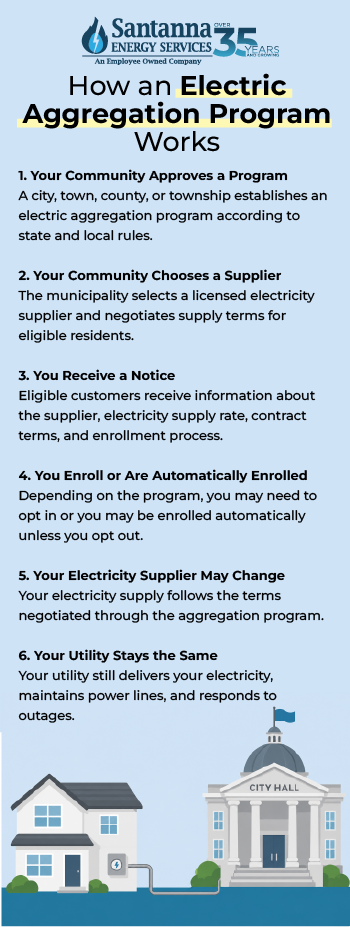
A community electric aggregation program works by having your city or town choose an electricity supplier for eligible residents. If you participate, the company that supplies your electricity may change, but your local utility and electric service stay exactly the same.
For most homeowners, the process of being enrolled in an electric aggregation program looks like this:
- Your community approves the aggregation program.
Before an aggregation program can begin, the community must first authorize it according to state and local rules. In some states, an opt-out program may require voter approval through a referendum before it can move forward. - Your city chooses an electricity supplier.
Once the aggregation program is approved, your municipality selects a licensed supplier and negotiates an electricity supply contract for eligible residents. - Once the supplier is confirmed, you’ll receive a notice about the program.
Before enrollment, you’ll receive information explaining the selected supplier, electricity supply rate, contract terms, and what action, if any, you need to take. - You may be automatically enrolled.
Eligible residents may be automatically enrolled unless they choose not to participate. Other programs may require residents to actively sign up, depending on local rules. - The supplier on your bill may change.
If you participate, the electricity supplier shown on the supply portion of your bill may change to the supplier selected by your community. Your electricity supply charge will then follow the terms of the aggregation agreement. - Your local utility stays the same.
Your utility still delivers electricity to your home, maintains the power lines, reads your meter, sends your bill in most cases, and restores power during outages. The aggregation program changes who supplies your electricity, not the utility that delivers it.
How Is Community Aggregation Different From Choosing Your Own Electricity Supplier?
The main difference is who chooses your electricity supplier. With community aggregation, your local government selects a licensed electricity supplier and negotiates an electricity supply agreement for eligible residents. When you choose your own electricity supplier, you select the supplier and plan yourself.
With community aggregation, your city, town, county, or township handles the supplier selection for the group.
When you choose your own electricity supplier, you shop for electricity supply individually. You can compare available rates, contract lengths, pricing options, and other plan features before deciding which plan works best for your home, giving you more control over your energy choice.
Who Can Participate in an Electric Aggregation Program?
Residential customers and many small businesses located within a city, town, county, or township that offers an electric aggregation program may be eligible to participate. Eligibility depends on where you live and whether your electricity account qualifies under your community’s program.
In most cases, you may be eligible if:
- You live within the boundaries of a community that has an electric aggregation program.
- You have an eligible residential or small business electricity account.
- Your account meets the participation requirements established by your community and state.
This means homeowners, renters, condominium owners, and apartment residents can all be eligible, provided they live in a participating community and have an eligible electricity account. If your landlord pays the electric bill or your building uses a master meter, the account holder rather than the individual resident is generally the one who can participate.
Does Illinois, Ohio, and Pennsylvania Have Electric Aggregation Programs?
Electric aggregation is available in Illinois, Ohio, and Pennsylvania, but the way these programs work can differ by state and community. Even if aggregation is allowed in your state, your local community must have a program before you can participate.
Electric Aggregation Program Illinois
In Illinois, municipalities and counties do have electric aggregation programs that control the electricity supply for residential customers and eligible small businesses. Both opt-in and opt-out programs are allowed, although opt-out aggregation requires voter approval through a referendum. For example, communities within the ComEd and Ameren Illinois service territories currently participate in municipal aggregation programs.
Electric Aggregation Program Ohio
Ohio does have electric aggregation programs that allow local governments to create electric aggregation programs for eligible residents and small businesses. For example, Cincinnati operated an opt-out electricity aggregation program, allowing the city to negotiate electricity supply on behalf of eligible customers while giving residents the option to opt out. Cincinnati voters approved the program in 2011.
Electric Aggregation Program Pennsylvania
Pennsylvania is different from Illinois and Ohio because community electricity purchasing does not necessarily follow the same municipal opt-out aggregation model.
Pennsylvania has a competitive electricity market where eligible customers can choose an Electric Generation Supplier (EGS) instead of receiving default electricity supply through their utility. Aggregators and suppliers that arrange electricity supply for customers are regulated by the Pennsylvania Public Utility Commission.
Some forms of group or community electricity purchasing may be available, including opt-in arrangements, but Pennsylvania homeowners should not assume they’ll be automatically enrolled in a municipal aggregation program simply because similar programs exist in Illinois or Ohio.
Is a Community Electric Aggregation Program Mandatory?
No, community aggregation is voluntary. In most programs, eligible customers are automatically enrolled unless they choose to opt out, but you typically have the right to decline participation or choose another electricity supplier if your state’s energy choice laws allow it.
This is one of the biggest reasons homeowners get confused. Receiving an enrollment letter or being automatically enrolled can make it seem like participation is required. In reality, automatic enrollment is simply how many aggregation programs are administered. It does not usually mean you’ve permanently lost the ability to make your own electricity supply choice.
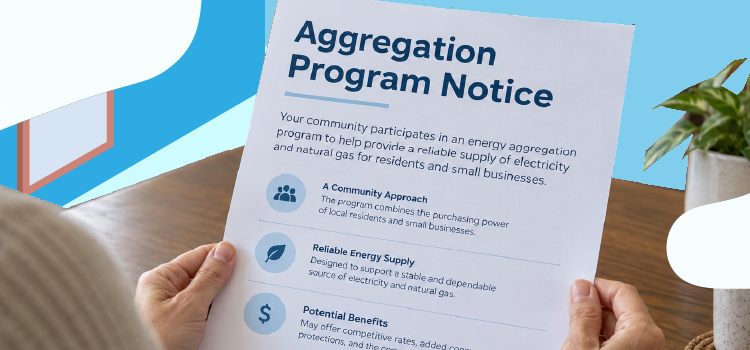
If your community starts an electric aggregation program, you’ll typically receive a notice before enrollment takes place. This letter usually explains:
- The electricity supplier selected by your municipality
- The electricity supply rate or contract terms
- When the program begins
- How and when to opt out if you don’t want to participate
If you don’t respond by the opt-out deadline, you may be enrolled automatically, depending on your community’s rules. However, automatic enrollment does not always mean you’re locked into the program. Many aggregation programs allow customers to leave later, although the process and any applicable fees depend on the program’s contract and state regulations.
For homeowners, the most important step is not to ignore the enrollment notice. Taking a few minutes to review the supplier, pricing, contract length, and opt-out instructions can help you decide whether the program fits your needs or whether you’d rather choose another electricity supply option.
Because electric aggregation programs are governed by state and local rules, enrollment procedures, opt-out deadlines, and cancellation policies can vary from one community to another.
How Do You Know If You’re Already in an Electric Aggregation Program?
The easiest way to find out if you’re already in an electric aggregation program is to check your electricity bill or look for a letter from your city or town. If you’re still unsure, your local utility or municipality can help confirm whether you’re participating.
If you don’t remember signing up, don’t worry. Many aggregation programs automatically enroll eligible customers unless they choose to opt out, so it’s common for homeowners to wonder whether they’re already participating.
Here are the easiest ways to check:
Step 1: Check Your Electricity Bill
Start with your monthly electricity bill. Look for the section that lists your electricity supplier or electricity supply charges.
If the supplier listed is different from your utility’s default electricity supplier, your electricity may be supplied through a community aggregation program or another electricity supplier you previously selected.
Step 2: Look for a Letter From Your Municipality
If your community has an aggregation program, you should receive a notice before you’re enrolled. The letter typically explains:
- The electricity supplier selected by your community
- The electricity supply rate and contract length
- When the program begins
- How to opt out, if applicable
If you still have this letter, it can quickly confirm whether you’re part of the program.
Step 3: Visit Your Municipality’s Website
Many cities, towns, and counties post information about their aggregation program on their official website. You can usually find the current electricity supplier, contract information, and enrollment details there.
Step 4: Contact Your Utility or Municipality
If you’re still not sure, call your local utility or your municipality. They can tell you whether your electricity account is participating in an aggregation program and answer any questions about your options.
Once you know who currently supplies your electricity, you’ll be in a better position to compare your available options and decide whether staying in the aggregation program or choosing another electricity supplier is the right choice for your home.
How Do You Opt Out of an Electric Aggregation Program?
You can usually opt out of an electric aggregation program by following the instructions from your municipality or the supplier managing the program. The exact process and deadlines vary by community, so check your specific program before making a change.
- Find your aggregation program information.
Check the enrollment notice you received or visit your municipality’s official website to find your program’s supplier, opt-out instructions, and any deadlines. - Review the opt-out terms.
Find out whether you can leave at any time, whether a deadline applies, and whether there are any cancellation fees or other conditions. - Submit your opt-out request.
Follow the program’s instructions, which may allow you to opt out online, by phone, or by mail. - Confirm what happens to your electricity supply.
After leaving the program, you may return to your utility’s default supply service or choose another licensed electricity supplier, depending on the options available where you live.
Opting out of aggregation does not shut off your electricity. Your local utility continues delivering electricity to your home, maintaining the power lines, and responding to outages regardless of who supplies your electricity.
Does Community Aggregation Save Money?
Community aggregation may help some homeowners lower their electricity supply costs, but it does not guarantee savings.
According to the E.P.A, some Community Choice Aggregation (CCA) programs, energy rates can be 15% to 20% lower than the residential retail price for electricity for those not in an aggregation program.
However, whether you pay less, more, or about the same depends on your community’s negotiated electricity supply rate, your utility’s default supply rate, market conditions, and when the contract was signed.
The best way to know if your aggregation program offers good value is to compare its electricity supply rate and contract terms with your other available electricity supply options.
Electric Aggregation: Pros and Cons
Electric aggregation programs can offer convenience and competitive electricity supply options, but they may not be the best fit for every homeowner. Understanding both the potential benefits and drawbacks can help you decide whether staying in your community’s program makes sense for your household.
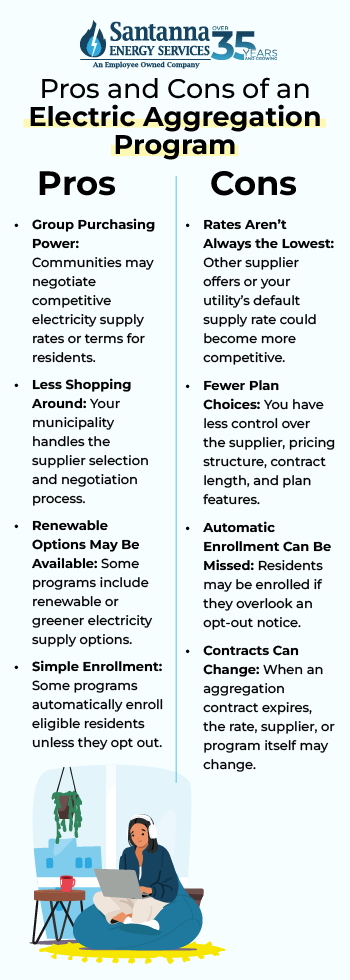
Here are some of the most noteworthy pros and cons of an aggregation program:
The Pros of an Energy Aggregation Program
- Negotiated purchasing power: By purchasing electricity supply for a large group of eligible residents, municipalities may be able to negotiate competitive electricity supply rates or contract terms that individual homeowners might not receive on their own.
- Convenience: Your municipality handles the bidding process and selects an electricity supplier for the community, so you don’t have to spend time researching and comparing multiple suppliers yourself.
- Renewable electricity options in some communities: Some aggregation programs choose electricity suppliers that offer renewable electricity or greener energy options. These programs vary by municipality, so availability depends on where you live.
- Simplified enrollment: In many communities, eligible residents are automatically enrolled unless they choose to opt out. This can make participating in the program easier, especially for homeowners who prefer a hands-off approach.
The Cons of an Energy Aggregation Program
- Rates may not always be the lowest: A community’s negotiated electricity supply rate may be competitive when the contract begins, but market conditions can change over time. That means another supplier or your utility’s default supply rate could become a better value later.
- Limited plan flexibility: Because the municipality negotiates one electricity supply contract for the community, you generally have fewer choices than if you selected your own licensed electricity supplier.
- Automatic enrollment can surprise residents: Some homeowners may not realize they’re being enrolled if they overlook the notice sent by their municipality. Reading enrollment letters carefully can help you understand your options before any changes take effect.
- Contracts eventually expire: Community aggregation contracts have end dates. When a contract expires, your municipality may negotiate a new agreement, select a different supplier, or end the program, so it’s worth reviewing any renewal notices you receive.
What Happens When Your Aggregation Contract Ends?
When your community’s aggregation contract ends, your municipality may negotiate a new electricity supply agreement, select a different supplier, or end the aggregation program altogether. What happens next depends on your community’s policies and the terms of the program.
In many cases, homeowners receive a notice before any changes take effect. This notice may explain the new electricity supply rate, the length of the next contract, whether you’ll remain enrolled, and any deadlines for opting out if you prefer another electricity supply option.
If your municipality renews the program, eligible residents may continue participating under the new contract unless they choose to opt out, depending on local rules. If the community decides not to renew the program, your electricity supply may return to your utility’s default supply service or follow another process outlined in the program’s terms.
Before a new contract begins, it’s a good idea to review your options rather than assuming the renewal is automatically the best choice. Comparing the updated electricity supply rate, contract terms, and other available electricity plans can help you decide whether staying in the aggregation program or choosing a different licensed electricity supplier better fits your household’s needs.
Can You Leave an Electric Aggregation Program Early?
Yes, many electric aggregation programs allow you to leave after you’re already enrolled, but the rules depend on your community’s program and contract. Some programs let residents leave at any time without a cancellation fee, while others may have specific terms or procedures for leaving early.
If you decide the program is no longer right for you, check your municipality’s website or aggregation agreement for cancellation terms and instructions. You’ll also want to confirm where your electricity supply will come from next, since you may return to your utility’s default supply service or choose another licensed electricity supplier, depending on your state’s rules.
Leaving an aggregation program does not interrupt your electric service. Your local utility continues delivering electricity to your home regardless of who provides your electricity supply.
How to Decide Whether an Aggregation Program Is Right for You
An electric aggregation program may be right for you if its supply rate, contract terms, and plan features fit your household better than the other electricity supply options available to you. There isn’t one best choice for every homeowner, so compare what’s available before deciding.
Choose an Aggregation Program If…
- You prefer having your community select and negotiate with an electricity supplier on your behalf.
- The aggregation supply rate is competitive with your utility’s default supply rate and other available offers.
- You’re comfortable with the program’s contract length, pricing, and other terms.
- The program meets your energy preferences, such as renewable electricity options.
Consider Opting Out If…
- You find another electricity supply option that better fits your household.
- You want more control over choosing your supplier, rate, contract length, or plan features.
- The aggregation rate is no longer competitive with other options available to you.
- You’re not comfortable with the program’s contract terms or upcoming changes.
Stay With Your Utility’s Default Supply If…
- You don’t want to participate in aggregation or choose a separate electricity supplier.
- Your utility’s default supply rate and terms work well for your household.
- You prefer not to enter a separate electricity supply contract.
Before making a change, compare the supply rate, contract terms, cancellation rules, and plan features of each option. The right choice is the one that best fits your household and the electricity supply options currently available where you live.
FAQs
Is community aggregation the same as my electric utility?
No, community aggregation chooses your electricity supplier on behalf of eligible customers, while your electric utility continues delivering electricity, maintaining the power lines, and restoring outages.
Will my electricity shut off if I leave an aggregation program?
No, leaving an aggregation program does not interrupt your electric service because your local utility continues delivering electricity regardless of who supplies it.
What if my municipal aggregation offer is costing me more?
If your aggregation rate is higher than other available electricity supply options, compare your current offer with your utility’s default supply rate and other licensed suppliers to determine whether switching makes sense.
Is an Electric Aggregation Program the same as a Virtual Power Plant?
No, an electric aggregation program combines customers to purchase electricity supply as a group, while a virtual power plant connects and coordinates home energy resources, such as batteries, solar panels, or smart devices, to help manage electricity demand or supply power to the grid.
Community aggregation is simply one way to purchase electricity supply, and whether it’s the right choice depends on your community’s program, the available electricity supply options, and what matters most to your household. Before making a decision, take time to understand your current electricity supplier, compare your options, and review the contract terms so you know exactly what you’re signing up for.
If you’re exploring alternatives to your community’s aggregation program, Santanna’s Unlimited Energy Plan is an electricity supply option worth considering. It offers a predictable electricity supply charge throughout your plan term, helping reduce surprises on the supply portion of your bill while giving you the confidence to choose the electricity plan that best fits your home. Explore Santanna’s Unlimited Energy Plan to see if it’s the right option for your energy needs.
Tyler is an experienced energy professional, having worked for Santanna Energy Services, for the past four years. He is passionate about renewable energy and believes that diversifying the energy grid is the key to a sustainable future. Tyler is dedicated to supplying consumers with the best possible energy solutions and works diligently to make sure that Santanna can deliver the highest quality service.