
Why Is My Room So Cold? 11 Common Causes and How to Fix Them

by Jenna Mendez
Updated: November 2, 2026
18.9 min read
Key Points of This Article:
- Blocked vents, dirty filters, ductwork issues, drafts, poor insulation, room location, and thermostat placement can all be reasons why your room is so cold.
- Start with simple checks like clearing vents, replacing the filter as recommended, and looking for drafts before turning up the thermostat for the whole house.
- Temporary warmth can help warm up your cold room, but regularly using a 1,500-watt space heater for four hours a day could add about $33 to a monthly electricity bill at an 18.34¢-per-kWh rate.
- A bedroom can feel comfortably cool around 60°F to 67°F for many adults, but call an HVAC or insulation professional if the room stays cold after basic checks or shows signs of weak airflow, duct problems, or heat loss.
It can be frustrating when the heat is running, yet one bedroom, a bonus room, or the space above the garage still feels uncomfortable. The cause could be as simple as a covered vent or as involved as an insulation, ductwork, or heating-system problem.
At Santanna, our employee-owners know what it's like to experience cold Midwest winters too, and we know how uneven heating can affect your comfort and energy use. We're here to help you understand why your room stays cold, identify the possible causes, and decide what you can safely do to warm it up.
Why Is My Room So Cold? 11 Possible Causes
Your room may stay cold because it is not getting enough warm air, is losing heat faster than nearby rooms, or is farther from the thermostat and heating system. The cause may involve airflow, ductwork, drafts, insulation, room design, or the way your thermostat controls the heat.
Here are 11 possible causes to check:
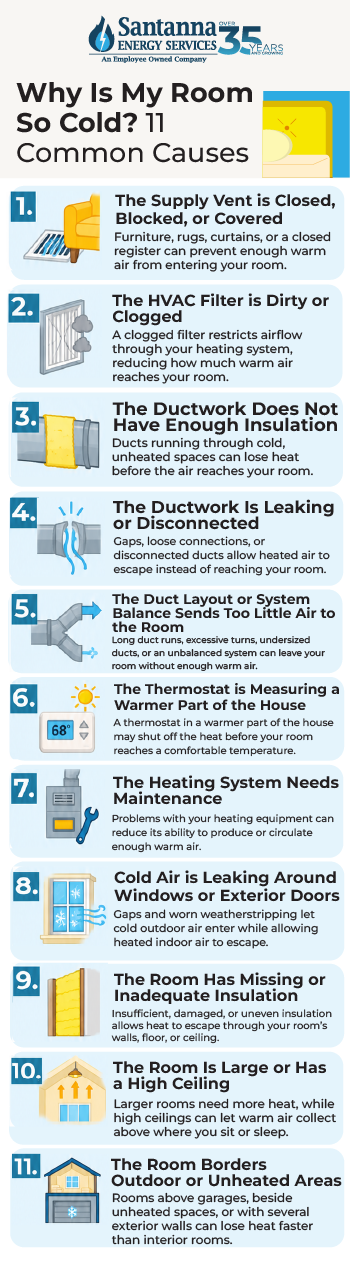
1. The Supply Vent is Closed, Blocked, or Covered
A closed, blocked, or covered supply vent can keep enough warm air from entering the room. Furniture, rugs, curtains, toys, and other household items can cover a vent without you realizing it.
For example, a bed placed over a floor vent can block or redirect warm air before it spreads through the room. Even a partly closed register can reduce the heat the room receives.
2. The HVAC Filter is Dirty or Clogged
A dirty HVAC filter can restrict airflow in a forced-air heating system. When less air moves through the system, less heated air may reach the rooms in your home. This often affects more than one room. But a room that already gets weaker airflow may feel colder first. You may also notice weaker airflow from several vents.
And a dirty air filter can affect your energy efficiency. According to the Department of Energy, a dirty air filter can increase your HVAC's energy consumption by 5-15%.
3. The Ductwork Does Not Have Enough Insulation
Ductwork that runs through a cold attic, garage, crawl space, or other unheated areas can lose heat if it lacks sufficient insulation. Air may still reach the room, but it may feel cooler than the air coming from nearby vents.
Adding proper attic insulation can reduce your home's total energy spending by around 10% and improve heat retention.
4. The Ductwork Is Leaking or Disconnected
A duct leak, loose connection, or disconnected duct section can allow heated air to escape before it reaches the room. That can leave the room with much less airflow than expected, making it seem colder than others.
One vent that is consistently weak may indicate a problem with the duct serving that room. Since much of the ductwork is hidden behind walls, ceilings, or floors, an HVAC professional may need to inspect it.
5. The Duct Layout or System Balance Sends Too Little Air to the Room
Your heating system may create enough warmth but still distribute it unevenly. A long duct run, too many turns, an undersized duct branch, or an unbalanced system can leave one room with less warm air.
For example, a room near the furnace may warm up quickly while a distant bedroom stays cold. In this case, the air may not be leaking. The system may simply not be sending enough of it to that room.
6. The Thermostat is Measuring a Warmer Part of the House
Your thermostat measures the temperature where it is installed, not the temperature in every room. If it is in a warmer hallway, near sunlight, or close to a heat source, it may reach its set temperature before your cold room feels comfortable.
When that happens, the thermostat tells the heating system to turn off. This can leave distant rooms or rooms that lose heat faster feeling colder than the rest of the house.
7. The Heating System Needs Maintenance
A heating system that needs maintenance may struggle to produce or distribute enough warm air throughout your home. In a forced-air system, an issue with the blower, controls, or another internal component can cause weak airflow or uneven room temperatures.
This is more likely when several rooms feel cold, your home cannot maintain the thermostat setting, or the system runs for unusually long or short cycles. An HVAC professional can inspect the equipment and identify whether maintenance or repair is needed.
8. Cold Air is Leaking Around Windows or Exterior Doors
Gaps around windows, exterior doors, frames, or worn weatherstripping can let cold outdoor air in and allow heated indoor air to escape. You may notice a draft near the window or door, especially on a windy winter day.
Older windows can contribute to heat loss, but age alone does not mean they need to be replaced. Sometimes worn seals or gaps around the frame are the bigger issue.
9. The Room Has Missing or Inadequate Insulation
Missing, damaged, compressed, or uneven insulation can make it harder for a room to hold onto heat. The walls, floor, or ceiling may feel unusually cold, and the room may cool down soon after the heating system turns off.
This can affect only one room, especially if it was added later, sits above an unheated space, or was finished differently from the rest of the home.
10. The Room Is Large or Has a High Ceiling
A large room needs more heat than a smaller room. If it does not receive enough warm air for its size, it may take longer to warm up or stay cooler than nearby rooms.
High ceilings can also allow warm air to collect above where you sit or sleep. Room size alone does not mean anything is wrong, but it can increase the amount of heat the space needs.
11. The Room Borders Outdoor or Unheated Areas
Rooms next to more outdoor or unheated areas can lose heat faster than interior rooms. This is common in rooms above garages or crawl spaces, finished attics, additions, and corner rooms with several exterior walls.
Rooms that receive little winter sunlight may also miss some daytime warmth. Still, room location is not always the whole answer. Insulation, air sealing, window condition, and airflow all affect how well a room holds heat.
Once you have a clearer idea of what may be causing the problem, you can start with simple checks rather than immediately raising the thermostat or assuming you need a new heating system.
Why Is Your Room So Cold? Start With These Clues
| What you notice | Possible causes | What to check first |
| Little or no air comes from one vent while other rooms have good airflow. | A closed or blocked vent; leaking, disconnected, or restricted ductwork. | Make sure the vent is open and furniture, rugs, or curtains are not covering it. |
| Airflow feels weak from several vents. | A dirty HVAC filter or a heating-system airflow problem. | Check the filter and make sure supply and return vents are unobstructed. |
| Air reaches the room but feels cooler than air from nearby vents during the same heating cycle. | Heat loss from ducts running through unheated areas, possibly because of inadequate duct insulation or leaks. | Note which vents feel cooler and whether they serve rooms above or beside unheated spaces. |
| A distant room has always received less airflow than rooms closer to the heating system. | A long or restrictive duct run, an undersized duct branch, or uneven system balance. | Compare airflow from the room’s open, unobstructed vent with airflow in nearby rooms. |
| The heat shuts off while the room is still cold, but the area around the thermostat feels warm. | Thermostat location or differences in how quickly rooms warm up and lose heat. | Check whether sunlight or a nearby heat source warms the thermostat area. |
| You feel drafts near windows or exterior doors, especially on windy days. | Gaps around frames or worn weatherstripping. | Look for visible gaps and loose, damaged, or missing weatherstripping. |
| The room warms up but cools quickly after the heat shuts off. | Air leaks, inadequate insulation, or greater exposure to outdoor or unheated areas. | Notice drafts, unusually cold surfaces, and whether the room sits above a garage or beside an unheated space. |
| A large room or room with a high ceiling stays chilly where you sit or sleep. | Warm air collecting overhead or insufficient heat reaching the occupied part of the room. | Notice whether the chill is concentrated near the floor and whether smaller nearby rooms warm up faster. |
| Several rooms—or the whole house—stay below the thermostat setting. | A heating-system problem, restricted airflow, or substantial heat loss. | Check the thermostat settings and, for forced-air systems, the filter and vents. Note unusual heating cycles or changes in performance. |
What If Your Home Has Radiators or Baseboard Heat?
| Heating type | Why one room might stay cold | What to check first |
| Hot-water radiators | Trapped air, a valve problem, or uneven hot-water circulation may prevent a radiator from heating properly. | Check that furniture or curtains are not blocking heat from spreading. Note whether one radiator stays cold while others warm up. |
| Steam radiators | An air-vent, valve, or steam-distribution problem may keep a radiator from receiving enough steam. | Notice whether the radiator heats during a heating cycle and report persistent cold spots, leaks, or unusual banging to a heating professional. |
| Hot-water baseboard heat | Blocked airflow around the baseboard, dust buildup, or a water-circulation or heating-zone problem may reduce warmth. | Check for furniture or curtains obstructing the unit and make sure adjustable louvers are open, if your model has them. |
| Electric baseboard heat | A thermostat, power-supply, or heater problem may prevent the unit from producing enough heat. Obstructions can also limit heat circulation. | Check the thermostat setting and keep the clearances specified by the manufacturer around the heater. |
How Can You Prevent a Room From Becoming Too Cold?
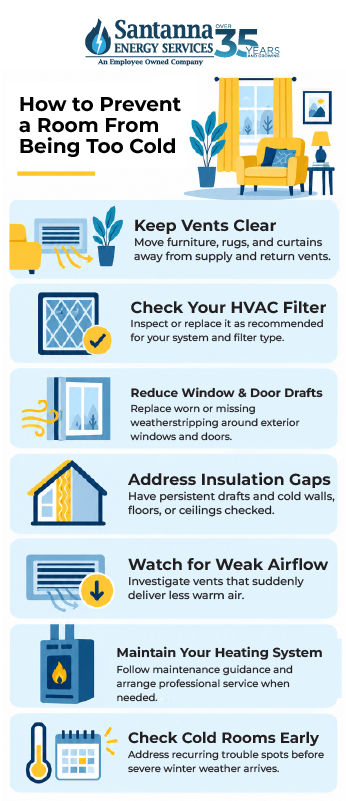
You can help prevent a room from becoming too cold by keeping the airflow clear, replacing your HVAC filter as recommended, reducing drafts, and fixing any known issues with insulation or the heating system. Checking these areas before winter can help you catch small problems before severe weather makes them more noticeable.
Let's take a closer look at the simple steps that can help keep a room from becoming too cold:
Keep Supply and Return Vents Unobstructed
Keep furniture, rugs, curtains, and other household items away from supply and return vents. Supply vents send warm air into the room, while return vents help air circulate back to the heating system.
A blocked vent can make it harder for the room to warm up and may affect airflow throughout your home.
Inspect or Replace the HVAC Filter
Check your HVAC filter based on the schedule recommended for your system and filter type. A dirty filter can restrict airflow and make it harder for warm air to reach every room.
If several vents have weaker airflow than usual, the filter is one simple place to start.
Check Weatherstripping Around Windows and Doors
Look for worn, loose, or missing weatherstripping around exterior windows and doors. Replacing damaged weatherstripping can help reduce drafts and keep more heated air inside the room.
You may notice the difference most on windy days or in rooms near exterior doors.
Address Known Air Leaks and Insulation Gaps
Do not ignore places where you regularly feel a draft or notice cold walls, floors, or ceilings. Air sealing or insulation improvements may help the room hold heat more effectively.
If you are unsure where the heat loss is coming from, a qualified professional can help identify the issue.
Watch for Changes in Airflow
Pay attention if air from a vent suddenly feels weaker than it used to or much weaker than airflow from nearby vents. A change may indicate a blocked vent, a dirty filter, a duct problem, or a heating-system issue that needs attention. This can help you proactively spot issues that could lead to a colder-than-usual room.
Arrange Appropriate Heating-System Maintenance
Regular heating-system maintenance can help identify airflow and equipment problems before they affect your comfort. Follow the maintenance guidance for your system, and contact a qualified HVAC professional when an inspection or repair is needed.
Check Problem Rooms Before Severe Winter Weather Arrives
If a room was hard to heat last winter, check it before temperatures drop again. Look at the vents, HVAC filter, windows, doors, and other known trouble spots early, so you have time to address the problem before you need the room most.
These steps can help warm air move more easily through your home, reduce unnecessary heat loss, and keep the room more comfortable throughout winter.
How to Keep Yourself Warm in a Cold Room Without Raising the Thermostat
Still cold even though the heat is on? You may be able to feel more comfortable without raising the thermostat for the whole house.
Try layering clothes, using a blanket or another appropriate warming product, moving around for a few minutes, or warming the spot where you are sitting. These steps can deliver temporary comfort while you look into why the room stays cold.
Here are a few quick ways to warm up without immediately raising the whole-home thermostat.
Dress in Warm Layers
Wear several comfortable layers that you can add or remove as needed. Warm socks, slippers, long sleeves, and a sweater can help you hold onto body heat while you work, relax, or sleep.
Use an Extra Blanket
Cover yourself with a regular blanket when sitting or resting. Adding a blanket to your bed may also help you stay comfortable at night, as long as you do not become too warm while sleeping. If you're trying to keep an infant warm, be cautious about how many blankets you use; skin-to-skin contact for extra warmth is more widely recommended.
Warm Clothes or a Blanket in the Dryer
If the care label allows it, you can briefly warm pajamas, socks, or a regular blanket in the dryer before using them. Remove the items once they feel comfortably warm.
Do not put an electric blanket or another heated product in the dryer unless the manufacturer specifically says it is safe to do so.
Use an Electric Blanket
An electric blanket can warm you directly without heating the entire room. Before using one, look for damaged cords, worn fabric, or exposed wires. Follow the manufacturer's instructions for placement, temperature settings, washing, and overnight use.
Stop using any heated product that is damaged or has been recalled , and do not use a heated blanket on an infant.
Use a Hot Water Bottle
A covered hot water bottle can provide warmth while you sit or rest. Check it for cracks, leaks, or other damage, and never fill it with boiling water. Keep it covered and avoid placing it directly against bare skin to reduce the risk of burns.
Move Around for a Few Minutes
Light movement can help your body feel warmer. Try walking around the room, stretching, or completing a simple household task instead of staying still for long periods of time.
Have a Warm Drink or Meal
A warm drink, soup, or meal can provide short-term comfort in a chilly room. Handle hot liquids carefully, especially around children and pets.
Use a Space Heater for Temporary Warmth
An electric space heater can provide focused warmth while you are using the room, but it will add to your electricity use and will not fix the reason the room is cold. Follow the manufacturer's instructions and basic space heater safety guidance to use this appliance properly.
These ideas can help you feel more comfortable for now. But if one room stays much colder than the rest of your home, it is still worth finding the cause.
Is It Healthy to Sleep in a Cold Room?
A comfortably cool room can be good for sleep, but feeling cold enough to shiver or struggle to stay warm is not. The goal is to feel comfortably cool in bed, not uncomfortably cold.
For most adults, a bedroom temperature between 60°F and 67°F is often recommended for sleep. But there is no single perfect temperature for everyone. Your age, health, bedding, sleepwear, and personal comfort all matter.
Your room may be too cold for sleep if you wake up repeatedly, cannot stay warm with normal bedding, or find that your hands and feet feel unusually cold. A room that is too cold can make it harder to get comfortable and stay asleep.
Infants, older adults, and people with certain health conditions may need extra care in cold weather. The Centers for Disease Control and Prevention says that infants under one year old should never sleep in a cold room because they lose body heat more easily than adults. The CDC also notes that older adults often produce less body heat and should ensure their homes stay properly heated during extreme cold.
So, if one bedroom is much colder than the rest of your home, do not assume it is simply better for sleep. Look for blocked vents, drafts, low airflow, or insulation issues to keep the room comfortably cool without getting too cold.
Can a Cold Room Increase Your Energy Bills?
No matter how you heat your home, a cold room may increase both your heat and your electricity bill.
When your room is colder than others, your furnace or boiler may burn more gas as it runs longer to reach a higher temperature setting. Meanwhile, using an electric space heater to heat up a cold room adds to your electricity costs. Depending on how you heat the room, your efforts to stay comfortable could affect one or both bills.
Room Still Cold? When Should You Call an HVAC or Insulation Professional for the Bigger Issues?
Simple checks can solve some cold-room problems. But if you have cleared the vents, checked the filter, and addressed obvious drafts without much improvement, the issue may be deeper than a quick adjustment.
Have you tried those steps, and the room is still cold? It may be time to call a qualified professional. You may also need help if very little warm air reaches the room, or you suspect a problem with the ductwork, insulation, or heating equipment.
The right professional depends on what you notice. An HVAC professional can check how your system produces and delivers warm air. An insulation or home energy professional can help identify places where the room may be losing heat.
Call an HVAC Professional When…
- Little or no warm air comes from the vent.
- Airflow remains weak after you replace the filter and clear the vents.
- You suspect that ductwork is leaking, crushed, damaged, or disconnected.
- Several rooms remain cold.
- The heating system cannot maintain the thermostat setting.
- The system runs for unusually long periods.
- The system turns on and off more frequently than usual.
- The room has suddenly become colder than it was before
An HVAC professional can inspect the system and determine whether the problem involves the equipment, ductwork, airflow, or system balance. Do not assume you need a larger furnace just because one room is cold. Uneven heating can have several possible causes.
Call an Insulation or Home Energy Professional When:
- Walls, ceilings, or floors stay unusually cold.
- Drafts continue after simple weatherstripping checks.
- The room is above a garage, crawl space, or another unheated area.
- A finished attic, bonus room, or home addition has always been difficult to heat.
- The room becomes warm but cools down quickly.
- The problem becomes much worse during severe winter weather.
A home energy assessment can help identify hidden air leaks and insulation gaps before you spend money on improvements. That can give you a clearer idea of what needs attention and which type of work may make the biggest difference.
Frequently Asked Questions About Cold Rooms
Do Humidifiers Make a Room Colder?
No, a humidifier does not directly lower the room temperature. It adds moisture to the air, which may change how the room feels, but it will not correct drafts, poor insulation, or weak airflow.
Should I Close Vents in Other Rooms to Make One Room Warmer?
No, closing several vents is not a reliable way to direct more heat into a single cold room. It may interfere with the airflow your heating system was designed to maintain. Keep vents open unless a qualified HVAC professional recommends a specific adjustment.
Can a Smart Thermostat Fix One Cold Room?
A smart thermostat cannot repair blocked vents, leaky ducts, drafts, or poor insulation. Compatible room sensors may help the system monitor temperatures in different areas, but the underlying airflow or heat-loss problem may still need attention.
Will Replacing My Windows Fix a Cold Room?
Replacing windows may help when damaged or poorly performing windows are a major source of heat loss, but it is not always necessary. The problem may come from worn weatherstripping, gaps around the frame, poor insulation, or weak airflow, so identify the cause before paying for replacement windows.
One cold room does not always mean your entire home needs more heat or that your heating system is failing. Often, the best place to start is with simple checks, such as opening vents, improving airflow, checking the filter, and looking for drafts. Finding the cause can help you make the room more comfortable without overheating the rest of your home.
Once you know what your room needs, you may also want more predictability in planning for household energy use during winter. With a Santanna Unlimited Energy plan, your monthly supply charge stays predictable during the plan term, even when your energy use changes.* Explore Unlimited Energy plan and enjoy fewer supply charge surprises through the seasons.
A more comfortable room and a more predictable supply charge can help winter feel a little easier.
* Restrictions apply. Enrollment based upon program eligibility. Customers using more than 125% of normal monthly usage as determined by Santanna may be required to switch plans.
Jenna Mendez is an experienced energy content professional who has spent four years researching, writing, and managing authoritative educational content for Midwest energy consumers at Santanna Energy Services. As a lifelong Illinois resident, Jenna brings firsthand knowledge of the region’s climate, communities, and household energy needs to her work.
She specializes in translating complex energy topics into clear, practical guidance about electricity and natural gas costs, appliance energy use, energy efficiency, and everyday home living. Drawing on industry research, Santanna customer data, and insights from experienced energy professionals, Jenna incorporates this knowledge into her content to help homeowners better understand their energy choices and make informed decisions for their households.