

How Long Does a Dishwasher Run? Average Times & More

by Tyler Castle
Updated: August 17, 2026
6.9 min read
Key Points of This Article:
- Most dishwasher cycles run between 1.5 and 4 hours, with older models taking longer and newer models operating more efficiently.
- Understanding cycle times helps improve energy and water efficiency, extend the appliance’s lifespan, and ensure dishes are cleaned effectively.
- Factors such as load size, soil level, water temperature, detergent type, and dishwasher maintenance all influence how long a cycle takes and how well the dishwasher performs.
Wondering how long your dishwasher runs on a typical cycle? Whether you’re waiting to unload clean dishes or trying to manage your household energy usage, understanding the average dishwasher run time can help. We’ll break down how long a dishwasher typically runs, what factors influence the cycle length, and how you can optimize its performance for efficiency and convenience.
How long does a dishwasher run?
Most dishwashers can run 1.5-4 hours. The exact length of your dishwashing cycle will depend on your model and what cycle you choose to wash your dishes. One of the biggest considerations that affects how long your dishwasher will run depends on the age of your appliance.
The older the dishwasher you have the less efficient and slower your dishes will take to clean. Older models need to work harder to get the job done, while newer ones are designed to operate more efficiently.
How long should a dishwasher cycle take?
Even at the heaviest cycle, your dishwashing cycle should take no more than 4 hours. If your dishwasher is taking longer than this, it might be time to purchase a new model.
How long is the average dishwasher cycle?
The average dishwasher cycle typically lasts between 1.5 to 2.5 hours. However, this can vary depending on the model and cycle type. Standard cycles generally fall within this range, while quick or express cycles may take as little as 30 to 60 minutes.
How long does a dishwasher run on normal cycle?
On a “normal” cycle, a dishwasher runs for two hours. A normal cycle on a dishwasher is designed for everyday dishwashing needs, cleaning standard loads of moderately soiled dishes. It’s recommended that dishwashers filled at a normal capacity should use the “normal” cycle.
Types of dishwasher cycles
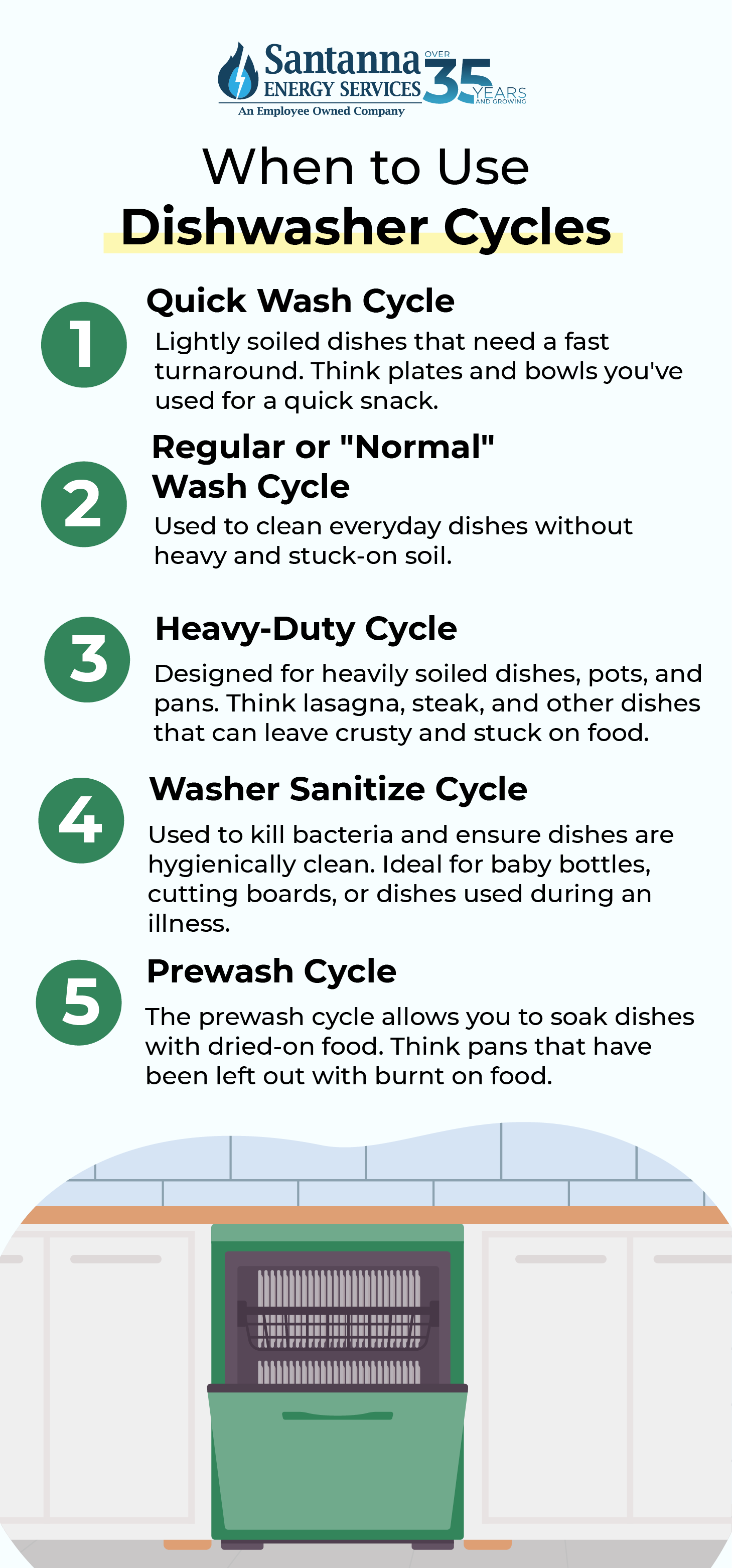
Modern dishwashers come with a few different cycles that clean for different residues. Knowing which cycle to choose for each type of residue can make a big difference in cleaning efficiency and resource usage. Here’s a breakdown of some of the most common cycles, their lengths, and what conditions they should be used for:
Quick wash cycle
The quick wash cycle is perfect for lightly soiled dishes that need a fast turnaround. This cycle is ideal for everyday use when time is short or dishes that don’t have baked-on food. Think plates and bowls you’ve used for a quick snack.
How long is a quick wash cycle? Quick wash cycles typically take an hour to run but some models can get the job done as fast as a half hour. Quick washes tend to use less water and energy because of their short runtime.
Regular or “normal” wash cycle
Regular cycles can be used to clean everyday dishes without heavy and stuck-on soil. This cycle type provides a balance between energy efficiency and effective cleaning. A typical regular wash cycle lasts between 1.5 to 2.5 hours, offering a thorough clean without excessive resource consumption.
Heavy-duty cycle
A heavy-duty cycle is specifically designed for heavily soiled dishes, pots, and pans that require extra cleaning power. Think lasagna, steak, and other dishes that can leave crusty and stuck on food. The heavy-duty dishwashing cycle uses high water pressure and scalding temperatures to handle baked-on food.
How long is a heavy-duty wash cycle? A heavy-duty wash cycle generally runs between 2 to 3.5 hours, depending on the dishwasher.
Washer sanitize cycle
The washer sanitize cycle is used to kill bacteria and ensure dishes are hygienically clean, making it ideal for items like baby bottles, cutting boards, or dishes used during an illness. This cycle also raises the dishwasher temperature to sanitize dishes and glassware. The washer sanitize cycles can add 1.5 hours to your cycle. Depending on the model, the sanitize cycle can last up to 3 hours because of the extended heating and cleaning process.
Prewash cycle
What is a prewash cycle? The prewash cycle allows you to soak dishes with dried-on food. Think of the pan that you left out for a few days you’ve used to cook chicken; this is the cycle you’ll want to use to clean this pan. The prewash cycle helps loosen debris so that the main cycle can clean more effectively.
The prewash cycle is short, usually around 10 to 15 minutes. Using the prewash first can improve the performance of the main wash by reducing the strain on it, leading to potentially cleaner dishes and shorter cycles.
Can I open my dishwasher mid-cycle?
You can open your dishwasher mid-cycle. Please note that this could interrupt your current cycle, and you may need to manually restart the machine. Depending on when you interrupt the cycle, look out for safety concerns like hot water leakage, hot steam, and hot dishes.
How often should you run your dishwasher?
How often you should run your dishwasher depends on your household’s size and dishwashing needs. For a typical family, running your dishwasher every day is pretty common. If you live alone or in a smaller household, you may only need to run it every two to three days. To keep your dishwasher running efficiently, Cascade recommends running your dishwasher once a week to keep things moving.
Should I run my dishwasher every night?
Running your dishwasher every night can be a good habit if you generate enough dirty dishes throughout the day to fill it. This routine ensures that you start each day with clean dishes and avoid letting dirty dishes pile up.
According to Cascade, running your dishwasher with as few as eight dishes is all it takes to save water. While running your dishwasher every night might not be necessary, consistently running your dishwasher can contribute to water conservation.
The best time to run the dishwasher
The best time to run your dishwasher is during off-peak energy hours. Off-peak energy hours are typically late at night or early in the morning. Additionally, operating your dishwasher during times of lower energy demand can significantly contribute to reducing the overall strain on the power grid.
How does cycle time affect energy efficiency?
Longer cycles generally use more energy because of their extended heating and drying times, as well as additional water usage. Heavy-duty cycles, which tackle tough stains, often require more time and energy compared to quick wash cycles.
Modern dishwashers often feature energy-efficient cycles designed to balance cleaning performance with reduced energy consumption. By selecting the appropriate cycle based on the load’s soil level, you can optimize both cleaning effectiveness and energy use.
Average energy consumption of a dishwasher
The average energy consumption of a dishwasher varies depending on the cycle used, and your unit’s efficiency. To determine how much energy a dishwasher uses, let’s discuss kilowatt hours. A kilowatt hour (kWh) is the metric utility companies use to gauge how much electricity you use over time. For every 1000 watts you use, this equals one-kilowatt hour of energy used.
Next, you’ll need to determine the amount of watts your dishwasher uses. According to Finish, the average dishwasher uses only about 1800 watts per cycle. Using this average, here is the approximate energy consumption based on different wash cycles and their average run times:
Average Dishwasher Energy Consumption by Cycle Type
| Dishwasher Cycle | Average Time | Average Wattage (Watts) | Energy Consumption (kWh) |
|---|---|---|---|
| Quick Wash | 30 minutes | 1800 | 0.9 kWh |
| Regular Wash | 2 hours | 1800 | 1.8 kWh |
| Heavy/Heavy-Duty | 3 hours | 1800 | 2.7 kWh |
| Sanitize | 2.5 hours | 1800 | 2.3 kWh |
| Prewash | 15 minutes | 1800 | 0.5 kWh |
There’s peace of mind in knowing you’ll pay the same monthly supply cost amount for your electricity or natural gas supply without any uncertainty — no matter what. Santanna’s Unlimited Energy option protects your bills from fluctuating supply charges no matter the changes in seasons. For over 35 years, Santanna has served customers in Illinois, Indiana, Pennsylvania, Michigan, and Ohio. Our mission is to provide innovative and cost-effective energy solutions that will help our customers achieve their energy goals.
Tyler is an experienced energy professional, having worked for Santanna Energy Services, for the past four years. He is passionate about renewable energy and believes that diversifying the energy grid is the key to a sustainable future. Tyler is dedicated to supplying consumers with the best possible energy solutions and works diligently to make sure that Santanna can deliver the highest quality service.