

How To Get Rid of Ants in a House: 14 Innovative Solutions

by Jenna Mendez
Updated: May 26, 2026
18.1 min read
If you've noticed ants in your kitchen, it can feel frustrating, especially when you're not sure where they're coming from or why they keep showing up. The good news is, ants rarely appear without a reason, and once you understand what's drawing them in, it becomes much easier to get rid of them for good and preserve your home's energy efficiency in the process, because, yes, ants can affect the efficiency of your home.
As an energy supplier serving Midwest homes, we understand how small issues like ants, moisture, and air leaks can affect overall comfort and efficiency.
In this guide, we'll walk through what's attracting ants, how to get rid of them step by step, and what you can do to keep them from coming back. Let's get started.
Key Points of This Article:
- Sealing gaps and entry points is one of the most effective ways to get rid of ants, and it also helps prevent air leaks that can increase your home's energy efficiency.
- Controlling moisture through cleaning and fixing leaks discourages ants and lowers indoor humidity, which can reduce strain on your heating and cooling systems.
- Using ant baits to target the colony prevents repeat infestations.
- A whole‑home approach that combines cleaning, sealing, moisture control, and targeted treatment not only helps keep ants from coming back but also supports better comfort and more consistent energy use.
What Types of Ants Are Found Inside Houses?
If you’ve spotted a few ants, it’s easy to assume they’re all the same. Most of them look very similar at first, especially when you only see a small trail here and there. But different types of ants behave differently, and knowing which one you’re dealing with can help you understand what’s really going on in your home.
Here are the most common types of ants you may find inside your home and what they usually mean:
Carpenter Ants
- One of the most destructive ants you can deal with.
- Often found near window frames, wall voids, bathrooms, basements, crawl spaces, or areas with past leaks.
- They eat and tunnel through damp or decaying wood to build nests.
Odorous House Ants
- Small ants commonly found in kitchens, pantries, and around sinks.
- Attracted to sugary foods, crumbs, spills, and moisture.
- Known for forming noticeable trails and returning quickly if food or water sources remain.
Pavement Ants
- Dark brown or black ants that often nest outdoors under concrete, sidewalks, or foundations.
- Enter homes through small cracks and gaps.
- Drawn to crumbs, grease, and food debris indoors.
Allegheny Mound Ants
- More commonly associated with large outdoor soil mounds.
- May increase ant activity around foundations and entry points.
- Indoor sightings usually happen when nests are located very close to the home.
Red Imported Fire Ants
- Best known for their painful stings and aggressive behavior.
- More common outdoors, especially in warmer regions.
- May enter homes during heavy rain or extreme heat while searching for shelter.
Pharaoh ants
- Very small ants, light yellow to reddish in color.
- Often nest in hidden indoor areas such as wall voids, cabinets, baseboards, or warm, humid spaces.
- Difficult to control because colonies can split when disturbed.
Crazy ants
- Named for their fast, erratic movement instead of straight trails.
- Attracted to moisture and often found near kitchens, bathrooms, appliances, and utility areas.
- Sometimes gather near electrical equipment or wiring.
Why Do I Have Ants in My House?
So why do you have ants in your house in the first place? If you’ve been noticing them show up again and again, it can feel a bit confusing, especially when everything looks clean.
Ants show up in your house because they are looking for food, water, or shelter, and they will keep coming back as long as your home continues to provide one of these.
What often catches homeowners off guard is how quickly this happens. It usually starts with a few ants exploring, and once they find what they need, they leave a scent trail that leads others right back to the same spot, which is why you may suddenly see a steady line even after cleaning.
To better understand the problem, let’s take a closer look at what draws ants into your home:
- Food: Ants are constantly searching for food, and even small amounts can attract them. Crumbs under appliances, sticky spots on counters, sugar in cabinets, or pet food left out can all bring ants inside. This is why kitchens and dining areas are often the first places homeowners notice them.
- Water: Ants need moisture, so they are often drawn to damp areas in the home. Common spots include under sinks, around leaking pipes, in bathrooms, basements, or near condensation. If ants keep showing up in the same damp area, it may be a sign that moisture is building up there.
- Shelter: Weather changes can push ants indoors. After heavy rain, ants may leave flooded nests. During hot or dry weather, they may come inside looking for water and a more stable environment. Your home provides protection and consistent conditions, which makes it appealing for them to stay.
Once ants find a reliable source of food or water, they do not just visit once. They leave a scent trail that guides other ants to the same spot, which is why you may suddenly see more ants in the same area.
How To Get Rid of Ants in a House
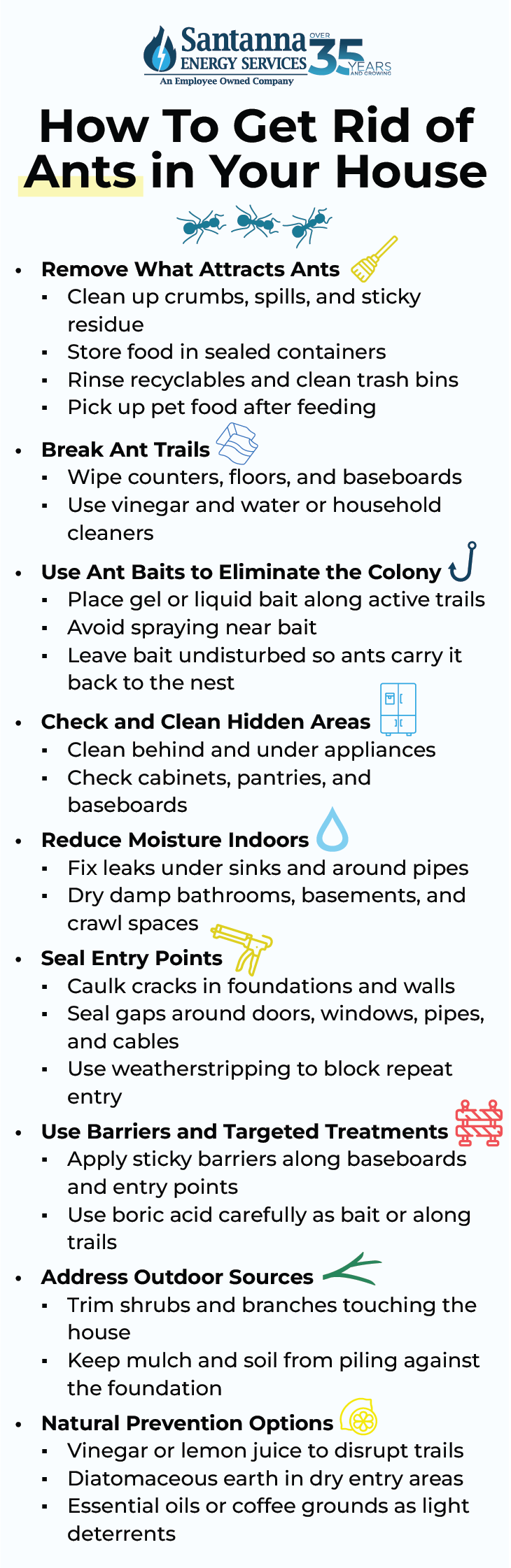
The most effective way to get rid of ants in your house is to remove what attracts them, disrupt their trails, and eliminate the colony, so they do not keep coming back.
In most homes, getting rid of ants is not about one quick fix. It is about using a combination of methods that work together. When you only focus on killing the ants you see, the problem often returns.
Here are the steps you can take to get rid of ants and keep them from coming back:
Use Ant Baits to Eliminate the Colony
Ant baits, such as gel or liquid bait solutions like Advion from Syngenta or Amdro, are some of the most effective solutions for getting rid of ants because they target the colony, not just the ants you see.
Baits work by attracting worker ants, which then carry the bait back to the nest and share it with the rest of the colony, including the queen. Over time, this helps eliminate the entire colony. Common options include gel baits, liquid bait stations, and simple mixtures like boric acid with sugar.
For best results, place bait near active trails and avoid disturbing it. It may take a few days to see a decrease, but this method addresses the root of the problem.
Clean Ant Trails to Stop More Ants From Following
Ants rely on scent trails to guide others to food or water. If that trail remains, more ants will continue to follow it.
To get rid of ants along these paths, wipe down surfaces using a mix of equal parts white vinegar and water or a standard household cleaner. Focus on countertops, floors, baseboards, and any areas where ants are active.
This does not kill the colony, but it helps stop new ants from being guided into your home.
Check and Clean Appliances Regularly
Appliances can hide crumbs and moisture that attract ants.
Pull out and clean behind refrigerators, stoves, dishwashers, and microwaves where food and debris can collect. These hidden areas are common spots where ants continue to return.
Rinse Recyclables Before Storing
Food residue on cans, bottles, and containers can attract ants.
Rinsing recyclables before placing them in bins helps remove sugar and food traces that ants may be drawn to.
Remove Food Sources That Keep Ants Coming Back
Ants will continue to return if your home provides an easy food source.
To reduce this, clean up crumbs and spills quickly, wipe down surfaces regularly, and store food in sealed containers. Pay close attention to hidden areas like under appliances, inside cabinets, and around trash bins. Pet food left out overnight can also attract ants.
Even small amounts of food can support ongoing ant activity, so consistency is key.
Store Food Properly and Limit Access
Ants are less likely to stay in your home when food is sealed and harder to reach.
Store pantry items in sealed containers and avoid leaving food exposed on counters. It helps to pick up pet food bowls after feeding instead of leaving them out throughout the day. These small habits can make a noticeable difference over time.
Reduce Moisture and Fix Damp Areas
Ants are often drawn to moisture, especially in homes with damp or humid areas.
Check under sinks, around pipes, in bathrooms, basements, and near windows for signs of leaks or condensation. Fixing leaks, improving airflow, and keeping these areas dry can make your home less appealing to ants.
In many cases, reducing moisture helps address both comfort and pest issues at the same time.
Seal Entry Points to Keep Ants Out
Ants often enter through very small gaps that are easy to miss.
To help get rid of ants and prevent them from returning, seal cracks in the foundation, close gaps around doors and windows, and cover openings where pipes or cables enter the home. Using caulk or weatherstripping can block these entry points and reduce repeat infestations.
Use Sticky Barriers to Block Ant Paths
Sticky barriers can help stop ants from reaching certain areas of your home.
You can apply double-sided tape or sticky traps along baseboards, windows, or entry points where ants are active. This does not eliminate the colony, but it helps block their path and reduce how many ants reach food or surfaces.
Use Boric Acid Carefully for Colony Control
Boric acid is a common and effective ingredient used in ant control. It can be used as a powder along trails or mixed with sugar to create bait.
When ants carry boric acid back to the colony, it helps eliminate the nest over time. However, it should be used carefully and kept away from children and pets.
This method works best when combined with proper bait placement and cleaning.
Wash Trash Bins and Recycling Areas Regularly
Trash bins are often overlooked, but they can attract ants quickly.
Food residue in trash cans or recycling bins can attract ants, even if the rest of your kitchen is clean. Regularly washing bins and keeping lids tightly closed helps remove this hidden food source.
Treat Outdoor Nests When You Can Find Them
If you can locate where ants are nesting outside, addressing it directly can help reduce ants entering your home. Gently spray the ant’s nest with water to get the colony to relocate.
Place outdoor bait stations near entry points to target ants before they come inside.
Keep Shrubs and Tree Branches Trimmed
What happens outside your home can directly affect ant activity indoors, since many ants nest near the foundation and then move inside once they find a way in.
Keep shrubs and tree branches trimmed so they do not touch the house, as these can act as pathways for ants to reach your home. Avoid letting mulch build up directly against the foundation, since thick mulch and damp soil can create ideal nesting areas.
It also helps to clear debris, keep the area dry, and pick up pet food bowls daily, so they do not attract ants near entry points.
Use Sprays for Immediate Control (Not a Long-Term Fix)
Sprays can quickly kill ants on contact, which can be helpful in the moment. However, they do not eliminate the colony and may not prevent ants from coming back.
For long-term results, sprays should be used alongside other methods like baiting, cleaning, and sealing.
How To Keep Ants Out of the House Naturally
You can keep ants out of your house naturally by using simple household items that disrupt their trails, deter them from entering, and make your home less inviting.
Natural methods work best for early or smaller ant problems and as part of regular prevention. They may not eliminate a large colony on their own, but they can help reduce activity and stop ants from settling in.
Here are some simple, natural ways to help keep ants out of your home:
Use Vinegar to Disrupt Ant Trails
Vinegar is one of the simplest ways to keep ants from returning to the same spot. It removes the scent trails ants rely on to find their way.
Wipe down countertops, floors, baseboards, and entry areas with a mix of equal parts of white vinegar and water. This helps break the trail and makes it harder for other ants to follow.
Use Lemon Juice to Deter Ants
Lemon juice works in a similar way by interfering with scent trails and creating an environment ants tend to avoid.
Apply it around windows, doorways, and small cracks where ants may enter. It can be a helpful option if you want something with a lighter scent than vinegar.
Use Diatomaceous Earth Around Entry Points
Diatomaceous earth is a natural powder made from very fine, crushed fossilized remains of tiny water organisms, and it helps control ants by drying out their outer layer.
Sprinkle a thin layer along baseboards, cracks, and entry points. It works best in dry areas and can help reduce ants that pass through these spaces.
Use Essential Oils as a Light Deterrent
Some homeowners use essential oils, such as peppermint or tea tree oil, to deter ants from entering certain areas.
Mix a few drops with water and apply it along entry points or areas where ants have been seen. These scents may help keep ants away, but they are usually not strong enough to solve larger infestations on their own.
Use Coffee Grounds Around Entry Areas
Some homeowners use coffee grounds as a natural way to help repel ants.
Sprinkle used coffee grounds along the foundation of your home, near entry points, or in areas where ants are active. The strong smell can help discourage ants from crossing those areas.
This method can help reduce activity, but it works best when combined with cleaning, sealing, and other prevention steps.
Natural solutions are a good starting point because they can help reduce ant activity and keep new ones from coming in when the problem is still small. If ants keep showing up, you may need to combine them with steps like baiting and sealing to fully solve the problem.
How Long Does It Take to Get Rid of Ants?
It usually takes a few days to two weeks to get rid of ants, depending on the size of the colony, how they are entering your home, and the methods you use.
In many homes, you may start to see fewer ants within a few days, especially if you clean trails and remove what is attracting them. But fully eliminating the problem can take longer because the colony itself needs to be affected, not just the ants you see.
When using ant bait, the process can take about one to two weeks. Ants need time to carry the bait back to the colony and spread it, which is what helps eliminate the nest over time. It is normal to see more ants at first, since they are gathering the bait.
If the infestation is larger or if there are multiple nests, it may take several weeks to fully control. This is more common when ants are nesting inside walls, under flooring, or in outdoor areas close to the home.
What really makes a difference is consistency. Cleaning regularly, removing food and moisture, and sealing entry points can help speed up the process and prevent new ants from coming in while you are treating the problem.
Patience and follow-through are important. Even if you see improvement quickly, continuing the process helps make sure the ants do not come back.
Why Is My Ant Bait Not Working?
Ant bait may not work if it is placed incorrectly, disrupted too soon, or not suited to what the ants are actually looking for.
It can be frustrating to use bait and still see ants days later. In many cases, the bait is working, but the process takes time. Ants need to carry the bait back to the colony and share it, which does not happen instantly. However, if the activity does not slow down after several days, there may be something getting in the way.
In most cases, bait doesn’t work because of a few common issues:
- The bait is placed in the wrong spot
Ant bait works best when it is placed directly along active trails or near entry points. If it is too far from where ants are traveling, they may not find it.
- The bait is removed or cleaned too soon
It can feel counterintuitive, but seeing more ants around bait at first is normal. This means they are taking it back to the colony. Cleaning or removing the bait too early can interrupt the process.
- Sprays are used at the same time
Using sprays near bait can kill ants before they carry the bait back to the nest. This prevents the bait from reaching the colony and reduces its effectiveness.
- The bait does not match what the ants want
Some ants prefer sugar, while others are drawn to protein or grease. If the bait does not match what they are looking for, they may ignore it.
- There are easier food sources nearby
If crumbs, spills, or pet food are still available, ants may choose those instead of the bait. Bait works best when it is the most attractive option.
- The colony is large or spread out
In some cases, especially with certain species, there may be multiple nests or a larger colony. This can take longer to control and may require more than one bait placement.
If the ant bait isn’t working, give it time and make sure it stays in an area where ants are active. Avoid using sprays nearby and remove other food sources, so the bait becomes the main option. If needed, try a different type of bait that better matches what the ants are attracted to.
In many homes, once the bait is properly placed and left undisturbed, you will begin to see fewer ants over time as the colony is affected.
How Ant Infestations Can Point to Home Efficiency Issues
Ant infestations can point to underlying conditions like moisture, air leaks, and hidden gaps that may affect comfort and energy use.
At first, ants and energy use may not seem related. But in many homes, the same issues that attract ants can also affect how well your home holds temperature and controls humidity. That is why this can be more than just a pest problem.
Here are some of the ways ant activity may point to larger home efficiency concerns:
- Ant infestations can point to moisture problems and small gaps that make your heating and cooling system work harder.
- Ants are often drawn to damp areas such as under sinks, basements, or around leaks, which can increase indoor humidity and make your home feel warmer, causing your cooling system to run longer.
- Ants can enter through small openings around windows, doors, foundations, or utility lines, which may also allow conditioned air to escape and reduce efficiency.
- Ant activity can signal deeper issues like damp wood or poor sealing, which can lead to uneven comfort and longer system runtime.
- Outdoor nests near the foundation can point to moisture or drainage issues that may impact your home’s overall efficiency.
Ants are not always just a surface problem. They can be a sign that your home may need better sealing, moisture control, or airflow, all of which can affect comfort and energy use over time.
FAQs
What is the best natural ant repellent?
The best natural ant repellent is diatomaceous earth, which works by dehydrating ants and helping reduce their activity.
What scent will keep ants away?
Strong scents like peppermint, citrus, and vinegar can help deter ants by disrupting their scent trails.
What is the fastest home remedy for ants?
The fastest home remedy for ants is wiping surfaces with a vinegar and water solution to remove scent trails immediately.
Is vinegar enough to get rid of ants?
Vinegar can help remove ant trails and deter them, but it does not eliminate the colony on its own.
Are ants harmful to your home?
Most ants are a nuisance, but some types, like carpenter ants, can damage wood and weaken parts of your home.
Ants are common and manageable, and they usually show up for a reason. When you address the root causes like food, moisture, and small entry points, you are not just getting rid of ants; you are helping your home run more smoothly overall.
For many Midwest homeowners, small gaps and humidity can quietly affect both comfort and energy use. When your home is better sealed and balanced, it becomes easier to maintain and more predictable day to day.
If you are already taking steps to make your home more controlled and consistent, your energy plan should follow that same path. Explore Unlimited Energy to bring predictability to your monthly supply charge, so you can focus less on surprises and more on a home that simply works the way it should.*
Restrictions apply. Enrollment based upon program eligibility. Customers using more than 125% of normal monthly usage as determined by Santanna may be required to switch plans.
Jenna Mendez is a Midwest native with lifelong roots in Illinois and time spent in Ohio during college, giving her a deep understanding of the Midwest region’s people, climate, and energy needs. She brings firsthand experience and local insight to topics that matter to Midwest homeowners, especially energy efficiency, sustainability, and home living. Jenna specializes in writing about eco-friendly living, all things Midwest, renewable energy, and practical ways to reduce energy costs. Jenna brings a trusted, and local hometown voice to every article she writes, helping readers live well, and sustainably, right where they are.