

Is Gas or Electric Cheaper? A Homeowner’s Guide to Energy Costs

by Jenna Mendez
Updated: October 9, 2026
13.7 min read
Key Points of This Article:
- Natural gas is generally cheaper than electricity for producing heat, making it commonly less expensive for furnaces, water heaters and clothes dryers, although high-efficiency heat pumps can be competitive in certain climates.
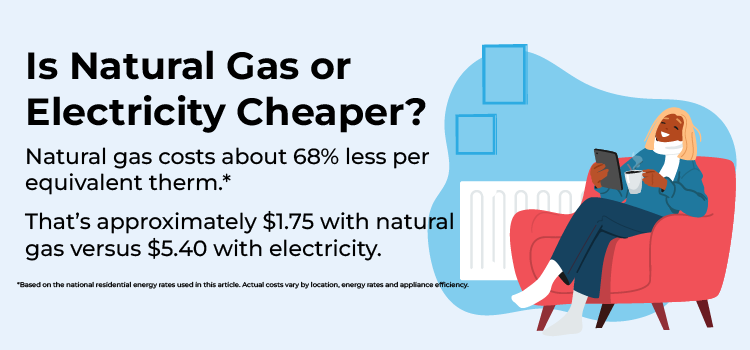
- At the time this article was written, natural gas costs about 68% less than electricity for the same amount of energy based on the national energy rates—approximately $1.75 per equivalent therm for natural gas versus $5.40 for electricity—making gas generally cheaper for heat-producing appliances.
- Energy costs depend on more than the price of the fuel because appliance efficiency, local rates, climate, household habits and seasonal demand all affect what you pay.
Natural gas is usually cheaper than electricity for many household energy needs, especially home heating and water heating, because natural gas typically costs less per unit of energy. However, that doesn’t mean gas is the cheapest choice for every appliance or every home.
At Santanna, we watch natural gas and electricity prices shift every day, so we know the cheapest energy choice isn’t always as simple as gas versus electric.
In this guide, you’ll learn when gas or electricity is typically the more affordable choice, which appliances are cheaper to run, and how to decide which option makes the most sense for your household.
Is Gas or Electric Cheaper?
According to an American Gas Association analysis, gas heating was more affordable than electric heating in 41 out of 50 states when comparing annual energy costs for ENERGY STAR® gas furnaces and electric heat pumps.
- Electricity cost per equivalent therm: The recent U.S. average residential electricity rate was 18.44 cents per kWh in May 2026. Since one therm equals about 29.3 kWh, that same amount of energy would cost roughly $5.40 using electricity.
- Natural gas cost per therm: Residential natural gas averaged $18.17 per thousand cubic feet in April 2026, or about $1.75 per therm.
- Which is cheaper? Natural gas is cheaper in this comparison; electricity is about $3.65 more expensive for the same amount of energy. Appliance efficiency and local energy rates can still change which option costs less for your home.
However, electricity can be the more affordable choice in some situations, especially if you have highly efficient electric equipment like a heat pump.
The cheaper option depends on how you use energy, your home, your energy needs, and the utility rates where you live.
What Santanna Customer Data Shows About Gas and Electric Costs
We reviewed usage data from more than 32,000 Santanna electric and natural gas customer accounts between September 2025 and August 2026.
Based on average monthly usage and the national energy rates used in this article, Santanna Energy Services natural gas customers averaged an estimated monthly cost of approximately $147, compared with approximately $180 for electricity.
In this real-world snapshot, the estimated natural gas cost was about $33 per month, or 18%, lower than the estimated electricity cost.
Keep in mind that this does not mean natural gas will be cheaper for every household; two customers may use energy differently, and what’s “cheaper” for one isn’t what’s “cheaper” for everyone.
What Determines Whether Gas or Electricity Costs Less?
Several factors work together to determine whether natural gas or electricity will cost less in your home. Understanding these factors can help explain why your experience may be different from someone else’s.
Local utility rates
Electricity rates and natural gas prices differ from state to state and even between utility service areas which can make one fuel source seem cheaper than the other.
It’s also important to know that natural gas and electricity aren’t billed the same way. Electricity is measured in kilowatt-hours (kWh), while natural gas is commonly measured in therms. Because these units measure energy differently, comparing the price of one kilowatt-hour to one therm doesn’t give you an accurate picture of what fuel source is cheaper.
Appliance efficiency
Not all appliances convert energy into heat or power the same way. A newer, high-efficiency appliance often uses less energy to do the same job than an older model, which can lower operating costs regardless of whether it runs on gas or electricity.
Climate
Where you live affects how much energy your home needs throughout the year. Homes in colder climates typically use more energy for heating during winter, while homes in warmer climates may spend more on air conditioning during summer, which can make one source of fuel appear cheaper than the other.
Household energy use
Your family’s daily habits also influence energy costs. A larger household that takes more showers, cooks frequently, or keeps the heat running longer will generally use more energy than a smaller household. Even two homes with the same appliances can have very different utility bills based on how much energy they use.
Existing home infrastructure
The systems already installed in your home can affect the overall cost of choosing gas or electricity. For example, if your home already has natural gas service and gas appliances, replacing them with similar models may be more practical than converting everything to electric. Likewise, an all-electric home may not benefit from adding natural gas if the installation costs outweigh the potential savings.
Supply and demand
Energy prices can change as supply and demand shift throughout the year. Natural gas demand often rises during cold weather as more homes need heating, while electricity demand can increase during hot weather because of air conditioning.
When demand rises or supply becomes limited, energy prices may increase, which means the cheaper fuel today may not always be the cheaper option in another season.
Which Is Cheaper to Run: A Gas or Electric Appliances?
Natural gas is generally cheaper to run than electricity for appliances that produce large amounts of heat, such as furnaces, water heaters, and clothes dryers.
However, electricity can cost less for certain appliances, especially highly efficient technologies like heat pumps or equipment that’s used less often, such as electric pressure washers.
We’ve crunched the numbers and based on estimated operating costs from different appliances, natural gas is generally the less expensive option for appliances that generate large amounts of heat, while electricity can be the more economical choice for highly efficient appliances and electric vehicles.
To help you compare your options, the tables below estimate the typical cost to run common gas and electric appliances using average U.S. residential energy prices of 18.44¢ per kilowatt-hour (kWh) for electricity in May 2026 and $18.17 per thousand cubic feet (Mcf) of natural gas in April 2026, according to the U.S. Energy Information Administration.
These estimates are intended as a general comparison to support your buying decision. Your actual costs may be higher or lower depending on your location, appliance model, usage habits, and energy rates:
Estimated Cost to Run Natural Gas Appliances
| Appliance | Typical Time of Usage | Estimated Gas Use | Average Cost / Day | Average Cost / Week | Average Cost / Month | Average Cost / Year |
| Home Heating (Gas Furnace) | 8 hrs/day | 2.0–3.7 therms/day | $3.50–$6.50 | $24.50–$45.50 | $105–$195 | $1,278–$2,373 |
| Water Heater | Daily household use (family of 4) | 0.34–0.57 therm/day | $0.60–$1.00 | $4.20–$7.00 | $18–$30 | $219–$365 |
| Gas Stove Top | About 1 hour/day | 0.05–0.10 therm/day | $0.08–$0.18 | $0.56–$1.26 | $2.40–$5.40 | $29–$66 |
| Gas Dryer | 5 loads/week | 0.09–0.14 therm/load | $0.15–$0.25 per load | $0.75–$1.25 | $3.25–$5.42 | $39–$65 |
Note: Annual costs are annualized using the same usage assumptions and energy rate throughout all 365 days. For home heating, this represents a hypothetical full-year comparison at 8 hours of use per day, not a typical household heating season. Actual costs depend on climate, appliance efficiency, household usage, and local natural gas rates.
Estimated Cost to Run Electric Appliances
| Appliance | Typical Time of Usage | Estimated Electricity Use | Average Cost / Day | Average Cost / Week | Average Cost / Month | Average Cost / Year |
| Electric Resistance Heating | 8 hrs/day | 37–80 kWh/day | $6.85–$14.70 | $47.95–$102.90 | $205.50–$441 | $2,500–$5,366 |
| Electric Heat Pump | 8 hrs/day | 13–32 kWh/day | $2.45–$5.90 | $17.15–$41.30 | $73.50–$177 | $894–$2,154 |
| Electric Water Heater | Daily household use (family of 4) | 5.3–9.5 kWh/day | $0.98–$1.75 | $6.86–$12.25 | $29.40–$52.50 | $358–$639 |
| Electric Stove Top | About 1 hour/day | 0.8–1.8 kWh/day | $0.15–$0.34 | $1.05–$2.38 | $4.50–$10.20 | $55–$124 |
| Electric Dryer | 5 loads/week | 2.7–4.8 kWh/load | $0.49–$0.88 per load | $2.45–$4.40 | $10.62–$19.07 | $128–$229 |
Estimates use an electricity rate of 18.44¢/kWh and assume the same usage pattern and rate throughout the year. Actual electricity use and costs vary by appliance size, efficiency, household habits, climate, and local electricity rates.
Natural Gas or Electricity: Which is Cheaper to Run by Appliance
- Home heating: A natural gas furnace is often cheaper to run than electric resistance heating because natural gas typically costs less per unit of heat. However, a heat pump can cost less to operate than both in many milder climates because it moves heat instead of generating it, allowing it to provide the same comfort while using much less energy.
- Water heaters: A natural gas water heater typically costs less to operate than an electric water heater because natural gas is generally less expensive than electricity for heating water. Many gas models also recover hot water more quickly, making them a practical choice for larger households with higher hot water demand.
- Cooking appliances: Gas and electric ranges usually have similar operating costs because cooking appliances use relatively little energy compared to heating systems or water heaters. However, induction cooktops, air fryers, and microwaves often cost even less to operate because they heat food more efficiently and usually require less cooking time than a conventional oven or stovetop.
- Clothes dryers: A gas dryer is often less expensive to run than an electric dryer because natural gas generally costs less than electricity for producing heat. Households that do several loads of laundry each week may notice greater savings over the life of the appliance.
- Pressure washers: An electric pressure washer typically costs less to operate than a gas model because it uses electricity only while it’s plugged in and doesn’t require gasoline or engine maintenance. It’s often the more economical choice for occasional household cleaning tasks.
Your actual operating costs will depend on your local natural gas and electricity rates, appliance or vehicle efficiency, household size, climate, and how often you use each appliance or vehicle.
For that reason, these estimates should be used as a general guide rather than an exact prediction of your energy or transportation costs.
Is It Cheaper to Heat Your Home With Natural Gas or Electricity?
Is it generally cheaper to heat your home with natural gas than with electric heating, but the overall cost depends on local energy rates, your climate, equipment efficiency, installation costs, and the heating system already in your home.
How Natural Gas Usage Changes by Season
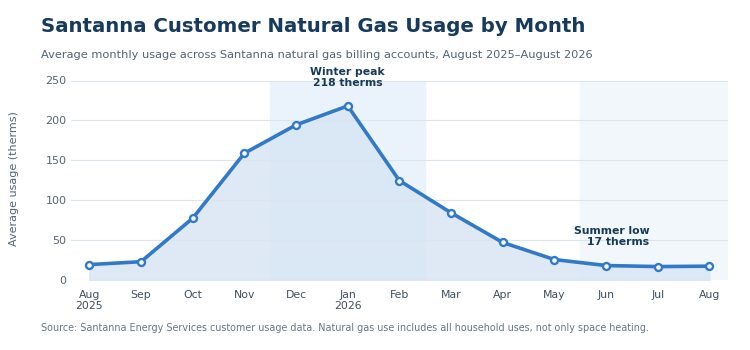
The amount a household spends on natural gas can change dramatically throughout the year as heating demand rises and falls. Our Santanna customer data illustrates this seasonal difference.
From December 2025 through February 2026, natural gas customers used an average of approximately 179 therms per month.
During the warmer months of June through August 2026, average natural gas usage fell to approximately 17 therms per month; in other words, average winter natural gas usage was about 10 times higher than average summer usage!
How Electricity Usage Changes by Season
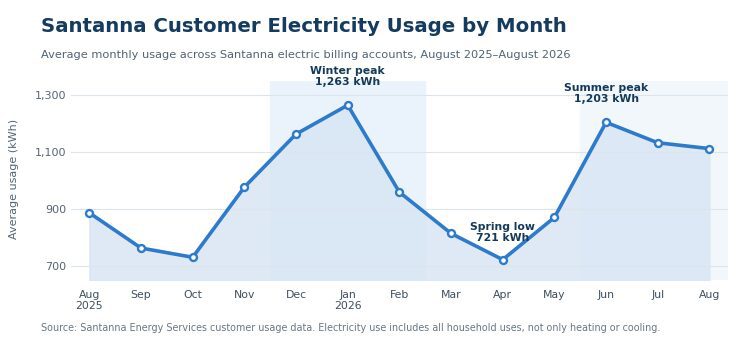
Electric heating costs also change throughout the year, although the seasonal pattern is more complicated because electricity powers cooling, lighting, electronics, and household appliances in addition to heating.
Santanna electric customers used an average of approximately 1,128 kWh per month from December 2025 through February 2026.
Electricity usage remained similarly high during the summer cooling season. From June through August 2026, customers used an average of approximately 1,149 kWh per month and by comparison, average usage fell to approximately 721 kWh in April.
Together, these patterns show that natural gas and electricity are affected by seasonality differently.
When Should You Switch From Gas to Electric or Electric to Gas?
Switching from one energy source to another can make sense if it lowers your long-term energy costs, improves efficiency, or better fits your home’s needs. However, switching isn’t always the most cost-effective solution.
Switch to Natural Gas If…
- Natural gas costs significantly less than electricity in your area. Lower natural gas rates can reduce the long-term operating cost of high-heat appliances like furnaces, water heaters, and clothes dryers.
- You have high heating or hot water needs. If your household uses a lot of heat throughout the year, natural gas can often provide lower operating costs than electricity for these high-demand applications.
- You’re replacing a furnace, water heater, or dryer. If these appliances are nearing the end of their lifespan, switching to natural gas may provide long-term savings depending on local energy prices and installation costs.
- You’re moving to an area with consistently cold winters. Natural gas heating can be more cost-effective in colder climates where your heating system needs to run frequently for several months. Gas furnaces can also provide strong, consistent heat during very cold weather, making natural gas worth considering when heating demand will be a major part of your annual energy use.
Switch to Electric If…
- Electricity rates are competitive where you live. Lower electricity prices can make electric appliances more affordable to operate, especially highly efficient models.
- You’re upgrading to a high-efficiency heat pump or heat pump water heater. These appliances use significantly less energy than traditional electric resistance systems and may even cost less to operate than natural gas in some homes and climates.
- You have rooftop solar panels or plan to install them. Generating your own electricity can reduce the cost of running electric appliances and charging an electric vehicle.
- You’re buying an electric vehicle. Charging an EV at home typically costs much less than fueling a comparable gasoline-powered vehicle, making electricity the more economical choice for transportation.
- You’re moving to an area with milder winters. Electric heating, especially a high-efficiency heat pump, can be an economical option in climates where temperatures are moderate and heating demand is lower. Heat pumps are particularly efficient in milder conditions and can provide both heating and cooling from one system.
Stay With Your Current Fuel Source If…
- Your existing appliance simply needs replacing. Upgrading to a newer, more efficient model using the same fuel source is often more affordable than paying to convert your home.
- The cost of switching outweighs the long-term savings. Installing new gas lines, venting, electrical circuits, or upgrading your electrical panel can add significantly to the upfront cost. If the expected energy savings won’t offset those expenses over time, staying with your current fuel source may be the better financial decision.
Ultimately, there isn’t a single answer that’s right for every homeowner. The best choice depends on your local natural gas and electricity rates, installation costs, appliance efficiency, household energy use, and how long you plan to stay in your home.
Frequently Asked Questions
Why do gas and electricity prices change throughout the year?
Gas and electricity prices change throughout the year because fuel supply, consumer demand, weather, fuel costs, infrastructure, and market conditions all influence how much it costs to produce and deliver energy.
How do weather and seasonal demand affect energy prices?
Cold winters increase demand for natural gas heating, while hot summers increase electricity demand for air conditioning, and higher seasonal demand can put upward pressure on energy prices when supplies are limited.
Should I switch to all-electric appliances if I install solar panels?
Installing solar panels can make all-electric appliances more cost-effective, but switching everything to electric depends on your home’s energy needs, local utility rates, replacement costs, and climate, since homes in colder areas may face higher winter electricity use for heating depending on the type and efficiency of the heating system.
When it comes to deciding whether gas or electricity is cheaper, there isn’t a one-size-fits-all answer. Natural gas often costs less for heating and water heating, while electricity can be the more economical choice for certain appliances and household situations. The most affordable option depends on your local energy rates, the appliances you use, your home’s energy needs, and how efficiently you use energy throughout the year.
No matter which fuel powers your home, understanding what drives your monthly energy costs can help you make more informed decisions.
If you’re looking for greater predictability on the electricity or natural gas supply portion of your bill, explore Santanna’s Unlimited Energy Plan. With a supply charge that stays the same throughout your contract term, it can help provide fewer surprises and make it easier to budget your energy costs while choosing the fuel and appliances that work best for your home.*
The best energy choice isn’t simply the cheaper one. It’s the one that helps keep your home comfortable, fits your lifestyle, and gives you greater confidence in your monthly energy costs.
* Restrictions apply. Enrollment based upon program eligibility. Customers using more than 125% of normal monthly usage as determined by Santanna may be required to switch plans.
Jenna Mendez is an experienced energy content professional who has spent four years researching, writing, and managing authoritative educational content for Midwest energy consumers at Santanna Energy Services. As a lifelong Illinois resident, Jenna brings firsthand knowledge of the region’s climate, communities, and household energy needs to her work.
She specializes in translating complex energy topics into clear, practical guidance about electricity and natural gas costs, appliance energy use, energy efficiency, and everyday home living. Drawing on industry research, Santanna customer data, and insights from experienced energy professionals, Jenna incorporates this knowledge into her content to help homeowners better understand their energy choices and make informed decisions for their households.