
What Is the Distribution Charge on Your Electric Bill?

by Tyler Castle
Updated: October 29, 2026
11.8 min read

Key Points of This Article:
- A distribution charge is the part of an electric bill that pays the local utility to deliver electricity through power lines, poles, transformers, and other local infrastructure.
- The amount you pay for your distribution charge can vary by utility, location, approved rates, billing period, and in some cases how much electricity a household uses.
- While customers generally cannot negotiate the distribution rate, they may reduce usage-based portions by using less electricity and should contact their local utility with questions about the charge.
- A distribution charge usually refers specifically to local equipment and service, while a delivery charge may be a broader bill category that can include distribution, transmission, customer charges, and approved fees.
It's easy to assume that everything on your electric bill is simply a charge for the electricity you used, but the distribution charge is different. It generally pays your local utility for delivering electricity through the local power lines, poles, transformers, and other equipment that serves your home.
If you've ever been confused by these charges, you're not alone. In a small internal Santanna Energy Experts survey, 8 of 10 employee-owner respondents said they did not understand the difference between supply and distribution charges before working in or learning more about the energy industry.
We'll explain more in depth what the charge covers, who controls it, how it differs from your electricity supply charge, why it may increase, and practical ways to reduce your electricity distribution charges.
What Is a Distribution Charge on an Electric Bill?
A distribution charge is the portion of your electric bill that generally pays your local utility for delivering electricity through the local distribution system to your home. It helps cover the equipment and services needed to keep that system operating, including local power lines, poles, transformers, and other distribution equipment.
For example, when you turn on a light, electricity has already traveled through a network of equipment before reaching your house. The distribution charge helps pay for the local part of that journey and for keeping that system available when you need electricity. Depending on your utility and its approved rate structure, your distribution charge may help cover:
- Local power lines and wires that carry electricity through your community and to homes and businesses.
- Utility poles that support local overhead power lines and other equipment.
- Transformers that adjust electricity to the proper voltage before it reaches homes and businesses.
- Substations and distribution equipment that help move electricity from the larger transmission system into the local distribution network.
- System maintenance and repairs needed to keep local equipment operating and repair damaged infrastructure.
- Storm and outage restoration for repairing damaged distribution equipment and restoring local electric service.
- Metering and other utility services where these costs are included in the utility’s distribution rates.
- System improvements and upgrades to replace or improve local distribution equipment.
Exactly what your distribution charge covers can vary by utility, so the items included on your bill may differ from those of a homeowner in another service area.
The important thing to remember is that your distribution charge is not simply another price for the electricity you use. It helps pay for the local infrastructure and services needed to get that electricity to your property.
Do All Electric Utilities Charge a Distribution Charge?
Yes, all electric distribution companies (utilities) charge a distribution charge. This charge is mandatory and covers the costs associated with maintaining and operating this infrastructure. State public utility commissions regulate these rates and you can’t control how much you’re charged for it.
Is a Distribution Charge the Same as a Delivery Charge?
“Distribution Charge” and “Delivery Charge” are related terms, but they aren’t always the same thing. A distribution charge is generally one component of the broader costs associated with delivering electricity to your home. Depending on your utility, “delivery” may refer to the overall category of charges associated with getting electricity to you, which can include:
- Distribution charges
- Transmission charges
- Customer or service charges
- Utility-approved fees or surcharges
The terminology and way these charges are grouped vary by utility. Some utilities may use “delivery charge” to refer specifically to distribution, while others use “delivery” as a broader category that includes distribution and other delivery-related costs.
Distribution and delivery charges are also separate from your electricity supply charge, which covers the electricity itself.
Who Charges the Distribution Fee, Your Utility or Electricity Supplier?
Even if you choose a different electricity supplier, your local electric utility generally charges the distribution portion of your electric bill. That’s because your utility still operates and maintains the local system that delivers electricity to your home.
In our internal Energy Experts survey, Santanna employee-owner Jacob Childress identified “the difference between a utility and a supplier” as something homeowners may misunderstand about their electric bills.
Your utility and electricity supplier have different roles. Your supplier provides the electricity supply under your plan, while your utility continues to deliver that electricity through the local power lines and other distribution equipment serving your home, charging you a distribution fee in the process.
Who Handles What on Your Electric Bill?
| Part of Your Bill | What It Generally Pays For | Who Is Responsible? |
| Supply Charge | Electricity supplied for your home | Your utility, or a competitive electricity supplier you choose if you live in a deregulated electricity market where supplier choice is available |
| Distribution Charge | Delivering electricity through local power lines and equipment to your home | Your local electric utility |
| Transmission Charge | Moving electricity long distances over high-voltage power lines before it reaches your local utility | The companies that operate the high-voltage power grid |
| Taxes, riders and other fees | Taxes and other approved costs added to your electric bill | Government agencies and your local utility, depending on the charge |
Your electric bill can include charges from different parts of your electric service. Your supplier provides the electricity supply, while your local utility delivers that electricity to your home. So, even if you choose a different electricity supplier, you will generally continue paying your local utility for distribution cost.
Why Do I Still Pay a Distribution Charge If I Switch Electricity Suppliers?
You still pay a distribution charge after switching electricity suppliers because you changed who supplies your electricity, not the local utility that delivers it to your home. Your local utility continues operating the distribution system serving your address, so its applicable distribution charges remain on your electric bill unless you move to a new utility territory.
So, if you switched to a competitive electricity supplier and still see your local utility and its distribution charges on your bill, that does not mean your supplier switch didn't work or that you're paying two companies for the same service. The supplier and utility are responsible for different parts of your electric service.
Why Is My Electricity Distribution Charge So High?
A high distribution charge can come from your utility increasing its approved distribution rates, the way your utility calculates its charges, or, in some cases, how much electricity is delivered to your home.
The exact reason depends on your local utility because distribution rates and billing structures are not the same everywhere. Common reasons for a high distribution charge include:
- Your utility's distribution rate increased. Regulated utilities may request rate changes to help cover approved costs of operating, maintaining, repairing, and improving the electric system. These rate changes generally go through the appropriate state regulatory process before taking effect.
- You used more electricity and your distribution charge is usage-based. Some utilities calculate part of the distribution charge using the number of kilowatt-hours (kWh) delivered to your home. If your utility does this, using more electricity can increase your distribution charge even when the distribution rate itself has not changed.
- Your bill includes fixed or other approved distribution-related charges. Not every distribution cost is tied directly to your electricity use. Depending on your utility's approved rate structure, some charges may stay the same regardless of how many kWh you use, while other approved charges may change.
- Your billing period was longer. If your distribution charge is based on kWh, a longer billing period can give your household more days to use electricity. That can result in more kWh being delivered and a higher usage-based distribution charge.
If your distribution charge suddenly increases, compare your current bill with your previous one. Look at your kWh use, number of billing days, distribution rate, and individual distribution or delivery charges. If your usage is similar but the distribution charge increased, check your utility's current rates or contact your utility for an explanation.
Does Your Distribution Charge Change Depending on Where You Live?
Distribution charges can vary depending on where you live because different local utilities have different approved distribution rates. This means two households using the same amount of electricity could still have different distribution charges if they are served by different utilities.
Your distribution charge is tied to the utility that serves your address. So, if you move to another city or even another utility service area nearby, the distribution portion of your electric bill may look different even if your electricity habits stay about the same.
For the most useful comparison, look at your own utility's current distribution rates and compare your bill with your previous bills. That gives you a better picture of whether your distribution costs or electricity use have changed over time.
How to Find the Distribution Charge on Your Electric Bill
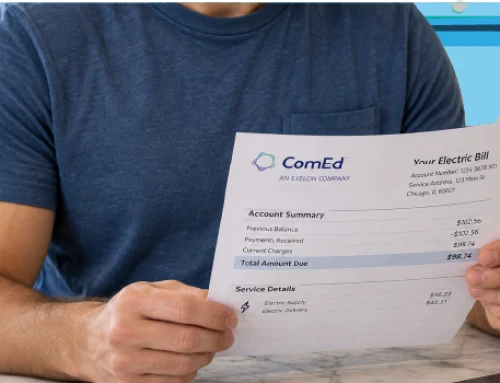
Your distribution charge is usually listed in the distribution or delivery section of your electric bill, although the exact name and location can vary by utility. It may appear as one charge or as part of several delivery-related charges.
Here's a simple way to find it on your electric bill:
- Look for a distribution or delivery section. Scan your bill for terms such as Distribution, Distribution Service, Electric Distribution, Delivery, Delivery Service, or Delivery Charges.
- Find the distribution charge or rate. Look within that section for a dollar amount or a rate listed for distribution. If the charge is based on electricity use, you may see a rate shown in cents or dollars per kilowatt-hour (kWh).
- Check the kWh used for the billing period. If your distribution charge is usage-based, your bill may show how many kWh were used to calculate that portion of the charge.
- Look for other distribution-related charges. Your utility may not put all distribution costs under one line called "Distribution Charge." Some costs may appear as separate fixed charges, riders, or other delivery-related items depending on your utility's bill and approved rate structure.
- Compare it with your previous bill. If the amount changed, compare the distribution rate or charges, kWh use, and number of billing days with your previous bill. This can help you see what changed.
If you still can't find your distribution charge, check your utility's bill guide or contact your local electric utility. They can show you exactly where distribution costs appear and explain how they are calculated on your bill.
Don't worry if you can't find a line that says exactly "Distribution Charge." Utilities label and organize these charges differently, so the distribution costs may be listed under a broader delivery section.
Can You Lower Your Distribution Charge?
You generally cannot lower or negotiate your utility's distribution rate yourself because distribution service is regulated and the rates are set through your utility's state-approved rate process. Unlike electricity supply in a deregulated market, you typically cannot shop around for another company to deliver electricity to your home or choose a different distribution rate.
However, that doesn't always mean the amount you pay for distribution is completely outside your control. If your utility calculates part of the distribution charge based on the number of kilowatt-hours (kWh) delivered to your home, using less electricity may reduce that usage-based portion.
Other parts of your distribution or delivery charges may be fixed or based on your utility's approved rate structure, so they may not decrease when you use less electricity.
In simple terms, you generally can't change the distribution rate, but you may be able to influence the usage-based portion of what you pay by using less electricity.
FAQs
Who do I contact about a distribution charge?
Contact your local electric utility if you have questions about a distribution or delivery charge. Contact your electricity supplier if your question is specifically about your electricity supply plan or supplier charges.
Why am I charged for both electricity usage and distribution?
You're charged for both because your supply charge pays for the electricity supplied to your home, while your distribution charge pays your local utility for delivering that electricity to your home through its local power system.
Can I choose my electricity distribution company?
Generally, no. Your local electric utility is determined by where you live. In areas with energy choice, you may be able to choose your electricity supplier, but not the utility that distributes electricity to your home.
Can I avoid paying a distribution charge?
Generally, no. If your home receives electricity through your local utility's distribution system, applicable distribution or delivery charges typically remain on your bill, even if you choose a different electricity supplier.
Understanding your distribution charge can make your electric bill a lot less confusing. It generally covers the local utility's role in delivering electricity to your home and is separate from the electricity supply portion of your bill. Knowing what each charge represents can help you better understand what you're paying for and where to go when you have questions.
While you generally can't choose your utility's distribution rate, you may have choices for your electricity supply. If you're looking for fewer surprises on that portion of your bill, Santanna's Unlimited Energy Plan offers a predictable monthly supply charge,* while utility charges and other bill costs can still vary. Explore Unlimited Energy to see if a more predictable supply charge could make your monthly budgeting easier.
When you understand what you're paying for, your electric bill becomes a little easier to navigate.
* Restrictions apply. Enrollment based upon program eligibility. Customers using more than 125% of normal monthly usage as determined by Santanna may be required to switch plans.
Tyler Castle is an experienced Web Architect with six years of expertise shaping Santanna Energy Services’ digital platforms and customer experiences. His work has given him extensive knowledge of the energy-shopping journey, including plan selection and enrollment, switching energy suppliers, and managing energy services online.
Tyler's experience at the intersection of energy, technology, and customer experience gives him a practical perspective on how digital tools can help customers confidently evaluate their options and find energy solutions that fit their household needs.