

Natural Gas vs. Propane: Differences and More

by Tyler Castle
Updated: August 11, 2026
18.8 min read
Key Points of This Article:
- Natural gas and propane are both fossil fuels used for home heating and appliances, but they differ in how they are sourced, stored, and delivered.
- Natural gas is piped directly to homes and is typically cheaper, while propane is stored in on‑site tanks and offers greater flexibility for rural or off‑grid areas.
- Propane provides more than twice the BTUs per cubic foot compared to natural gas, making it a hotter‑burning and more efficient fuel per unit.
- Choosing between the two depends on factors such as cost, availability, installation needs, maintenance preferences, and desired heat output.
When it comes to fueling your home, two of the most common options are natural gas and propane. While they may seem similar at first glance, they're actually quite different in how they're delivered, stored, priced, and used. Whether you're building a new home, upgrading your heating system, or just exploring energy alternatives, understanding these differences is key to making the right choice.
In this guide, we'll break down how natural gas and propane compare in cost, efficiency, availability, safety, and more so you can decide which fuel works best for your home and lifestyle. By the end, you'll have the knowledge you need to choose confidently and power your home wisely.
Is Natural Gas the Same as Propane?
Natural gas and propane are closely related—they're both fossil fuels, both mostly produced in the U.S., and both commonly used to heat homes and power appliances. But when it comes to how they're stored and delived, they are not the same. Here's how they differ:
When it comes to delivery, natural gas stays in its gaseous form and is delivered through underground pipelines directly to your home. If your neighborhood has gas lines, you're connected to a constant fuel supply—no need for tanks or deliveries.
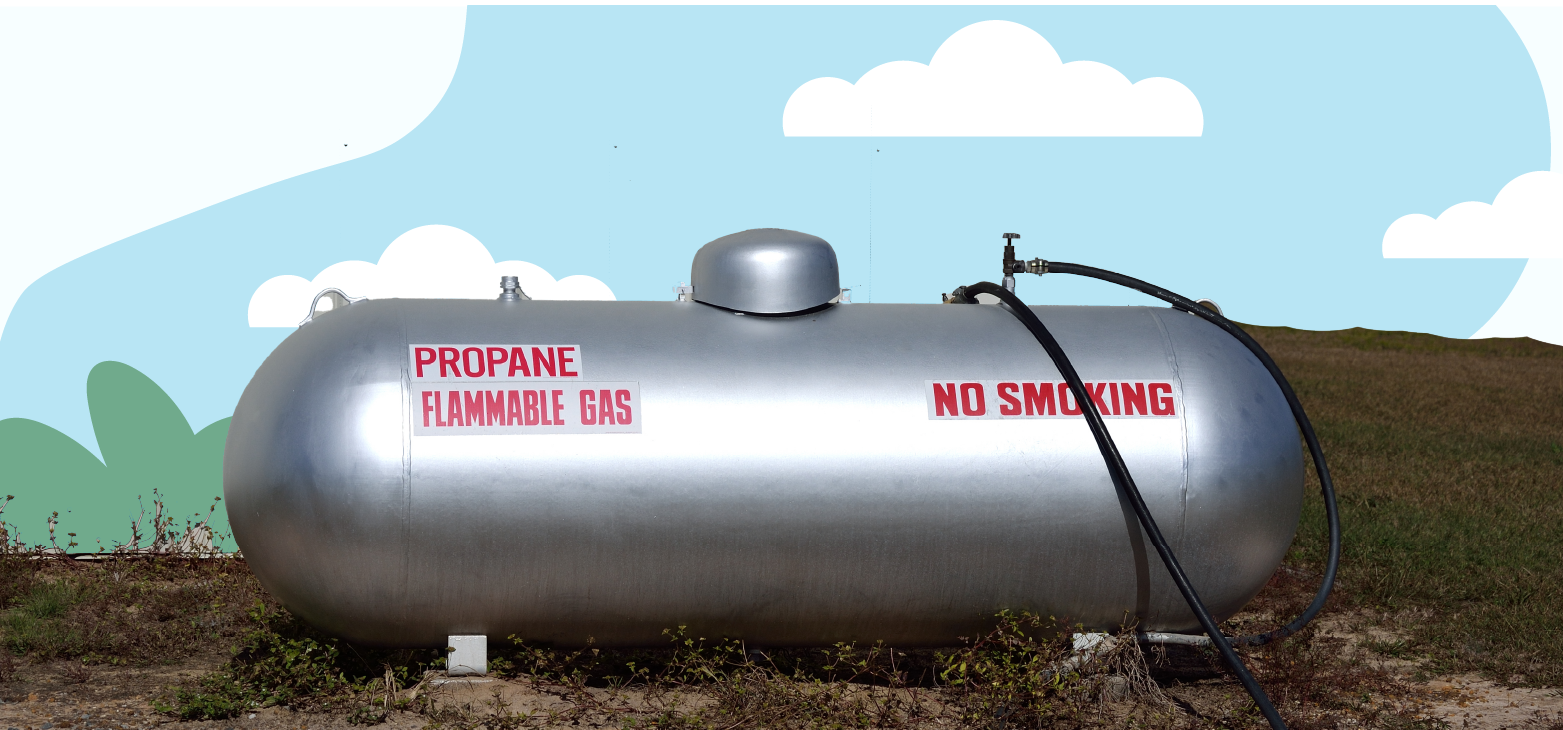
Propane, by contrast, is compressed into a liquid and stored in tanks. It's either sold in portable canisters (like the ones you use for a grill) or delivered by truck to a larger tank installed on your property.
This major difference affects homeowners; with natural gas, you don't have to monitor fuel levels or schedule refills—you've got an "always-on" fuel source. However, with propane, you'll need to keep track of your tank's fuel level and arrange deliveries to avoid running out.
Bottom line, natural gas is piped; propane is portable, and they're not the same. This means propane gives you more flexibility in rural or off-grid areas, while natural gas is generally cheaper and more convenient where pipelines are available.
While both fuels can power heating systems, stoves, water heaters, and more, they differ in how they're delivered, stored, and maintained. If you have access to a natural gas line, it's usually more convenient and cost-effective. If you live in a rural area or want on-site fuel storage, propane gives you more independence.
Difference Between Propane and Natural Gas
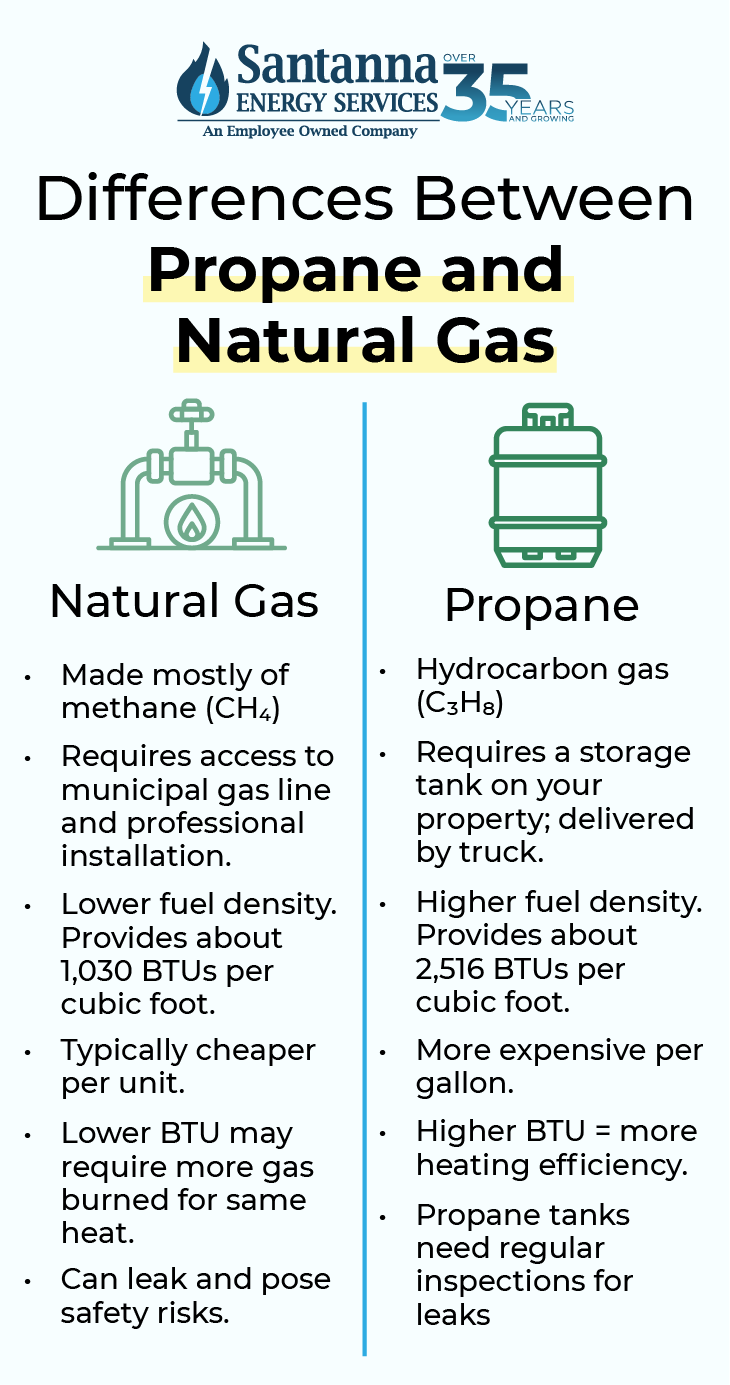
While both propane and natural gas are popular for their energy-efficiency and are used for similar purposes like heating and cooking, they differ in many ways. Aside from delivery and how they're stored, propane and natural gas they differ in how they're priced, and even how much heat they produce. Here are some of the biggest differences between propane and natural gas you should know if you find yourself stuck between energy sources:
Top Differences: Natural Gas vs. Propane
| Category | Natural Gas | Propane |
| Composition & Environmental Impact |
|
|
| Installation Process |
|
|
| Energy Used |
|
|
| Cost of Fuel |
|
|
| Efficiency |
|
|
| Safety Considerations |
|
|
| Availability & Access |
|
|
| Emissions |
|
|
| Maintenance Needs |
|
|
Difference Between Natural Gas and Propane
Composition and Environmental Impact
Natural gas and propane are both fossil fuels, but they differ in composition and environmental consequences. Natural gas is primarily composed of methane the second-largest contributor to climate warming after carbon dioxide. While it burns cleaner than coal or oil, methane leaks from extraction and pipeline infrastructure pose a significant environmental concern.
Propane is made of a hydrocarbon gas (C₃H₈) stored as a liquid under pressure. It burns cleaner than other fossil fuels, emitting fewer carbon emissions overall than that of natural gas. Propane may have a slight environmental edge because methane leaks from natural gas pipelines have a higher global warming potential.
Installation Process
The installation process for natural gas or propane depends largely on your location and whether your home already has the appropriate infrastructure.
Provided and metered by a public utility, natural gas requires access to a municipal gas line and a professionally installed connection. Installation typically involves running gas piping from the utility source to your home’s appliances or equipment (like a generator), followed by a pressure test and inspection by your local Municipal Gas Inspection Office.
If you opt for propane, the installation process involves selecting a safe, level outdoor space that meets clearance guidelines for the propane tank. A licensed installer will perform the tank setup, connect gas lines, and conduct safety tests and inspections. Propane systems may require more upfront work, including excavation, delivery planning, and additional equipment.
Since most U.S. residential appliances are designed for natural gas, natural gas has a slight edge over propane when it comes to the installation process and ultimately deciding between natural gas vs propane for your home.
Energy Used
When it comes to energy used (energy density), propane has a significant advantage over natural gas. To put this into perspective, natural gas provides about 1,030 BTUs per cubic foot of gas used, whereas propane generates approximately 2,516 BTUs per cubic foot—more than twice as much.
Efficiency
Due to its higher BTU content, propane tends to be more efficient in terms of heat output per unit. Appliances powered by natural gas must burn more fuel to achieve the same level of heat as their propane-powered counterparts. If you’re heating a large home or colder climate, propane may provide better heating efficiency.
This high efficiency can be beneficial to those who live in colder climates where fuels like propane are used more often for heating homes.
Performance and Preference
Natural gas is typically favored in urban and suburban areas where pipeline access is common and fuel costs are relatively low. Its continuous supply and connection to utility infrastructure make it a convenient choice for everyday use.
On the other hand, propane is often the fuel of choice in rural or off-grid locations without pipeline access. Because it’s stored on-site and delivered by truck, propane offers flexibility and independence from public utilities.
Safety Considerations
When exploring the safety consideration from natural gas vs propane, both fuel sources are about equal. If both fuel sources are properly maintained and installed, they’re completely safe. However, natural gas can be prone to leaks which typically rise and disperse quickly and can still pose an explosion risk if trapped indoors.
Propane can also be prone to leaks. Being heavier than air, leaked fuel can accumulate near the ground, which creates a pooling hazard that may be harder to ventilate during the event of a leak.
Availability and Access
Natural Gas is only available where pipeline networks exist—mostly urban/suburban areas. If your home is not located near a utility line, accessing natural gas may not be possible without significant infrastructure costs. Propane can be delivered by truck and stored on-site—accessible anywhere, including remote or rural locations. If you’re off the grid, propane may be your only option.
Emissions
While both fuels are considered cleaner-burning compared to coal or oil, they differ in their environmental footprints. Natural gas emits slightly more carbon dioxide when burned and poses a unique risk of methane leaks, which significantly contribute to global warming. However, propane burns cleaner with fewer greenhouse gases and less smog-producing emissions.
Maintenance Needs
In terms of ongoing maintenance, natural gas tends to require less homeowner involvement. Once installed, there’s no need to track usage or arrange deliveries—the utility company handles everything.
Propane demands more oversight. Homeowners must regularly check tank levels, schedule fuel deliveries, and ensure the tank remains in good condition. While this extra effort provides more control and autonomy, it also increases the time and attention required to manage your fuel supply. If you prefer a more hands-off energy experience, natural gas is the more convenient option.
Is Natural Gas Cheaper Than Propane?
Natural gas is generally cheaper than propane primarily because it’s a direct resource extracted from the Earth, while propane is a byproduct of natural gas processing and oil refining. Below are some reasons on why natural gas is cheaper than propane:
- Infrastructure advantage: Natural gas is delivered through existing pipelines in most urban and suburban areas, which keeps delivery costs low and steady. Propane, by contrast, needs to be delivered by truck and stored in tanks, adding transportation and handling fees to the price.
- Higher production volume: Natural gas is produced in larger volumes in the U.S., than propane especially from domestic shale gas fields. This supply abundance leads to lower wholesale prices compared to propane.
- Fewer delivery costs passed to consumers: With natural gas, utilities spread infrastructure maintenance costs across large customer bases. With propane, each homeowner is responsible for maintaining or leasing their tank, plus paying delivery fees for each refill.
While natural gas is usually cheaper per unit of energy and has lower ongoing delivery and infrastructure costs, the actual savings for your household will depend on your local fuel prices which can vary from region to region, if your home is already connected to a gas line, you avoid costly installation fees and even the efficiency of your appliances.
If you live in an area with natural gas service, it’s typically the most cost-effective choice in the long run. But in rural areas without pipelines, propane’s portability and higher energy content make it a strong alternative despite a higher per-gallon price.
When comparing energy costs, it’s important to look at the price per unit of energy, not just per gallon or cubic foot.
But when we convert both to the same energy unit—BTUs—the difference becomes clear:
Is Natural Gas Cheaper Than Propane?
| Fuel Type | Price | Energy Content per Unit | Cost per Million BTUs (MMBTU) |
| Natural Gas | $0.19.83/Mcf | ~1,030,000 BTUs | $19.25/MMBTU |
| Propane | $2.26/gal | ~91,500 BTUs | $24.70/MMBTU |
Natural gas is nearly half the cost of propane when measured by energy output. If your home has access to a natural gas line, it’s usually the more cost-effective option for heating and fuel use.
Does Propane Burn Hotter than Natural Gas?
Yes, propane does burn hotter than natural gas, and that difference comes down to the fuel’s energy content. The amount of heat a fuel produces is measured in BTUs, or British Thermal Units. Propane contains about 2,516 BTUs per cubic foot, while natural gas contains around 1,030 BTUs per cubic foot. In other words, propane provides more than double the energy of natural gas for the same volume.
When it comes to flame temperature, propane also has a slight advantage. Burning propane in air produces an adiabatic flame temperature of about 1,980°C (3,596°F), compared to natural gas (methane) which burns at around 1,960°C (3,560°F). While this temperature difference might seem small, it can matter in situations where higher heat is needed, like certain industrial or cooking applications.
This higher heat output means propane can heat a space faster and may require less fuel to achieve the same warmth as natural gas. However, appliances need to be designed for propane’s higher BTU output; using propane in a natural gas appliance without the right adjustments can be dangerous. Because propane is stored in pressurized tanks, it’s also portable making it a great option for homes or locations without access to natural gas pipelines.
It’s worth noting, though, that while propane delivers more heat per unit, it’s often more expensive than natural gas. So when deciding between the two, homeowners need to consider not just the heat output but also their budget, energy needs, and access to fuel sources. In short, propane burns hotter and more efficiently per volume, making it a powerful fuel choice in certain situations, but not always the most economical option.
Pros and Cons of Propane
Still deciding which fuel source is right for you? No worries, we’ll help you out by listing the most notable pros and cons to each option:
Pros of Propane
- High Energy Efficiency: Propane has a higher energy content per unit than many other fuels. This means propane-powered appliances often heat more quickly and efficiently, potentially leading to lower energy consumption.
- Clean-Burning Fuel: Recognized as a clean fuel under the 1990 Clean Air Act, propane produces fewer greenhouse gas emissions compared to other fossil fuels. It emits less carbon monoxide and nitrogen oxides, contributing to better air quality.
- Versatility: Propane can power a variety of household appliances, including furnaces, water heaters, stoves, dryers, and generators. This versatility allows homeowners to use a single fuel source for multiple applications.
- Off-Grid Reliability: For homes in rural or remote areas, propane offers a reliable energy source independent of the electrical grid. With on-site storage tanks, homeowners have control over their fuel supply, reducing vulnerability to power outages.
- Domestic Production: Nearly 90% of propane used in the United States is produced domestically, which can contribute to energy security and potentially more stable pricing.
Cons of Propane
- Fuel Cost Variability: Propane prices can fluctuate based on market conditions, and it is often more expensive per unit than natural gas. This variability can make budgeting for energy costs more challenging.
- Storage and Delivery Requirements: Unlike natural gas, which is delivered via pipelines, propane requires on-site storage tanks and regular deliveries. Homeowners must monitor fuel levels and schedule refills, adding an element of maintenance.
- Initial Installation Costs: Setting up a propane system can involve significant upfront expenses, including purchasing or leasing storage tanks and converting or replacing appliances to be propane-compatible.
- Aesthetic and Space Considerations: Above-ground propane tanks can be bulky and may not blend seamlessly with landscaping. While underground tanks are an option, they involve additional installation costs and considerations.
- Safety Precautions: While propane is generally safe when handled properly, it is a flammable gas that requires careful storage and usage. Proper installation, regular maintenance, and the use of carbon monoxide detectors are essential safety measures.
Pros and Cons of Natural Gas
Interested in natural gas? Before you make your decision, here’s a few pros and cons you should know:
Pros of Natural Gas
- Abundant and Accessible: For now, the United States has substantial natural gas reserves, ensuring a stable supply for the foreseeable future. This abundance contributes to energy security and supports widespread availability across many regions.
- Lower Emissions Compared to Other Fossil Fuels: When burned, natural gas emits fewer pollutants and greenhouse gases than coal or oil. Specifically, it produces about 50-60% less carbon dioxide than coal, making it a cleaner-burning fossil fuel option.
- Cost-Effective Energy Source: Natural gas is often more affordable than electricity for heating and cooking. Homes utilizing natural gas for these purposes can experience significant annual savings compared to electric alternatives.
- Reliable and Efficient: Natural gas appliances, such as furnaces and water heaters, are known for their efficiency and reliability. They can provide consistent heating and hot water, even during power outages, as they don’t rely on electricity.
- Established Infrastructure: Many urban and suburban areas have existing natural gas pipelines, facilitating easy integration into homes without the need for on-site fuel storage.
Cons of Natural Gas
- Environmental Concerns: While cleaner than other fossil fuels, natural gas is primarily composed of methane, a potent greenhouse gas. Leaks during extraction, transportation, or usage can contribute significantly to climate change.
- Non-Renewable Resource: Natural gas is a finite resource formed over millions of years. Its continued use delays the transition to renewable energy sources and sustainable practices.
- Safety Risks: Natural gas is highly flammable. Leaks can lead to explosions or carbon monoxide poisoning if not detected promptly. Proper installation, maintenance, and the use of detectors are essential for safety.
- Infrastructure Limitations: In rural or undeveloped areas, natural gas pipelines may not be available, limiting access. Extending infrastructure to these regions can be costly and time-consuming.
- Potential Health Impacts: Recent studies reveal that natural gas appliances, like stoves, increase exposures to nitrogen dioxide, which may exacerbate respiratory conditions like childhood asthma, especially in poorly ventilated spaces.
Natural Gas vs. Propane: Which is Right for You?
Choosing between propane and natural gas for your home isn’t just about price—it’s about what fits your lifestyle, home setup, and long-term needs. Here’s how to decide which fuel makes the most sense for you:
Choose Natural Gas If…
Your home already has a natural gas line
If your home is connected to a natural gas pipeline, it’s usually the most convenient and cost-effective option. Installation is simple, and you’ll have a continuous fuel supply without worrying about deliveries or refills.
You want lower long-term fuel costs
Natural gas is generally cheaper per unit than propane, which can add up to big savings over time especially if you use gas for heating, cooking, or water heating.
You’re installing a permanent outdoor kitchen or appliances
Natural gas grills, fire pits, and heaters are perfect for homeowners creating a fixed backyard entertainment space with a direct gas hookup.
You value “set it and forget it” convenience
With natural gas, you’ll never need to schedule deliveries, monitor tank levels, or swap out tanks. It’s a continuous, no-hassle supply.
Choose Propane If…
You live in a rural area without natural gas access
Propane is the go-to option for homes off the gas grid. Since it’s delivered and stored on-site in tanks, you can use it virtually anywhere.
You want flexibility and portability
Propane tanks make it easy to fuel portable grills, patio heaters, and even backup generators that can move with you or be relocated around your property.
You need higher heat output for specific appliances
Propane contains more than twice the energy per cubic foot compared to natural gas. That higher BTU rating makes propane ideal for tasks like quickly searing food or heating large spaces efficiently.
You want energy independence
With propane, you store your own fuel supply. This means you’re not reliant on utility pipelines, which can be helpful during outages or emergencies.
Both propane and natural gas are efficient, clean-burning fuels that can power your home reliably. But the best choice depends on where you live, how you plan to use it, and what kind of convenience matters most to you.
If you’re in a city or suburb with natural gas access, it’s usually the cheaper and more convenient route. If you’re in a rural area or need flexibility, propane offers reliable energy you can control.
FAQs
What type of gas is used in homes?
Most U.S. homes utilize natural gas delivered via underground pipelines for heating, cooking, and water heating. In areas without pipeline access, propane stored in on-site tanks is commonly used as an alternative.
Can I convert my propane appliances to natural gas or vice versa?
Yes, conversions are possible but require specific conversion kits and adjustments to accommodate differences in gas pressure and burner orifice sizes. It’s essential to have a licensed professional perform the conversion to ensure safety and compliance with local regulations.
Which fuel is safer to store on my property?
Propane is stored in pressurized tanks designed to withstand various conditions, making it safe when properly maintained. Natural gas, supplied through pipelines, eliminates the need for on-site storage but requires regular maintenance to prevent leaks.
Are there any government incentives for using propane or natural gas?
Yes, the federal government offers tax credits for energy-efficient home improvements, including installations of qualified natural gas or propane furnaces, boilers, and water heaters. Homeowners can claim 30% of the cost, up to $1,200 annually, for eligible improvements made through 2032.
Can you buy natural gas tanks?
Typically, natural gas is delivered via pipelines and not stored in residential tanks due to its gaseous state under normal conditions. While compressed natural gas (CNG) tanks exist, they are primarily used for vehicles and industrial applications, not standard home use.
Can propane appliances run on natural gas?
No, propane and natural gas appliances are not interchangeable due to differences in gas pressure and combustion characteristics. Using the wrong fuel can lead to inefficient operation or hazardous conditions. Always consult a professional for proper conversion or appliance selection.
Tyler is an experienced energy professional, having worked for Santanna Energy Services, for the past four years. He is passionate about renewable energy and believes that diversifying the energy grid is the key to a sustainable future. Tyler is dedicated to supplying consumers with the best possible energy solutions and works diligently to make sure that Santanna can deliver the highest quality service.