

Why is My AC Running But Not Cooling?

by Tyler Castle
Updated: August 17, 2026
12.1 min read
Key Points of This Article:
- An AC that runs but doesn’t cool is often caused by incorrect thermostat settings, dirty filters, blocked condenser units, or frozen evaporator coils.
- Refrigerant leaks, ductwork problems, improper system sizing, and failing compressors can also prevent the system from cooling effectively.
- Excess indoor heat, faulty sensors, and electrical issues like tripped breakers can further reduce cooling performance.
- Regular maintenance such as cleaning filters and coils, checking refrigerant levels, clearing drains, and scheduling professional inspections helps prevent most cooling issues.
When summer temperatures rise, the last thing you want is an air conditioner that’s running but not actually cooling your home. This common issue can lead to discomfort, high energy bills, and even long-term damage to your HVAC system if not addressed properly.
When your AC is on the fritz, it might be difficult to determine exactly what the issue is since problems can come from anywhere. We’re here to help as we break down the most obvious reasons why your AC is running but not cooling and how to troubleshoot these issues. Let’s get started!
Common Reasons Why Your AC Is Running But Not Cooling
Determining why your AC unit is running but not cooling isn’t the easiest thing to figure out without the right knowledge. Several factors could be causing the issue, ranging from simple fixes like a clogged air filter to more complex problems such as refrigerant leaks or compressor failure. Knowing what causes your AC to run but not cool can help you troubleshoot the problem and determine if you need professional help.
Here are some of the most common reasons your AC is running but not cooling:
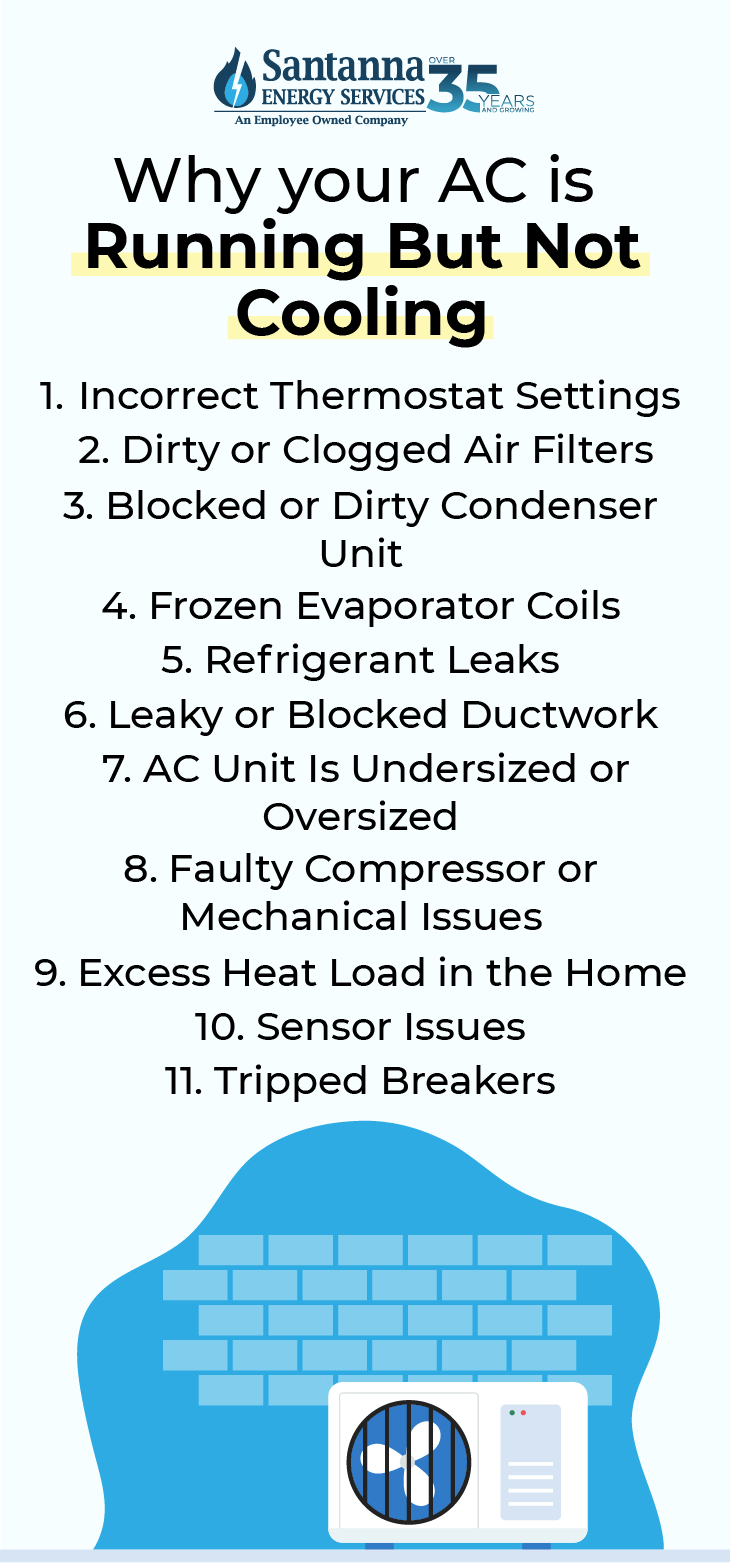
1. Incorrect Thermostat Settings
Before assuming there’s a major issue, check your thermostat settings. Your if your AC unit is running but not cooling, it might be because you’ve set the wrong thermostat settings. If your unit is set to “fan” mode instead of “cool,” this means the AC is running but not actively cooling the air.
To check if your settings are correct, ensure that your thermostat is set to “cool.” This will kick on your AC unit to begin cooling your home. Be aware that if you’ve set your thermostat to a temperature warmer than your room’s temperature you might not feel a difference and think there’s something wrong with your AC unit; be sure to set your unit at a cooler temperature.
If you frequently experience temperature inconsistencies, consider upgrading to a smart thermostat, which can optimize cooling efficiency and help lower energy bills.
2. Dirty or Clogged Air Filters
Your AC filter plays a critical role in ensuring proper airflow and efficiency. A clogged or dirty air filter can restrict airflow, making it harder for your AC to cool which might make you think there’s issues with your AC.
A dirty air filter can also cause your evaporator coil to freeze, further reducing cooling capacity; this means your AC will run but not cool. Worst of all, a dirty AC filter can lead to higher energy consumption as your AC struggles to push air through which can lead to higher electricity bills.
To troubleshoot this problem, check your filter and replace it if it’s clogged with dust and debris. As a general rule, change your filter every 1-3 months, depending on usage and environmental conditions.
3. Blocked or Dirty Condenser Unit
Another reason your AC is running but not cooling might come down to blocked or dirty condenser unit. The outdoor condenser unit is responsible for expelling heat from your home. If it’s covered in dirt, leaves, or debris, the system won’t be able to release heat properly, leading to poor cooling performance.
To fix this issue, start by turning off the power to your AC and remove any visible debris around the unit. For extra cleanliness, use a hose to gently clean the condenser coils and trim any plants or objects blocking airflow within 2-3 feet of the unit to get your unit going again.
4. Frozen Evaporator Coil
If your AC is running but not cooling, check if there’s ice buildup on the indoor evaporator coil. A frozen coil prevents the system from absorbing heat properly and this can happen for a variety of reasons. An evaporator coil can freeze from restricted air flow from a dirty filter or blocked air vents. In the same way, refrigerant leaks your AC unit on low for extended periods can freeze your coils.
To troubleshoot this issue, start by turning off your AC and letting the ice thaw. After it’s had the chance to thaw after a few hours, check your air filter and vents to ensure proper airflow. If the issue persists, call a professional to check for refrigerant leaks.
5. Refrigerant Leak
Refrigerant is the substance that absorbs heat from indoor air and cools it within your AC unit. If there’s a leak in your refrigerant, your AC won’t be able to cool effectively leading to your AC unit to run but not cool your home. Signs of low refrigerant levels in your AC unit include warm air blowing from vents, hissing or bubbling noises near the AC unit, and ice formation on refrigerant lines.
If your AC unit has low refrigerant levels, it likely means there is a leak, or the system was undercharged during installation. Running an AC with low refrigerant can damage the compressor, leading to costly repairs. Refrigerant leaks should only be handled by a licensed HVAC technician, as improper handling can be dangerous. So be sure to get a hold of a professional to fix this problem.
6. Leaky or Blocked Ductwork
If your AC is running but not cooling, check for leaky ducts which can cause cooled air to escape before reaching your living spaces. Blocked or leaky ductwork can lead to can reduced airflow with your home feeling warmer than what your thermostat is set to.
Signs of duct issues include uneven cooling throughout your home, higher-than-normal energy bills, and dirt and dust accumulation near vents. Be sure to look for visible gaps, holes, or disconnected sections in exposed ductwork which can also lead to a running but cooling AC unit.
To fix this issue, it’s best to have a professional duct inspection. For a DIY solution, try using a sealing mastic sealant or metal-backed tape (not regular duct tape) to seal small leaks which can improve AC performance and efficiency. For blocked air ducts, remove visible debris or dust buildup in vents and registers or schedule a professional cleaning.
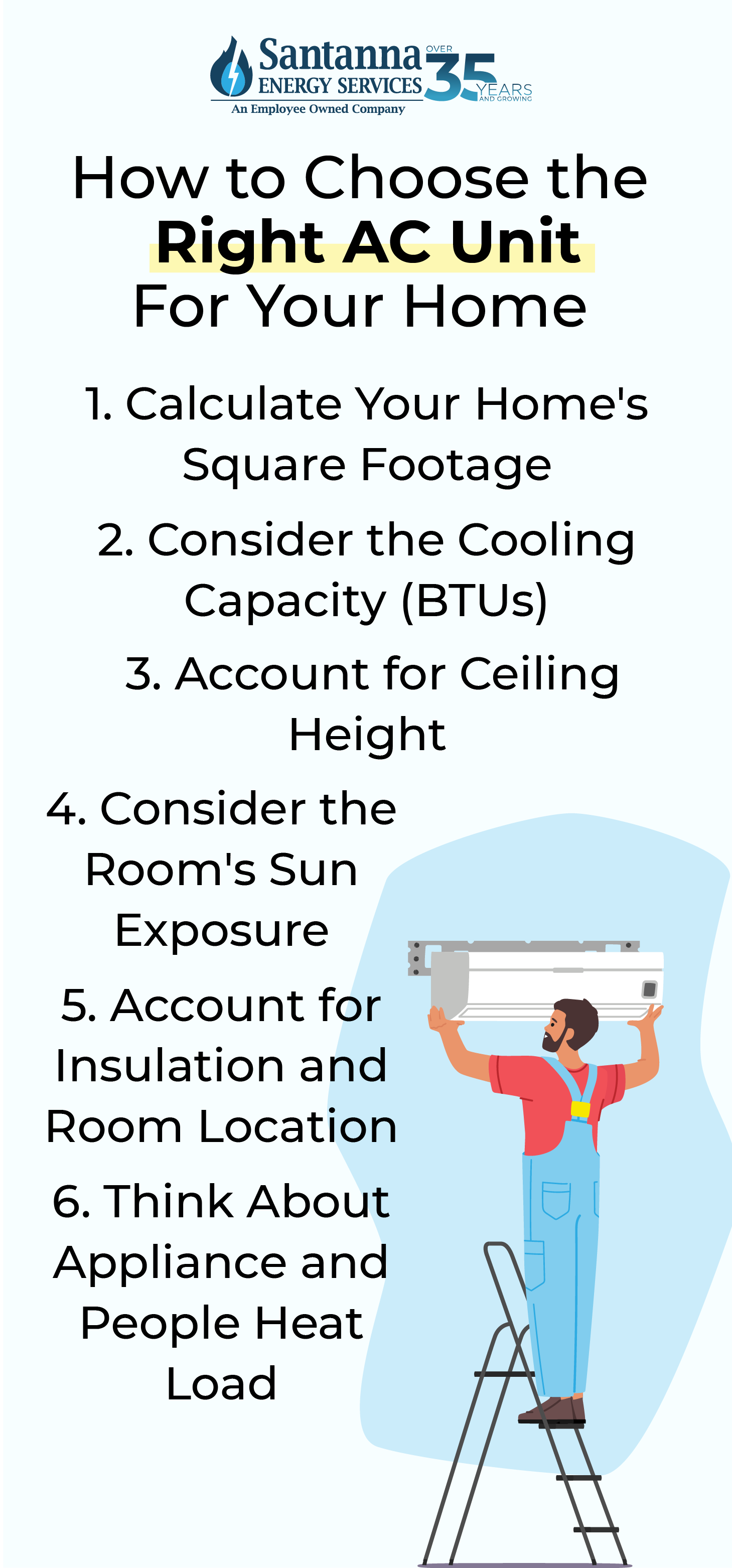
7. AC Unit Is Undersized or Oversized
An improperly sized AC unit can struggle to cool your home efficiently leading you to think there’s issues with your unit when there’s not. Undersized ACs run constantly but never fully cool the space while oversized ACs cool too quickly but cycle off before dehumidifying, leading to a clammy indoor environment.
If your AC size doesn’t match your home’s cooling needs, a professional HVAC assessment can help determine the right unit. As a general rule of thumb, 20 British Thermal Units (BTUs) are required per square foot of living space.
8. Faulty Compressor or Mechanical Issues
If your AC is running but not cooling, this could mean that you have a faulty compressor or deeper mechanical issues. The compressor is the heart of your AC system and if it’s failing, the unit won’t be able to cool your home. Signs of a bad compressor include your AC unit making clicking or buzzing noises, warm air blowing from vents despite the unit running, and tripped circuit breakers.
The best way to handle a faulty compressor or underlying mechanical issues in your AC unit is to schedule an appointment with a professional technician that can diagnose whether repair or replacement is needed.
9. Excess Heat Load in the Home
If your home generates excessive heat, your AC may struggle to keep up. Common causes of this include running appliances like ovens, dryers, and multiple electronics simultaneously, poor insulation or large windows with direct sunlight exposure, and too many occupants in one room generating heat.
Excess heat load can lead your AC to run but not cool because too much heat load can overwork the system, causing it to run continuously without effectively cooling your space. Reduce this load and get your AC unit running to its maximum by sealing air leaks, add weatherstripping, closing blinds and using ceiling or box fans to circulate air.
10. Sensor Issues (For Window or Ductless Units)
Many ACs have temperature sensors that regulate cooling cycles. If the sensor is misaligned or faulty, this can cause your AC to run but not cool your home. In the same way, a broken or disconnected sensor may cause the AC to run erratically or not adjust cooling as needed.
To troubleshoot this issue, first check the position of your sensor. The sensor should be near the evaporator coil but not touching it. If it’s bent or misaligned, carefully adjust it back into place. Gently wipe off dust and debris with a soft cloth or compressed air to improve accuracy on your sensor and keep the area around your sensor clear of obstructions for better performance.
11. Electrical Issues or Tripped Breakers
Your AC system relies on a stable electrical connection to power key components like the compressor, fan, and thermostat. If an electrical issue occurs, some parts of the unit may continue running while others fail —leading to a situation where the AC is running but not cooling.
If the breaker controlling the outdoor condenser unit trips, the fan inside may still run, but the compressor won’t be able to cool the air. Over time, electrical connections can loosen or get damaged, disrupting power to critical components like the compressor or thermostat. Blown fuses or a power surge can prevent your AC from cooling properly.
To troubleshoot tripped breakers on your AC unit, always start with checking the electrical panel for a tripped breaker and reset it if needed. If the breaker keeps tripping, this may indicate a deeper electrical problem requiring professional help. If you see burned wires or loose connections, turn off power to the AC and call an HVAC professional.
How Does Weather Affect AC Performance?
Weather conditions play a significant role in how efficiently your AC operates. When it comes to humidity, high outdoor temperatures make the AC work harder to cool your home. If the temperature is very high, the system may struggle to reach the desired indoor temperature. It’s recommended to keep your home’s humidity 30%-50% for optimal comfort and AC performance.
In the colder months, if the AC system has a heat pump (which works for both heating and cooling), it might struggle to produce enough heat during extremely cold weather. In such cases, the backup heating system may need to kick in, which can reduce energy efficiency.
Air quality factors also impact AC performance. High winds, dust storms, and pollen can clog air filters, restricting airflow and making the system work harder to cool your home. Additionally, heavy rain and storms can lead to debris buildup around the outdoor condenser unit, obstructing proper airflow and reducing efficiency.
Regular maintenance, such as cleaning filters and keeping the outdoor unit clear of obstructions, can help ensure your AC functions optimally in varying weather conditions.
How Long Should an AC Run?
The ideal AC run time varies based on outdoor temperature, insulation, thermostat settings, and unit size, but in general, an efficient air conditioner should run in 15-20 minute cycles to maintain a comfortable indoor temperature. Typically, an AC uses between 3,000 – 5,000 watts of power per cycle.
To optimize efficiency, set your thermostat to a moderate temperature (such as 78°F in summer) and use a programmable thermostat to regulate cooling cycles. If your AC runs longer than 30 minutes at a time or struggles to cool your home, it may need maintenance or an energy efficiency upgrade.
AC Maintenance Tips to Prevent Cooling Issues
Like any appliances within your home, you must maintain them to keep them performing to the best of their ability. Here are some of the most important tips you should utilize to keep your AC unit running in tip top shape:
- Clean or Replace Air Filters Regularly: Dirty filters block airflow, making the AC work harder. Check and replace or clean filters every 1-3 months, depending on use and the type of filter.
- Clean the Coils: Dust and debris can build up on both the evaporator and condenser coils. Clean them at least once a year to maintain efficiency and prevent cooling problems.
- Check Refrigerant Levels: Low refrigerant levels can reduce cooling power and strain the system. Have a professional check the refrigerant level and refill it if necessary.
- Clear the Condensate Drain: Ensure the condensate drain is clear to prevent water buildup, which could lead to mold growth or water damage. Check the drain line periodically for clogs.
- Inspect the Ductwork: Leaky ducts can cause your AC to lose efficiency. Inspect the ducts for leaks or blockages, and seal any gaps to prevent air loss.
- Clean the Outdoor Unit: Remove debris like leaves, dirt, or twigs from around the outdoor condenser unit. Ensure that there’s at least 2 feet of clearance around it for proper airflow.
- Check the Thermostat: Ensure your thermostat is calibrated correctly. If it’s not working well or reading temperatures inaccurately, it could lead to cooling issues. Upgrade to a programmable or smart thermostat for better control.
- Schedule Professional Inspections: Have a licensed HVAC professional inspect and service your system at least once a year, ideally before the cooling season starts. They can identify and fix potential issues early on.
- Lubricate Moving Parts: Regularly lubricate the motor and fan to prevent wear and tear. This helps to avoid mechanical failure and ensure smooth operation.
- Inspect Insulation: Make sure the insulation around the ducts, refrigerant lines, and attic is in good condition. Proper insulation reduces the workload on your AC and helps maintain consistent cooling.
Understanding why your AC isn’t cooling can help you take quick action to fix the problem. Regular maintenance, proper troubleshooting, and professional inspections can keep your AC running efficiently. If persistent issues occur, consider consulting an HVAC expert to determine whether repair or replacement is the best option.
Tyler is an experienced energy professional, having worked for Santanna Energy Services, for the past four years. He is passionate about renewable energy and believes that diversifying the energy grid is the key to a sustainable future. Tyler is dedicated to supplying consumers with the best possible energy solutions and works diligently to make sure that Santanna can deliver the highest quality service.