
Why Is My AC Blowing Hot Air?

by Jenna Mendez
Updated: October 9, 2026
11.6 min read
Key Points of This Article:
- If you're wondering why is my AC blowing hot air, the issue often comes down to thermostat settings, a dirty air filter, restricted airflow, low refrigerant, or problems with the outdoor unit.
- Start with simple troubleshooting steps you can safely do yourself, including checking the thermostat, replacing the air filter, confirming vents are open, inspecting the breaker, and clearing debris around the outdoor unit.
- After making a basic adjustment, give your AC about 10–15 minutes to respond, and avoid lowering the thermostat dramatically because it won't cool your home faster.
- Call an HVAC professional if your AC keeps blowing hot air, the outdoor unit won't run, ice forms on the system, the breaker trips repeatedly, or you notice burning odors or unusual noises.
Many homeowners assume that if their AC is blowing hot air, it means the whole system has failed. In reality, the cause could be something as simple as an incorrect thermostat setting or a dirty air filter, or it may be a problem that needs professional repair.
When your home isn’t cooling on a hot day, it’s natural to wonder what’s wrong and whether continuing to run the AC is wasting electricity.
Over 35 years of serving Midwest homeowners, we’ve seen how AC problems can affect both comfort and energy use. Here, we’ll explain why your AC may be blowing hot air, what you can safely check, and when it’s time to call an HVAC professional.
Why Is My AC Blowing Hot Air?
Your AC may blow hot air when something interrupts its ability to remove heat from your home. Some causes are simple to check yourself, while others need professional attention.
Let’s take a closer look at the common reasons why your AC is blowing hot air:
Incorrect Thermostat Settings
Incorrect thermostat settings are one of the simplest reasons your AC may blow warm air. If it’s set to Heat instead of Cool, the fan is set to On instead of Auto, or the temperature is set too high, your AC may not cool as expected.
The good news is that adjusting the settings may be all it takes to fix the problem.
Clogged or Dirty Air Filter
A clogged or dirty air filter restricts airflow, making it harder for your AC to cool your home. You may notice weak airflow, longer cooling cycles, or rooms that never seem to get comfortable.
Restricted airflow can also contribute to a frozen evaporator coil, so replacing a dirty filter is a simple place to start.
Low Refrigerant
Low refrigerant can prevent your AC from removing enough heat from your home. Refrigerant doesn’t normally get used up, so a low level often means there’s a leak somewhere in the system.
You may notice warm air from the vents, longer cooling cycles, or a home that takes much longer to cool. Because refrigerant requires specialized equipment to handle safely, have an HVAC professional inspect the system.
Frozen Evaporator Coil
A frozen evaporator coil can’t absorb heat properly, which can cause your AC to blow warm air. Common causes include restricted airflow from a dirty filter, blocked vents, or low refrigerant.
You may notice ice on the indoor unit, weak airflow, or an AC that runs continuously without cooling your home. Since several issues can cause the coil to freeze, it’s best to have an HVAC professional determine the cause.
Outdoor Unit Problems
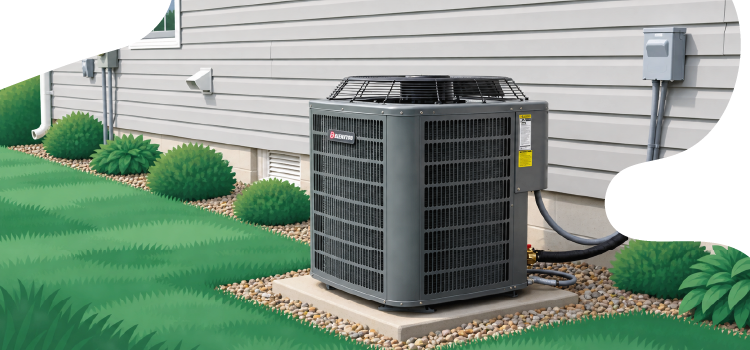
The outdoor unit releases heat from your home, so if it loses power, becomes blocked by leaves or debris, or stops working properly, your AC may blow air without cooling it.
You can check for obvious debris and make sure the unit appears to be running, but leave repairs to an HVAC professional.
Compressor or Electrical Problems
Compressor or electrical problems can prevent your AC from cooling even when the system appears to be running. You may notice the outdoor unit isn’t turning on, unusual noises, or a circuit breaker that repeatedly trips.
Because these problems involve critical electrical and cooling components, they should be inspected and repaired by a qualified HVAC professional.
What Have Santanna Energy Experts Experienced?
In a recent survey of Santanna Energy Experts, 65% (11 of 17 respondents) said they had experienced an air conditioner blowing warm or hot air when it should have been cooling.
Those who shared what caused the problem reported a surprisingly wide range of issues, including dirty filters, frozen coils, refrigerant problems, faulty thermostats, blown capacitors, electrical problems, coil leaks, and failed AC components.
One Santanna Energy Expert experienced an AC blowing warm air three separate times, with three different causes: a faulty thermostat, a bad furnace resistor, and a failed capacitor on the outdoor unit.
This is a good example of why homeowners shouldn’t assume that warm air always points to the same problem. Start with the simple checks, but recurring or unexplained cooling problems may require professional diagnosis.
AC Blowing Hot Air: The Complete Troubleshooting Guide
| What You’re Noticing | Most Likely Cause | Can You Fix It Yourself? | What You Should Do |
| AC is blowing warm air, but the fan is running | Incorrect thermostat setting or outdoor unit problem | Sometimes | Check the thermostat settings first, then do a visual check of the outdoor unit. |
| Weak airflow and warm air from the vents | Dirty or clogged air filter | Yes | Replace the air filter and let the system run for several minutes to see if cooling improves. |
| Indoor unit is running, but the outdoor unit is silent | Tripped circuit breaker or electrical issue | Limited | Check the breaker once. If it trips again or the outdoor unit still doesn’t run, contact an HVAC professional. |
| Ice on the indoor unit | Frozen evaporator coil | No | Turn the AC off to let it thaw, then schedule professional service if the problem continues. |
| Warm air with a hissing sound | Low refrigerant or a refrigerant leak | No | Contact an HVAC professional, as refrigerant systems require specialized repair. |
| Leaves, grass, or debris around the outdoor unit | Restricted airflow | Yes | Carefully clear debris around the unit, but don’t open or disassemble it. |
| AC runs almost constantly but never cools the house | Low refrigerant, airflow restriction, or another system issue | Limited | Complete the basic homeowner checks first. If the problem continues, schedule an HVAC inspection. |
| Higher electricity bill while your home still feels warm | The AC is running longer than normal | Depends | Address the cooling problem early to help reduce unnecessary electricity use and prevent further strain on the system. |
Quick Note: This chart is intended to help you identify common possibilities, not diagnose your air conditioning system. If your AC continues blowing hot air after the basic checks or you notice unusual noises, burning smells, or repeated breaker trips, it’s best to contact an HVAC professional.
Does an AC Blowing Hot Air Increase My Electricity Bill?
An AC blowing hot air can increase your electricity bill by $20 to $60 or more per month if it runs several extra hours each day without cooling your home. Instead of reaching the thermostat setting and shutting off, it keeps running and using electricity.
As a general estimate, window air conditioners use about 500 to 1,000 watts (0.5 to 1.0 kW) while running, while central air conditioners typically use between 3,000 and 5,000 watts (3 to 5 kW). The longer your AC runs, the more electricity it uses, which can lead to a higher monthly bill.
For example, if you have a 4,000-watt (4 kW) central AC running 8 hours a day, it uses about 32 kWh daily. If blowing hot air adds 2 extra hours, usage rises to 40 kWh per day, or about 240 additional kWh per month. At 18.83¢ per kWh (EIA, April 2026), that's roughly $45.19 more per month.
This is a hypothetical example, but the idea is simple: if your AC runs constantly while your home stays warm, addressing the problem can help reduce wasted electricity and restore your home's comfort.
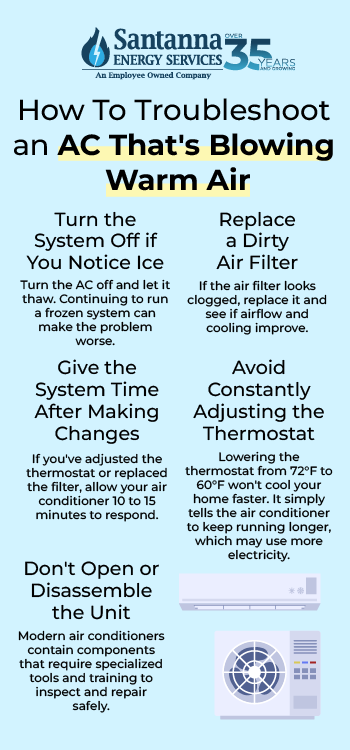
How To Troubleshoot an AC That's Blowing Hot Air
If your AC is still blowing warm air after the basic checks, try these safe troubleshooting steps to rule out simple problems and determine whether it's time to call an HVAC professional:
Turn the System Off if You Notice Ice
If you see ice on the indoor or outdoor unit, turn the AC off and let it thaw. Continuing to run a frozen system can make the problem worse.
If you notice a burning smell, repeated breaker trips, or the outdoor unit won't turn on, stop using the AC and call an HVAC professional.
Replace a Dirty Air Filter
If the air filter looks clogged, replace it and see if airflow and cooling improve. If the AC still blows hot air or ice returns, there may be another problem that needs professional attention.
Give the System Time After Making Changes
If you've adjusted the thermostat or replaced the filter, allow your air conditioner 10 to 15 minutes to respond. It may take a little time to start cooling normally again, so if it still isn't cooling, move on to the next step.
Waiting isn't recommended if the system won't start, you notice burning smells, or you hear loud or unusual noises.
Avoid Constantly Adjusting the Thermostat
Lowering the thermostat from 72°F to 60°F won't cool your home faster. It simply tells the air conditioner to keep running longer, which may use more electricity and increase your electricity bill without fixing the problem.
If your AC continues blowing warm air or isn't cooling at any setting, adjusting the thermostat won't solve the underlying issue.
Don't Open or Disassemble the Unit
Avoid removing panels, handling electrical components, or adding refrigerant yourself. Modern air conditioners contain components that require specialized tools and training to inspect and repair safely.
If you suspect an electrical problem, a refrigerant leak, or notice visible damage, it's safest to leave further diagnosis to a qualified technician.
When Should You Call an HVAC Professional?
If you've already checked the thermostat, air filter, circuit breaker, vents, and outdoor unit but your AC is still blowing hot air, it's time to contact an HVAC professional. You should also schedule service if you notice any of these warning signs:
- The outdoor unit isn't running even though your thermostat is set to cool.
- Ice is forming on the indoor or outdoor unit.
- Your circuit breaker keeps tripping after being reset once.
- You hear unusual noises, such as grinding, banging, or buzzing.
- You notice burning or electrical odors coming from the system.
- Your home isn't getting cooler even though the AC has been running for an extended period.
- Your electricity bill suddenly increases without a noticeable change in your cooling habits.
The sooner these problems are addressed, the less likely they are to put additional strain on your air conditioner or cause your electricity use to increase unnecessarily.
How To Prevent Your AC From Blowing Hot Air
While not every air conditioning problem can be prevented, a few simple habits can help your AC run efficiently and reduce the chances of it blowing warm air:
Replace Your Air Filter Regularly
A clean air filter helps air move freely through your cooling system. Replacing it every 1 to 3 months, or as recommended by the manufacturer, can improve airflow, support cooling performance, and reduce unnecessary strain on your air conditioner.
Keep the Outdoor Unit Clear of Debris
Leaves, grass clippings, weeds, and other debris can build up around the outdoor unit and make it harder to release heat. Keeping at least 1-2 feet of open space around your air conditioner unit helps maintain good airflow and allows it to operate more efficiently.
Schedule Routine HVAC Maintenance
Have your AC inspected before the cooling season to catch developing problems early and help it run efficiently throughout the summer.
Don't Ignore Early Warning Signs
Weak airflow, rooms that take longer to cool, unusual noises, musty odors, or an air conditioner that runs almost constantly are often early signs that something isn't working as it should. Addressing these issues early may help prevent larger problems later.
Keep Supply Vents Open and Unblocked
Make sure furniture, curtains, rugs, or other household items aren't blocking your supply vents. Good airflow helps cooled air circulate more evenly throughout your home and allows your air conditioner to work more effectively.
Use a Reasonable Thermostat Setting
Setting your thermostat much lower than your desired temperature won't cool your home faster. Instead, choose a comfortable temperature and let your air conditioner cycle normally. This can help reduce unnecessary run time and avoid wasting electricity.
Pay Attention to Changes in Your Electricity Use
A sudden increase in your electricity bill or longer AC run times may signal that your system isn't cooling efficiently. Catching these changes early can help prevent wasted electricity and bigger problems later.
FAQs
Can Hot Weather Make My AC Blow Hot Air?
No, hot weather alone shouldn't make your AC blow hot air, but extremely high outdoor temperatures can make it run longer and cool your home more slowly.
How Much Does It Cost to Fix an AC That's Blowing Hot Air?
The cost to fix an AC that's blowing hot air typically ranges from about $550 to $1,100 on average, although the actual cost depends on the underlying problem, with simple fixes costing much less than major repairs such as compressor or refrigerant system issues.
When your AC blows hot air, checking the basics first can help restore your home's comfort sooner while preventing your air conditioner from running longer and using more electricity than necessary.
If your AC is working harder, your electricity use can climb too. Pairing an efficient cooling system with an electricity plan that offers more predictable supply charges and fewer surprises can make managing your summer energy costs easier. Explore Santanna's Unlimited Energy plan to see if it's a good fit for your home.
Because a little troubleshooting today can help keep your home cooler, more comfortable, and more energy efficient tomorrow.
Jenna Mendez is an experienced energy content professional who has spent four years researching, writing, and managing authoritative educational content for Midwest energy consumers at Santanna Energy Services. As a lifelong Illinois resident, Jenna brings firsthand knowledge of the region’s climate, communities, and household energy needs to her work.
She specializes in translating complex energy topics into clear, practical guidance about electricity and natural gas costs, appliance energy use, energy efficiency, and everyday home living. Drawing on industry research, Santanna customer data, and insights from experienced energy professionals, Jenna incorporates this knowledge into her content to help homeowners better understand their energy choices and make informed decisions for their households.