
How to Tell If Your Thermostat Can Be Upgraded in Your House

by Jenna Mendez
Updated: October 9, 2026
13.5 min read
Key Points of This Article:
- You can tell if your thermostat can be upgraded by checking your HVAC system type, confirming it uses low‑voltage C‑wiring is present to support modern features like Wi‑Fi and app control.
- Common signs it’s time to upgrade include a thermostat that’s over 10 years old, requires frequent manual adjustments, lacks scheduling or Wi‑Fi access, or doesn’t match how your home actually feels.
- Upgrading to a programmable or smart thermostat can improve day‑to‑day comfort and help lower heating and cooling costs by automatically adjusting temperatures based on your routine and home usage.
Is your thermostat quietly working against your comfort and energy bill? Many homeowners start thinking about upgrading their thermostat when something in the house just doesn't feel quite right.
Your thermostat may seem like a small device on the wall, but it plays a major role in how your home feels every day. It acts as the control center that tells your heating and cooling system when to turn on or off. If it's outdated, it can affect comfort, how long your HVAC system runs, and how efficiently your home uses energy.
As an energy supplier for more than 35 years, we understand how systems, like your thermostat, and home habits influence comfort and energy use.
The good news is that many homes can upgrade their thermostat. The key is knowing whether your current system and wiring support a newer model.
In this guide, we'll walk through simple ways to tell if your thermostat can be upgraded, what signs to look for, and what you should check before considering a smart or programmable thermostat.
Can I Upgrade My Thermostat? 3 Easy Steps To Tell
Many thermostats can be upgraded, but it depends on your system, your wiring, and whether the new thermostat works with your heating and cooling system.
Before upgrading, there are three key things your home should have:
- A compatible HVAC system (like a furnace, central AC, or heat pump)
- Low-voltage wiring that supports modern thermostats
- Enough wiring support for the features you want (such as a C-wire for smart features)
Most homes already have these, especially if they use central heating and cooling. However, some homes with electric baseboard heat, boilers, or older systems may need a more specific type of thermostat.
Here’s how to check if your home has these three things, which can help you confirm if your thermostat can be upgraded:
Step 1: Identify What Type of Thermostat You Have
Start by checking what type of thermostat you have, because this helps you know how easy it is to upgrade.
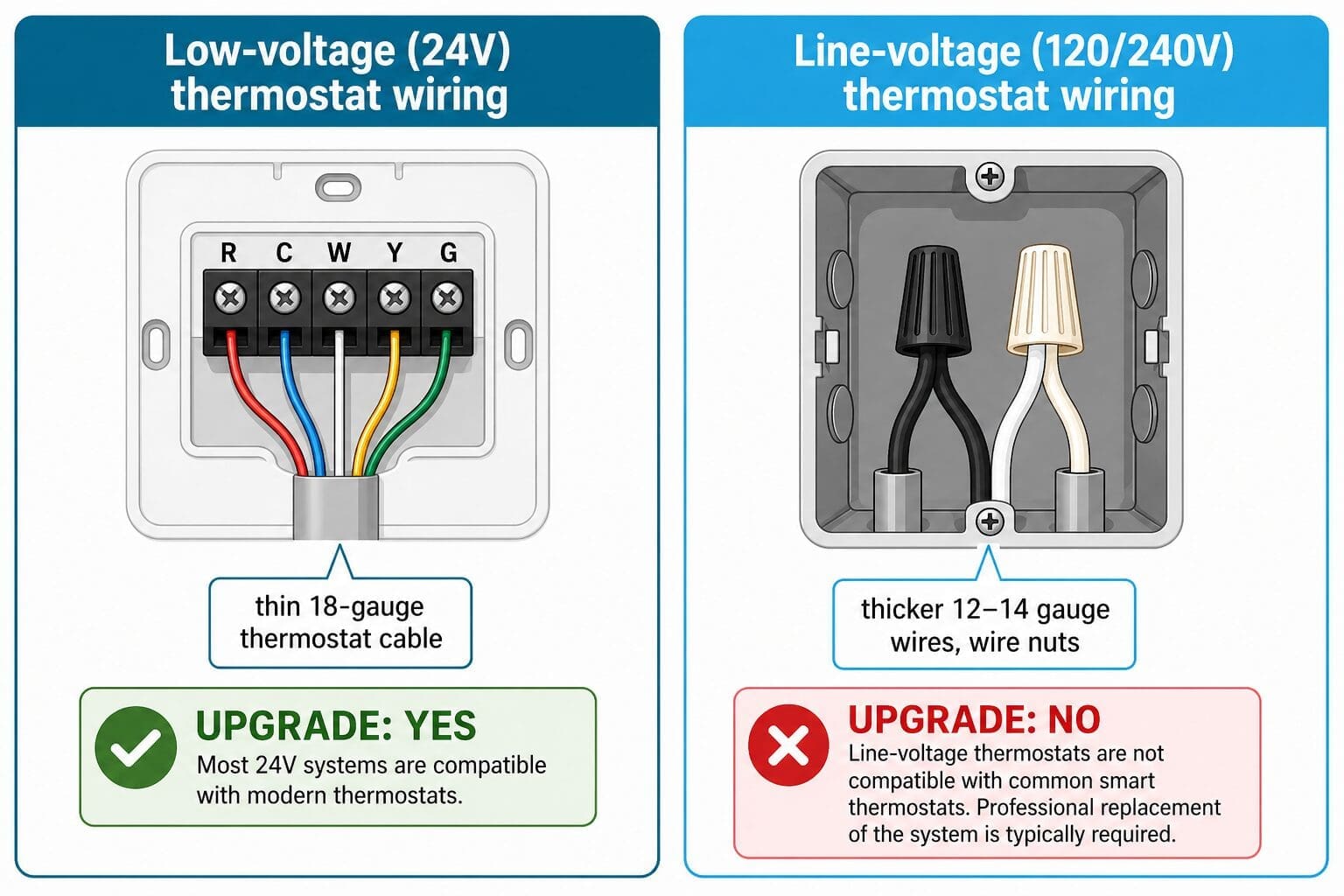
Most homes use low-voltage thermostats, which have thin wires and work with systems like furnaces, central air, or heat pumps, which are usually easy to upgrade to a smart or programmable thermostat.
Some homes, especially those with electric baseboard heaters, use high-voltage thermostats with thicker wires. These systems are different, and most smart thermostats are not made for them, so they may need a special type of thermostat.
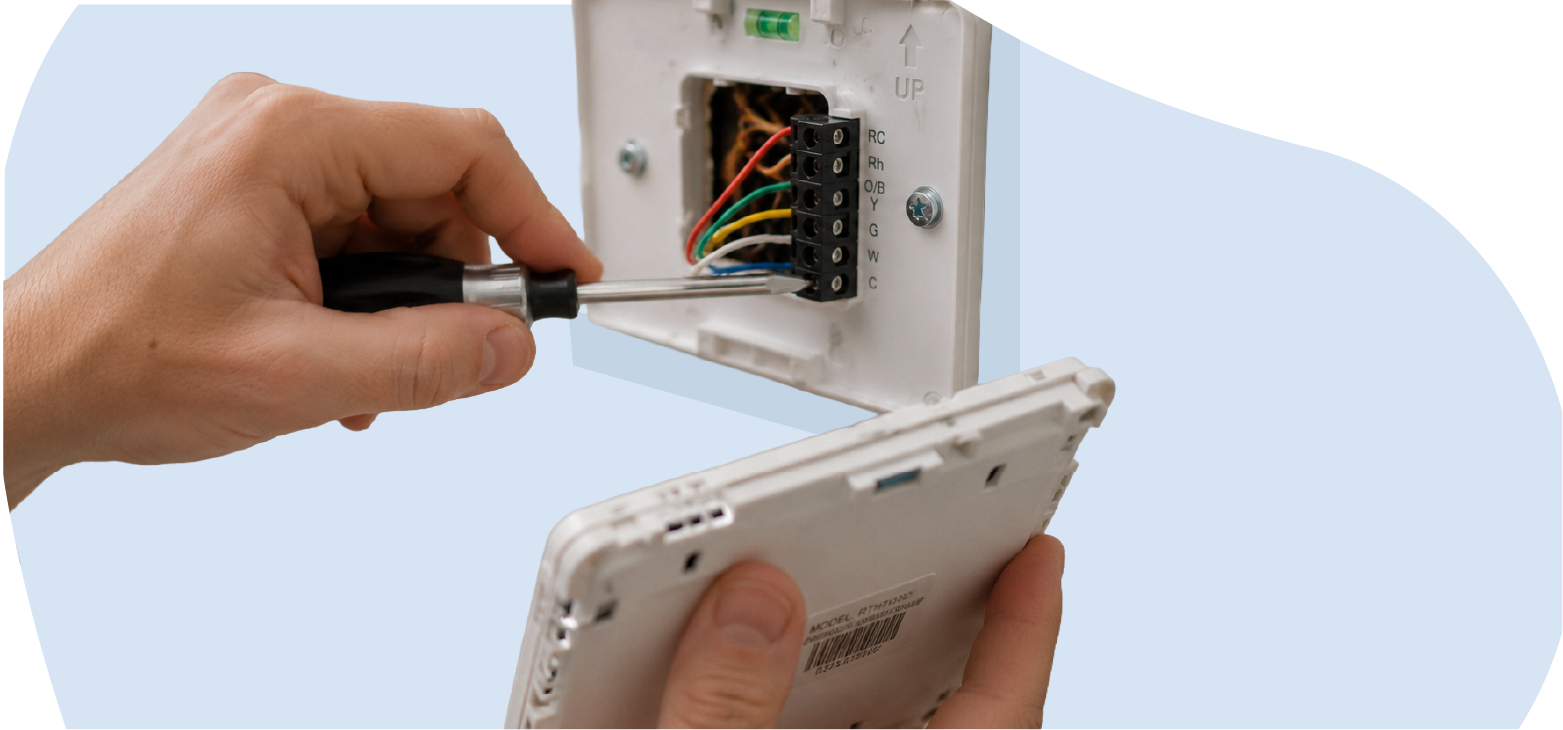
Step 2: Check for a C-Wire
One of the easiest ways to tell if your home’s thermostat can be upgraded is to check whether your current thermostat has a C-wire, also called a common wire. Having a C-wire can make it easier to upgrade to a smart thermostat because it provides steady power for features like Wi-Fi, app control, and a digital display.
Some homes already have one connected, while others may have an extra wire behind the wall that can be used. In older homes, there may not be one at all.
Step 3: Know Your HVAC System Type
Finally, make sure your thermostat matches the heating and cooling system in your home.
The thermostat does not just control temperature; it also communicates with your HVAC system. If they are not compatible, the thermostat may not work properly. Most homes with furnaces and central air can be easily upgraded because these systems work well with modern thermostats.
Older systems like boilers or radiant heat may need special thermostats, and more complex setups like zoned or multi-stage systems need closer checking. The main idea is simple: your thermostat has to match your system for the upgrade to work.
How To Tell If a Thermostat Can Be Upgraded in Your House
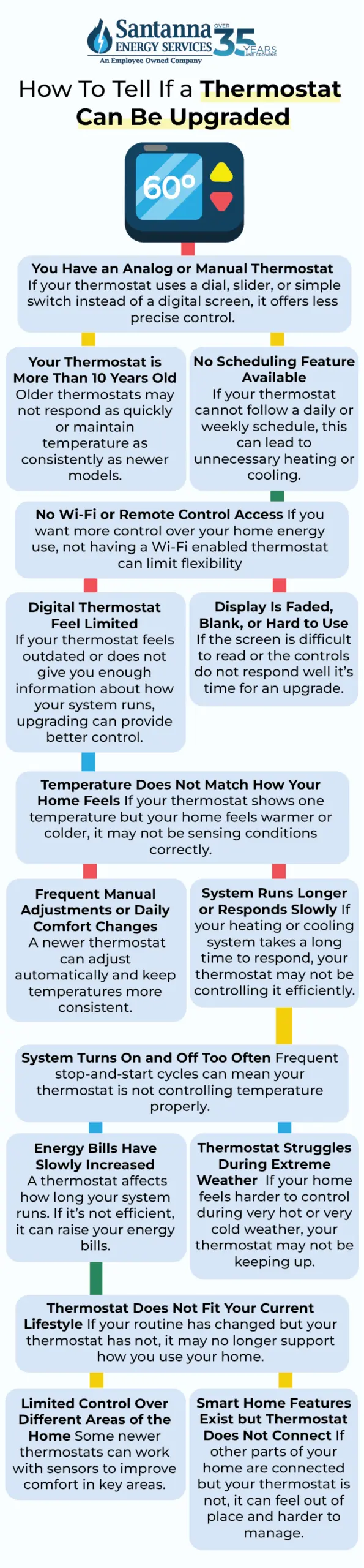
You can usually tell if your thermostat can be upgraded by looking at how it works, how your home feels, and whether your heating and cooling system supports a newer model.
It really comes down to two simple questions. Does your thermostat feel outdated or hard to use? And does your home have a system that can support a newer thermostat?
If your comfort feels off, your control feels limited, or your thermostat no longer fits your daily routine, it may be time to consider an upgrade. The good news is that many homes, especially those with central heating and cooling, are already set up to make upgrading possible.
Here are common signs your thermostat may be ready for an upgrade:
You Have an Analog or Manual Thermostat
If your thermostat uses a dial, slider, or simple switch instead of a digital screen, it offers less precise control and requires manual adjustment for every setting. This makes it harder to keep your home comfortable throughout the day and can cause your system to run longer than needed.
The Thermostat Is More Than 10 Years Old
Older thermostats can still work, but they often become less reliable and less accurate over time. They may not respond as quickly or maintain temperature as consistently as newer models and lack modern features that make comfort easier to manage. Upgrading can improve both performance and control. Thermostats typically last 10-20 years; anything older should be upgraded.
No Scheduling Feature Available
If your thermostat cannot follow a daily or weekly schedule, your system may run at the same setting even when it is not needed. This can lead to unnecessary heating or cooling when you are asleep or away. A newer thermostat can better match your routine and reduce wasted energy.
No Wi-Fi or Remote Control Access
Your thermostat should be upgraded if it cannot connect to Wi-Fi. If you want more control over your home energy use, not having a Wi-Fi-enabled thermostat can limit flexibility when plans change or if you forget to adjust the temperature before leaving. Upgrading allows you to manage comfort from anywhere.
Digital Thermostat Feels Limited or Lacks Useful Features
Some digital thermostats offer basic control but lack features like app access, energy insights, flexible scheduling, or system notifications. If your thermostat feels outdated or does not give you enough information about how your system runs, upgrading can provide better control and visibility.
Display Is Faded, Blank, or Hard To Use
If the screen is difficult to read or the controls do not respond well, even simple changes can become frustrating. This often means the thermostat is wearing out. Upgrading can make everyday use easier and more dependable.
The Temperature Does Not Match How Your Home Feels
If your thermostat shows one temperature but your home feels warmer or colder, it may not be sensing conditions correctly. This can cause your system to run at the wrong times and make comfort harder to maintain.
Frequent Manual Adjustments or Daily Comfort Changes
If you find yourself changing the temperature often or noticing your home feels different at various times of the day, your thermostat may not be keeping up with your routine. A newer thermostat can adjust automatically and keep temperatures more consistent.
System Runs Longer or Responds Slowly
If your heating or cooling system takes a long time to respond or runs longer than expected, your thermostat may not be controlling it efficiently. This can lead to higher energy use and uneven comfort.
System Turns On and Off Too Often
Frequent stop-and-start cycles can mean your thermostat is not controlling temperature properly. This can make your home feel less steady and may put extra strain on your HVAC system.
Energy Bills Have Slowly Increased
If your heating and cooling costs keep rising and your thermostat is older or limited, it may not be managing your system efficiently. A thermostat affects how long your system runs and how well it matches your routine.
Thermostat Struggles During Extreme Weather
If your home feels harder to control during very hot or very cold weather, your thermostat may not be keeping up. In Midwest climates, a more responsive thermostat can help adjust better to seasonal changes.
Thermostat Does Not Fit Your Current Lifestyle
If your routine has changed but your thermostat has not, it may no longer support your home’s use. Working from home or having a changing schedule can make manual control harder to manage.
Limited Control Over Different Areas of the Home
If some rooms feel too hot or too cold and your thermostat cannot adjust for those differences, it may not offer enough control. Some newer thermostats can work with sensors to improve comfort in key areas.
No Alerts or System Notifications
Older thermostats do not alert you when something may be wrong. Newer models can provide reminders or notifications that help you catch small issues earlier and keep your system running smoothly.
Smart Home Features Exist, but the Thermostat Does Not Connect
If other parts of your home are connected but your thermostat is not, it can feel out of place and harder to manage. Upgrading your thermostat can bring your heating and cooling system in line with the rest of your home.
How Thermostat Upgrades Affect Comfort and Energy Use
Upgrading your thermostat can make your home more comfortable and may help lower your heating and cooling costs. Heating and cooling make up a big part of your energy bill, so even small changes in how your system runs can add up over time. ENERGY STAR says smart thermostats can save about 8% on heating and cooling costs on average.
To put that into real dollars: ENERGY STAR notes that the average American household spends over $900 per year on heating and cooling. At an average 8% reduction, you would save at least $70 per year just by upgrading your thermostat. If you pay $1,500 per year on heating and cooling, you would save $120.
The reason for these savings is simple: your thermostat tells your system when to turn on and for how long. If it is outdated or poorly set up, your system may run longer than needed. A newer thermostat can automatically adjust when you are asleep or away, so your system doesn’t work harder than it has to.
Compared to older thermostats, smart models make things easier. You do not have to remember to change the settings all the time. The thermostat can follow your routine or adjust based on when you are home, which helps keep your house comfortable without extra effort.
Benefits of Upgrading Your Thermostat
Upgrading your thermostat can change how your heating and cooling system runs each day. Since thermostats control when your system turns on and how long it runs, even small improvements in control can affect both comfort and energy use over time.
Here’s how those benefits can show up in your home:
Lower Heating and Cooling Costs
An upgraded thermostat can help lower your energy costs by reducing unnecessary heating and cooling throughout the day. Instead of running at the same setting all the time, it can adjust based on your routine, so your system is not working when it does not need to.
Over time, this more intentional control can help you avoid wasted energy and keep your monthly costs more manageable, especially during high-usage seasons. Depending on how much you spend on heating and cooling, upgrading your thermostat can save you $50-$150 a year.
More Consistent Comfort Throughout the Day
A newer thermostat can help keep temperatures steadier, so your home does not feel too warm one moment and too cold the next. Making more precise adjustments helps your heating and cooling system respond better to changes throughout the day. This can make your home feel more balanced and comfortable from morning to night.
Easier Control at Home and Away
An upgraded thermostat makes it easier to manage your home’s temperature without constantly walking to the wall unit. With features like scheduling or app control, you can adjust settings quickly, whether you are at home or away. This gives you more flexibility when plans change and helps you stay comfortable without extra effort.
A Smaller Impact on Energy Use and the Environment
When your thermostat helps reduce unnecessary heating and cooling, your home uses less energy overall. Using less energy not only helps lower your bills but can also reduce the environmental impact of energy use, according to Energy.gov. Small changes in how your system runs can add up over time.
Better Temperature Control Around Your Daily Routine
A newer thermostat can automatically adjust to your schedule, such as when you wake up, leave the house, or go to bed. This helps avoid heating or cooling an empty home and keeps your space comfortable when you actually need it. Over time, this better alignment with your routine can improve both comfort and efficiency.
Fewer Manual Thermostat Changes
Older thermostats rely on you to remember when to change the temperature. A newer model can handle many of those adjustments automatically, which means less back-and-forth throughout the day. This makes managing comfort simpler, especially during busy routines.
More Visibility Into How Your Home Uses Energy
Some newer thermostats provide simple insights into how often your system runs and how your settings affect energy use. This helps you better understand your habits and make small adjustments if needed. Over time, this added visibility can support better energy decisions.
A Smarter Replacement for an Outdated Thermostat
If your current thermostat is hard to use, difficult to read, or no longer fits how your home runs, upgrading can be a simple way to improve daily comfort. It allows you to gain more control and better performance without replacing your entire heating and cooling system.
FAQs
Do I definitely need a C-wire for a smart thermostat?
Not always. Most smart thermostats use a C-wire for constant power, but some models work without one, and some homes can use an adapter or an unused wire.
Will my thermostat work if the Wi-Fi goes out?
Usually yes. An ENERGY STAR certified smart thermostat should still work as a basic thermostat, but app control and other connected features may stop until Wi-Fi comes back.
Can I go back to my old thermostat if I don’t like the new one?
Usually yes, as long as your old thermostat can be reinstalled correctly with the original wiring.
Is a programmable thermostat still a good option, or do I need a smart thermostat?
A programmable thermostat is still a good option if your schedule is predictable, because automatic setbacks can still help lower heating and cooling costs.
Will a new thermostat fix uneven temperatures in my house?
Not always. Uneven temperatures can also come from duct leaks, insulation gaps, airflow problems, humidity, or the layout of your home.
Most homes can upgrade their thermostat, but the right choice depends on your thermostat type, wiring compatibility, and the heating and cooling system in your home. Taking a few minutes to check these basics can help you decide whether a newer thermostat could improve comfort and day-to-day control.
For many Midwest homeowners, better thermostat control can also help manage heating and cooling use during cold winters and humid summers. Small improvements in how your system runs can make a difference in both comfort and energy costs over time.
Once your home systems are running efficiently, it can also help to think about long-term stability on the supply side of your energy bill. Santanna’s Unlimited Energy plan is one option to explore if you want predictable supply charges, fewer surprises during high-usage months*, and easier budgeting from season to season.
* Restrictions apply. Enrollment based upon program eligibility. Customers using more than 125% of normal monthly usage as determined by Santanna may be required to switch plans.
Jenna Mendez is an experienced energy content professional who has spent four years researching, writing, and managing authoritative educational content for Midwest energy consumers at Santanna Energy Services. As a lifelong Illinois resident, Jenna brings firsthand knowledge of the region’s climate, communities, and household energy needs to her work.
She specializes in translating complex energy topics into clear, practical guidance about electricity and natural gas costs, appliance energy use, energy efficiency, and everyday home living. Drawing on industry research, Santanna customer data, and insights from experienced energy professionals, Jenna incorporates this knowledge into her content to help homeowners better understand their energy choices and make informed decisions for their households.