

What Should Your Hot Water Heater Temperature Be Set To? (And What It’s Costing You If It’s Too High)

by Tyler Castle
Updated: June 29, 2026
14.9 min read
Key Points of This Article:
- The best hot water heater temperature for most homes is 120°F. This setting balances comfort, safety, and energy efficiency while lowering the risk of scalding and unnecessary heating costs.
- Setting your water heater temperature higher than necessary can increase water-heating energy use by 5% to 10%, potentially adding $42 to $84 per year to your energy costs.
- Simple changes like fixing leaks, installing low-flow fixtures, insulating hot water pipes, and shortening shower times can help reduce water-heating costs without sacrificing comfort.
Hot water that feels too hot, not warm enough, or inconsistent is a common experience in many homes. In some cases, energy bills that increase without a clear reason can be part of the same issue.
What many people do not realize is how hot their water heater should be and how it can affect both their day-to-day experience and their monthly energy costs. In fact, in a recent Santanna survey, 73% of employee-owners said they do not know what temperature their hot water heater is currently set to.
That means many homeowners could be using more energy than necessary or missing out on simple opportunities to improve comfort and safety.
What Is the Recommended Hot Water Heater Temperature for Most Homes?
According to the U.S. Department of Energy, most homes should set their hot water heater temperature to 120°F to reduce scalding risk, limit mineral buildup, and keep electricity bills in check.
At this setting, your water is hot enough for everyday use like showers, washing dishes, and doing laundry, without being hotter than it needs to be.
Higher temperatures can cause burns quickly, while this setting helps reduce that risk while still meeting daily needs. It also works well for smaller households where hot water demand is more manageable.
In some cases, a higher setting around 120°F -130°F may be considered, especially if someone in the home has a weakened immune system, if your dishwasher does not heat water on its own, or if multiple people are using hot water at the same time.
Setting your hot water heater to 120°F is widely recommended because it supports both safety and efficiency. Water set too high may require more energy to maintain.
Does Setting Your Water Heater Temperature Too High Increase Your Energy Bills?
Yes, setting your water heater temperature too high can increase your energy bills by $42 to $84 per year.
Water heating makes up about 12% of a home's total energy use, making it the second largest energy expense in most households. And in many homes, raising the temperature above the recommended setting of 120°F can increase water-heating energy use by about 5% to 10%
That happens because a higher water heater temperature setting requires more energy to both heat the water and keep it hot throughout the day. The hotter the setpoint, the harder the system has to work to maintain that temperature.
Let's dive deeper to see how adjusting your electric or gas hot water heater temperature affects your bill:
A typical electric water heater may use around 400 kWh per month for water heating. According to the U.S. Energy Information Administration, the average residential electricity rate is 17.65 cents per kWh as of February 2026. That means most electric water heaters add about $70.60 to your monthly electricity bill.
If your electric water heater temperature is set a few degrees higher than needed, it can increase energy use by 5-10% and raise your monthly cost by about $3.50 to $7.00.
For homes with a natural gas water heater, you can estimate costs in a similar way.
A typical gas water heater may use about 35,500 BTU per hour or roughly 0.355 therms.
The average residential natural gas rate, according to the U.S. Energy Information Administration, is $15.07 per thousand cubic feet as of February 2026. Setting the temperature too high could increase monthly gas bills by about $1.60 to $4.90.
Higher settings also increase standby heat loss, which is the heat that escapes from stored hot water while it sits in the tank. As a result, the water heater cycles on more often to keep water at the chosen temperature. Over time, that extra runtime can increase total energy use for both electric and gas systems.
When the temperature is set too low, your water may not feel warm enough for showers, cleaning, or daily tasks. This can lead to longer use as you try to get the right temperature, which can affect how efficiently your system runs your water bill costs.
When Should You Adjust Your Water Heater Temperature? Signs To Look For
You should adjust your water heater temperature when your hot water no longer feels comfortable, consistent, or aligned with your daily needs.
Here are common signs and situations to watch for so you can decide when to adjust your hot water heater temperature properly:
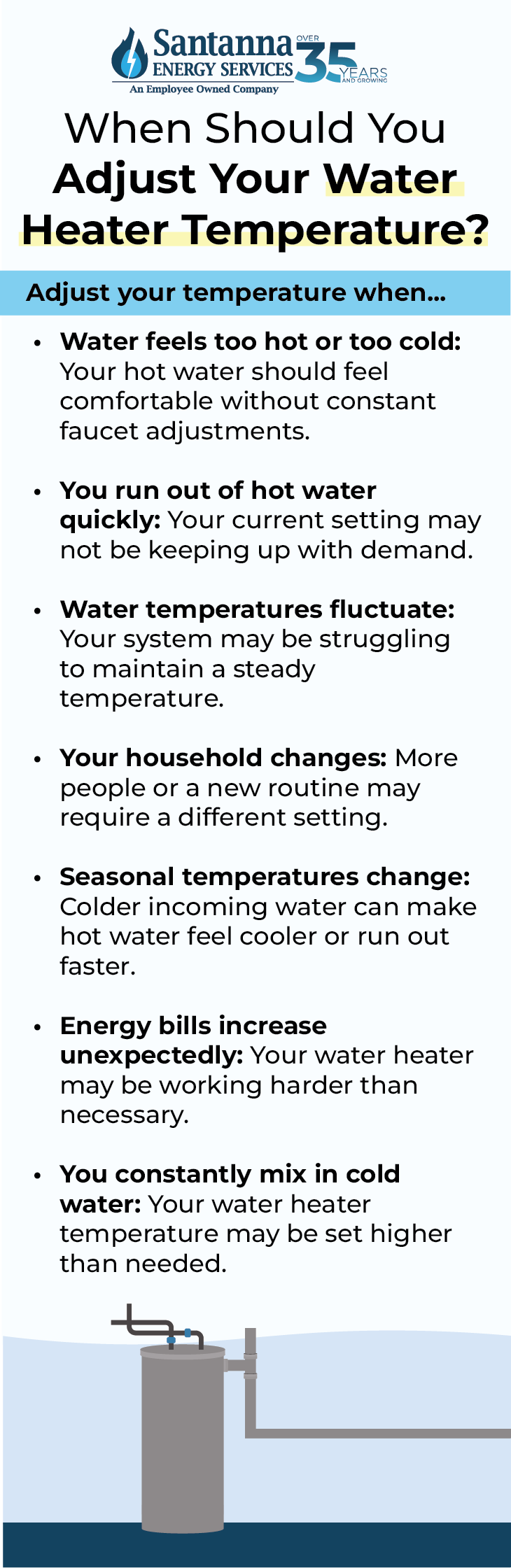
- Your water feels too hot or too cold: If your water is uncomfortable to use or does not feel warm enough for everyday tasks, your setting may be too high or too low. Your hot water should feel steady without constant adjustment at the faucet.
- You're running out of hot water too quickly: If hot water runs out faster than expected, especially during showers or busy times of day, your current setting may not be keeping up with demand.
- Your water temperatures consistently fluctuate: If your water switches between hot and cold during use, your system may be struggling to maintain a consistent temperature.
- There are changes in household size or routine: If more people are using hot water or your schedule has shifted, your current setting may no longer match your needs. Back-to-back showers or increased daily usage can impact performance.
- Seasonal changes: During colder months, incoming water starts at a lower temperature. This can make your hot water feel cooler or run out faster, even if your setting has not changed.
- You're experiencing unexpected increases in energy use: If your energy bills rise without a clear reason, your water heater may be working harder than necessary due to a higher temperature setting.
- There's a need to mix in a lot of cold water: If your hot water feels too strong and you regularly add cold water to make it usable, your temperature may be set too high.
Paying attention to these everyday signs can help you decide when a small adjustment may improve both your comfort and your energy use at home.
What Prompted Real Homeowners to Adjust Their Water Heater Temperature?
In a recent Santanna Energy Experts survey, employee-owners who had adjusted their water heater temperature most commonly cited:
- Running out of hot water during back-to-back showers
- Water that felt too hot for children or other family members
- Moving into a new home or replacing a water heater
- Wanting longer-lasting hot water for household needs
Most adjustments are driven by comfort, safety, and household demand rather than energy savings alone.
What Factors Should You Consider When Setting Your Hot Water Heater Temperature?
Your hot water temperature setting depends on how your household uses hot water, your safety needs, and how efficiently you want your system to run. The right setting is not just about comfort. It is about finding a balance that works for your daily routine while keeping energy use reasonable.
Here are the key factors that can help you decide what setting works best for your home:
Household Size and Hot Water Usage
Homes that use hot water simultaneously, such as during morning routines or back-to-back showers, may need a slightly higher setting to keep up with demand. Larger households tend to use more hot water quickly, while smaller households can usually stay comfortable at a moderate setting.
Appliance Needs and Cleaning Performance
Some dishwashers and washing machines heat water on their own, but others rely on your home's hot water supply. If your appliances do not preheat water, your temperature setting can affect how well dishes and laundry are cleaned.
Incoming Water Temperature
In colder regions, especially across the Midwest, the water coming into your home starts at a lower temperature. This means your water heater has to work harder to reach your set level, especially during colder months when water may feel cooler or run out faster.
Household Safety Needs
Higher temperature settings can increase the risk of burns, especially for children and older adults. Keeping your temperature at a moderate level can help reduce this risk while still providing comfortable hot water for daily use.
Energy Use and System Efficiency
The higher your temperature setting, the more energy your system uses to heat and maintain hot water. This can cause your water heater to run more often. A balanced setting helps your system run more efficiently and keeps energy use more manageable.
How To Adjust the Temperature on a Hot Water Heater
How you adjust your water heater temperature depends on the brand, model, and energy source, but the general process is similar. Here's how to adjust the temperature on a gas water heater and an electric tank water heater:
How To Adjust a Gas Water Heater
- Find the temperature dial on the gas control valve: The control valve is the small box mounted to the gas line, usually on the front of the heater near the bottom. The temperature dial is on the front of this valve. Most dials use labels such as Warm or Hot.
- Note your current setting: Take a quick picture of the dial (or mark the current position) so you can return to it if needed.
- Turn the dial slightly: Rotate the dial one small notch at a time toward cooler or warmer. Small changes can make a noticeable difference and help you avoid overcorrecting.
- Wait for the tank to recover: Give the heater a few hours to reach the new setting (longer if hot water was recently used heavily), then test again.
- Check the temperature at a faucet: Run hot water for about a minute and check the temperature (a kitchen thermometer works well). If it is still too hot or too cool, make one more small adjustment and repeat.
- Repeat in small increments if needed: Adjusting a gas water heater is usually a simple process, but the goal is not to keep changing it often. Once you find a setting that feels comfortable and works for your home, keeping it steady can help your system run more efficiently and keep your energy use more consistent over time.
For a normal hot water heater temperature change, you typically only need to rotate the temperature dial slightly. Avoid changing the gas control to OFF or moving anything labeled PILOT unless you are following the manufacturer's relighting instructions.
How To Adjust an Electric Water Heater
- Turn off the power at the breaker: Before touching the water heater, switch off the circuit breaker supplying power to the unit. Electric water heaters use high voltage, so do not remove any panels until the power is off.
- Remove the access panels: Most electric water heaters have upper and lower access panels on the side of the tank. Remove the screws and carefully pull back the insulation to expose the thermostat controls.
- Note the current settings: Take a quick picture or note the current position of each thermostat before making changes so you can return to the original setting if needed.
- Adjust the thermostat in small increments: Use a flathead screwdriver to turn the thermostat slightly toward the desired setting. Many electric units have two thermostats, and both should usually be set to the same temperature for consistent hot water.
- Replace the insulation and panels: Once you finish adjusting the temperature, put the insulation back in place and reattach the access panels before restoring power.
- Restore power and wait a few hours: Turn the breaker back on and give the water heater time to reach the new setting before testing the water.
- Test the temperature at a faucet: Run hot water at a sink for about one minute, then check the temperature with a thermometer. If needed, make one more small adjustment and test again after the tank has had time to recover.
How Can You Check Your Current Water Temperature Safely?
You can check your current water temperature safely by running hot water at a faucet and measuring how warm it feels using a thermometer.
A quick check at your sink or shower can help you understand whether your water is within a comfortable and safe range.
Here is a simple way to do it:
- Turn on the hot water at a faucet and let it run for about a minute so it reaches a steady temperature
- Carefully place a thermometer under the running water to get a reading
- Compare the result to a comfortable range for everyday use
If the temperature feels too hot or not warm enough, that is a good sign your setting may need a small adjustment. Keep in mind that any changes should be done carefully, and it is best to avoid making large adjustments all at once.
What Are Simple Ways to Reduce Water Heating Energy Costs Without Sacrificing Comfort?
You can reduce water-heating costs without sacrificing comfort by making small changes that lower the amount of hot water you use and the work your system has to do. Many of these changes do not require major upgrades or lifestyle changes. They simply help your system run more efficiently in the background.
Here are simple ways you can start reducing water heating costs at home:
1. Lower Your Water Heater Temperature to Improve Efficiency
Lowering your water heater temperature can reduce how much energy your system uses. In some cases, lowering the setting can cut water heating energy use by up to 22% annually.
Keeping your setting at a moderate level helps avoid heating water more than you need while still providing comfortable hot water for daily use. It is one of the simplest ways to improve efficiency without changing how you use hot water.
2. Fix Leaks Early
Even a small drip from a faucet or pipe can waste a surprising amount of hot water over time. Every drop of hot water that is lost has already been heated, which means your system has to keep working to replace it.
Fixing leaks early helps prevent unnecessary energy use and keeps your water heating costs from quietly increasing.
3. Use Water-Efficient Fixtures
Low-flow showerheads and faucets are designed to use less water without affecting how it feels during use. This means you can still enjoy a comfortable shower or steady flow while using less hot water. Over time, reducing water use also reduces how often your water heater needs to run.
4. Spread Out Hot Water Use
Running multiple appliances at once, such as showers, laundry, and dishwashing, can push your water heater to work harder. This can lead to higher energy use and less consistent hot water. Spacing out these activities gives your system time to recover and maintain a steady temperature more efficiently.
5. Wash Clothes with Cold or Warm Water When Possible
Many modern detergents are designed to work well in cold or warm water. By choosing these settings when possible, you reduce the need for your water heater to heat large amounts of water. This can lower energy use without affecting the cleanliness of most loads.
6. Be Mindful of Shower Time
Long showers use a large amount of hot water, especially when they happen daily. Shortening your shower by just a few minutes can reduce how much hot water your system needs to heat. Over time, these small changes can add up without affecting your overall comfort.
7. Insulate Your Water Heater and Pipes
Insulating your water heater tank and the pipes that carry hot water helps keep the heat from escaping too quickly. This means your water stays warmer as it travels through your home, and your system does not have to reheat it as often. This is especially helpful in colder areas where heat loss can happen more quickly.
These small adjustments work together to reduce how much energy your water heater uses while still giving you the comfort you expect every day.
FAQs
Why doesn't my hot water feel as hot as my setting indicates?
Hot water can feel cooler than the setting because heat is lost as it travels through pipes before reaching your faucet or shower.
How often should I adjust my water heater temperature?
You usually do not need to adjust it often, but it may help to review your settings when your household size, routine, or seasonal conditions change.
How long does it take for a new temperature setting to take effect?
It can take a few hours for your water heater to fully adjust to a new temperature setting, depending on the tank size and the amount of hot water being used.
Why does my hot water run out faster in winter?
In colder months, incoming water is colder, so your water heater has to work harder to heat it. This can cause hot water to run out faster, even if your setting has not changed.
Setting your hot water heater to the right temperature is a simple way to balance comfort, safety, and energy use at home. It is one of those small settings that quietly shape how your home feels every day.
In Midwest homes, where incoming water can be colder, this setting plays an even bigger role. It can affect how long your hot water lasts, how your system performs, and how much energy you use from month to month.
When your system runs efficiently, your energy use becomes more predictable. Small adjustments like this help you stay comfortable while keeping your costs more manageable over time.
If you want that same level of consistency in how your energy supply costs show up each month, explore our Unlimited Energy plan today!
Tyler is an experienced energy professional, having worked for Santanna Energy Services, for the past four years. He is passionate about renewable energy and believes that diversifying the energy grid is the key to a sustainable future. Tyler is dedicated to supplying consumers with the best possible energy solutions and works diligently to make sure that Santanna can deliver the highest quality service.