
Why Is My Outlet Warm When Nothing Is Plugged in?

by Tyler Castle
14.8 min read
Key Points of This Article:
- A warm outlet when nothing is plugged in usually isn't normal and can be an early warning sign of loose wiring, an overloaded circuit, or a worn outlet.
- If an outlet stays warm when not in use, feels hot to the touch, or shows signs of damage, stop using it and have it inspected by a licensed electrician before the problem becomes more serious.
- A warm outlet itself is unlikely to noticeably increase your electricity bill, but if a high-powered appliance is plugged in, this can create high electrical demand that may use significantly more energy and increase your monthly costs.
- Simple habits like avoiding overloaded circuits, plugging high-powered appliances directly into wall outlets, and checking outlets regularly can help reduce the risk of overheating your outlet.
Have you ever touched an electrical outlet and noticed it felt warm even though nothing was plugged into it? It might not seem like a big deal at first, but it's enough to make you wonder whether it's normal or a sign that something isn't right.
In many cases, an outlet should not feel warm when it's not in use. While the cause isn't always serious, it's important to know when a warm outlet is harmless and when it could point to an electrical problem that needs attention.
At Santanna, we know homeowners often have questions about how electricity behaves around the home because those small changes can sometimes be the first sign that something needs attention.
In this guide, you'll learn why an outlet may feel warm when nothing is plugged in, what warning signs to watch for, what you can safely do, and when it's time to call a licensed electrician.
Is It Normal for an Outlet to Get Warm When Nothing Is Plugged In?
An outlet should not feel warm when nothing is plugged into it. If an outlet feels noticeably warm or hot, it could be a sign of loose wiring, an overloaded circuit, or a worn-out outlet.
That said, not every warm outlet means there's an immediate danger. In some homes, a slight amount of warmth can occur because the outlet shares wiring with other outlets or appliances on the same electrical circuit.
Why Is My Outlet Warm When Nothing Is Plugged In?
An outlet can feel warm even when nothing is plugged into it if heat is being generated somewhere within the outlet or the electrical circuit connected to it.
Let's take a closer look at some of the most common reasons an outlet may feel warm even when it's not being used:
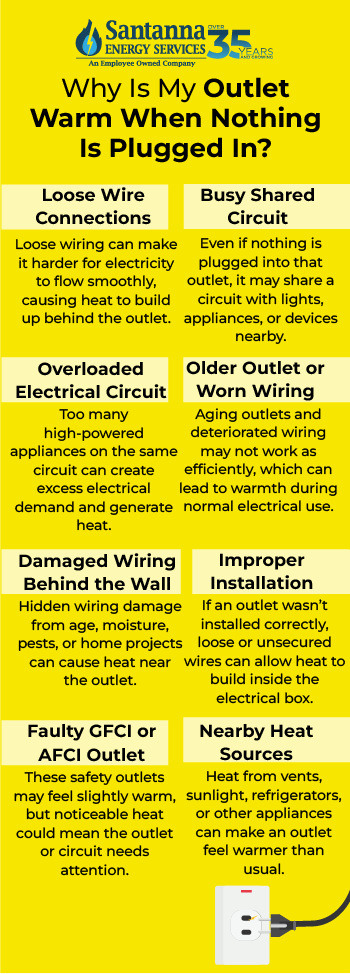
Loose Wire Connections
Loose wire connections are one of the most common reasons an outlet becomes warm because electricity cannot flow smoothly through a loose connection, causing heat to build up behind the outlet.
Over time, connections can loosen because of normal wear, repeated heating and cooling, or vibrations within the electrical system. While you may not notice anything unusual at first, the outlet can gradually become warmer each time electricity passes through the circuit. If left unaddressed, the heat can continue to build and may increase the risk of damage to the outlet or wiring.
The Outlet Shares a Busy Circuit
Even if nothing is plugged into a particular outlet, it may still be connected to other outlets, lights, or appliances that are using electricity. As those devices operate, electrical current continues to travel through the same circuit and the wiring behind the unused outlet.
For example, if a space heater, window air conditioner, microwave, or another high-powered appliance is running on the same circuit, you may notice slight warmth around nearby outlets.
Overloaded Electrical Circuit
An overloaded circuit happens when too many high-powered devices are using the same circuit at the same time. This forces the wiring to carry more electricity than it was designed to handle, which can create excess heat.
You may be more likely to experience an overloaded circuit if several appliances are running together, such as portable heaters, air conditioners, hair dryers, or kitchen appliances.
Older Outlet or Deteriorated Wiring
An older outlet or deteriorated wiring can cause an outlet to become warm because worn electrical components may generate more heat than they should during normal use.
Like many parts of a home, electrical outlets and wiring naturally wear out over time. Years of everyday use can cause the internal parts of an outlet to loosen, while older wiring may begin to deteriorate, especially in older homes.
Age alone doesn't always mean there's a serious problem. However, if an outlet consistently feels warm, it's a good idea to have it inspected by a licensed electrician to make sure it's operating safely.
Damaged Wiring Behind the Wall
Sometimes the source of the heat isn't the outlet itself, but the wiring hidden behind the wall. Electrical wiring can become damaged over time because of age, moisture, pests, accidental damage during home projects, or other factors.
Since this type of damage isn't visible from the outside, a warm outlet may be one of the first signs that something behind the wall needs professional attention.
Improper Outlet Installation
An outlet that wasn't installed correctly may develop warm spots even if it appears to work normally. Loose connections, improperly secured wires, or other installation issues can prevent electricity from flowing as intended and allow heat to build inside the electrical box.
Because these problems are hidden behind the outlet cover, you may not realize anything is wrong until you notice warmth, discoloration, or other warning signs.
Faulty GFCI or AFCI Outlet
Some homes have Ground Fault Circuit Interrupter (GFCI) or Arc Fault Circuit Interrupter (AFCI) outlets with built-in safety features that help protect against electrical hazards. Because these outlets contain additional internal components, they may sometimes feel slightly warmer than a standard outlet during normal operation.
However, they should never feel hot to touch. If a GFCI or AFCI outlet becomes noticeably warm, won't reset properly, trips repeatedly, or shows signs of damage such as discoloration, melted plastic, cracks, a burning smell, buzzing, or sparks, stop using it and have a licensed electrician inspect the outlet and the electrical circuit.
Heat From Nearby Electrical Equipment or External Heat Sources
Not all warmth comes from an electrical problem. Sometimes an outlet may feel warm because of the heat coming from nearby equipment or the surrounding environment.
For example, an outlet located behind a refrigerator, next to a heating vent, near direct sunlight, or close to another heat-producing appliance may naturally feel warmer than outlets in other parts of the home. While this type of warmth is often harmless, the outlet should still be checked if it becomes unusually hot or if you notice warning signs such as a burning smell, discoloration, buzzing sounds, or sparks.
Is a Warm Electrical Outlet Dangerous?
A warm electrical outlet can be dangerous because it may indicate excess heat building up from loose wiring, overloaded circuits, or other electrical problems that can damage the outlet and increase the risk of an electrical fire.
However, not every warm outlet is an emergency. In some cases, a slight amount of warmth may occur during normal electrical use, especially if other devices on the same circuit are drawing power.
The most important thing is to pay attention to how warm it feels and whether the warmth goes away or continues over time. An outlet that becomes increasingly warm, stays warm when it's not in use, or feels hot to the touch should be inspected by a licensed electrician.
Take a look at the table below to help you determine whether the warmth is something to monitor or a sign that it's time to have the outlet inspected:
How to Tell Whether a Warm Electrical Outlet Is a Cause for Concern
| What You Notice | Is It a Cause for Concern? | What You Should Do |
| The outlet feels cool or the same temperature as the surrounding wall. | No. This is considered normal. | No action is needed. |
| The outlet feels slightly warm while nearby appliances are running, but cools down afterward. | Usually not. This can be normal if the outlet shares a circuit with other devices drawing electricity. | Monitor the outlet. If it cools once electrical demand decreases and there are no other warning signs, it may not be a concern. |
| The outlet feels noticeably warm even though nothing is plugged into it, or it stays warm long after nearby appliances have been turned off. | Yes. This is not considered normal and should be checked. | Avoid using the outlet until the cause is identified. If the warmth continues, have it inspected by a licensed electrician. |
| The outlet feels hot or uncomfortable to touch. | Yes. This could indicate a potentially dangerous electrical problem. | Stop using the outlet immediately and contact a licensed electrician as soon as possible. |
| The outlet is hot and you notice a burning smell, buzzing, crackling, sparks, discoloration, melted plastic, or smoke. | Yes. This is an electrical emergency. | If it is safe to do so, turn off power to the affected circuit at the breaker panel, avoid using the outlet, and contact a licensed electrician immediately. |
Warning Signs That Your Warm Outlet Needs Immediate Attention
A warm outlet is not always an emergency, but certain warning signs can indicate a more serious electrical problem. If you notice any of the following signs, stop using the outlet and contact a licensed electrician:
- Burning Smell: A burning or melting plastic smell can indicate overheating electrical components or damaged wire insulation.
- Buzzing, Crackling, or Popping Sounds: Electrical outlets should operate quietly. Unusual sounds may indicate loose electrical connections or electrical arcing.
- Brown, Black, or Scorched Marks: Discoloration around the outlet may be a sign that excessive heat has already damaged the outlet or nearby wiring.
- Sparks: A tiny spark when plugging in a device can occasionally occur during normal use. However, repeated sparks or sparks accompanied by smoke, unusual noises, or a burning smell should be inspected immediately.
- Melted or Warped Outlet Cover: Visible melting or warping often means the outlet has been exposed to excessive heat.
- Flickering Lights: Lights that flicker when nearby appliances are used may point to a problem affecting the same electrical circuit.
- Repeated Breaker Trips: A breaker that trips frequently may indicate an overloaded circuit or another electrical fault.
- Outlet Suddenly Stops Working: An outlet that becomes warm and then loses power may have developed internal damage.
Catching these warning signs early can help prevent more extensive electrical damage, reduce safety risks, and protect your home's electrical system.
What Should You Do if You Notice an Outlet Feels Warm to the Touch?
Now that you know the warning signs to watch for, the next step is knowing how to respond if you discover a warm outlet in your home. Taking a few simple precautions can help you determine whether the outlet should simply be monitored or whether it needs immediate professional attention.
Follow these steps if you notice an outlet that feels warm to the touch:
Step 1: Stop Using the Outlet
If the outlet feels unusually warm or hot, avoid plugging in additional devices until you know what's causing the heat. Continuing to use the outlet could make the problem worse if there's an issue behind the wall.
Step 2: Check Nearby Outlets
Touch other outlets on the same wall or in the same room to see if they feel similar. If multiple outlets are warm, it could point to an issue affecting the electrical circuit rather than just one outlet.
Step 3: Look for Other Warning Signs
Take a quick look around the outlet. Check for signs such as discoloration, scorch marks, cracks, melted plastic, buzzing sounds, sparks, or a burning smell. If you notice any of these warning signs, stop using the outlet immediately.
Step 4: Consider What's Running on the Same Circuit
Think about what other appliances or devices are currently being used. High-powered appliances such as space heaters, window air conditioners, microwaves, or hair dryers can place more demand on the same electrical circuit, even if nothing is plugged into the warm outlet itself.
Step 5: Monitor Whether the Warmth Goes Away
If the outlet is only slightly warm, notice whether it cools down after nearby appliances are turned off or after the electrical demand decreases. An outlet that continues to feel warm after electrical demand has decreased should be inspected.
Step 6: Contact a Licensed Electrician
If the outlet feels hot to the touch, repeatedly becomes warm, or continues to show warning signs, contact a licensed electrician. They can safely identify the cause and recommend appropriate repairs.
While it may be tempting to ignore a warm outlet if everything else seems to be working normally, acting early can help prevent more serious electrical problems and keep your home safe.
Can a Warm Electrical Outlet Increase Your Electricity Bill?
No, a warm electrical outlet by itself is unlikely to noticeably increase your electricity bill. While a loose electrical connection can waste a small amount of electricity by producing heat, the amount is typically too small to have a measurable effect on your monthly energy costs.
What usually increases your electricity bill is the appliance or electrical demand causing the outlet to become warm, not the outlet itself. High-powered appliances such as space heaters, window air conditioners, portable air conditioners, electric heaters, microwaves, and other large electrical devices use significantly more electricity than smaller household electronics. If several of these appliances are running on the same circuit or are used for long periods, they're much more likely to increase your energy use.
If an outlet continues to feel warm even when nothing is plugged into it or electrical demand is low, the concern shifts from energy costs to electrical safety. In that situation, it's best to have the outlet inspected by a licensed electrician to identify the underlying cause.
How Can You Prevent Electrical Outlets From Becoming Warm?
You can help reduce the risk of electrical outlets getting warm by keeping your home's electrical system well-maintained and paying attention to any changes that could indicate a problem.
While some causes aren't visible, there are several ways to lower the risk of overheating and help keep your home's electrical system operating safely:
- Avoid Overloading Electrical Circuits: Whenever possible, spread out the use of appliances so one circuit isn't carrying more electricity than necessary.
- Plug High-Powered Appliances Directly Into Wall Outlets: Many high-powered appliances are designed to be plugged directly into a wall outlet instead of a power strip or extension cord. This helps ensure they receive the electricity they need safely and reduces the risk of overheating caused by overloaded accessories.
- Replace Worn or Damaged Outlets: If an outlet is loose, cracked, discolored, or no longer holds plugs securely, have a licensed electrician evaluate and replace it if needed.
- Inspect Outlets Regularly: Look for signs such as unusual warmth, discoloration, cracks, loose faceplates, or burn marks. Catching these warning signs early can help prevent larger electrical problems.
- Avoid Damaging Electrical Cords and Plugs: Replace frayed or damaged cords and avoid forcing plugs into outlets that no longer hold them securely.
- Schedule Electrical Inspections for Older Homes: If your home is several decades old or you're unsure when the electrical system was last inspected, consider having a licensed electrician perform a professional inspection. Older wiring, aging outlets, and outdated electrical components are more likely to develop issues over time, even if there are no obvious warning signs.
FAQs
Does an outlet that feels warm always need to be replaced?
No, a warm outlet doesn't always need to be replaced because the underlying issue may be with the wiring or electrical circuit rather than the outlet itself.
Should I replace a warm outlet myself?
No, if an outlet feels unusually warm or hot, it's safest to have it inspected and repaired by a licensed electrician.
Should I turn off the breaker if an outlet feels warm?
If the outlet feels hot or shows warning signs such as a burning smell, smoke, or sparks, turn off the breaker if it is safe to do so and contact a licensed electrician.
Do GFCI or AFCI outlets feel warm?
Yes, GFCI and AFCI outlets may feel slightly warm during normal operation because they contain additional internal safety components, but they should never feel hot to the touch.
Why is my outlet warm even when the breaker hasn't tripped?
A breaker doesn't always trip immediately because some problems, such as loose connections or worn wiring, can generate heat without exceeding the breaker's trip threshold.
A warm electrical outlet isn't always a sign of a serious problem, but it's also not something you should ignore. Knowing the difference between an outlet that's slightly warm and one that's hot or showing warning signs can help you take action early and keep your home's electrical system operating safely. When in doubt, it's always better to have a licensed electrician inspect the outlet than to assume the problem will go away on its own.
Just as paying attention to small changes around your home can help you avoid bigger electrical problems, choosing an energy plan with more predictable supply charges can help reduce surprises elsewhere in your household. With Santanna's Unlimited Energy plan, you can enjoy greater confidence in your monthly energy supply costs, making it one less thing to worry about while you focus on keeping your home comfortable and safe.*
Learn more about this plan to see if it's the right fit for your household. Peace of mind starts with paying attention to the little things, because small signs today can help prevent bigger problems tomorrow.
* Restrictions apply. Enrollment based upon program eligibility. Customers using more than 125% of normal monthly usage as determined by Santanna may be required to switch plans.
Tyler is an experienced energy professional, having worked for Santanna Energy Services, for the past four years. He is passionate about renewable energy and believes that diversifying the energy grid is the key to a sustainable future. Tyler is dedicated to supplying consumers with the best possible energy solutions and works diligently to make sure that Santanna can deliver the highest quality service.